
What is a screen-print?
- Show All
- Established
- Discoveries
- Show All
Artworks Related to Screen-print
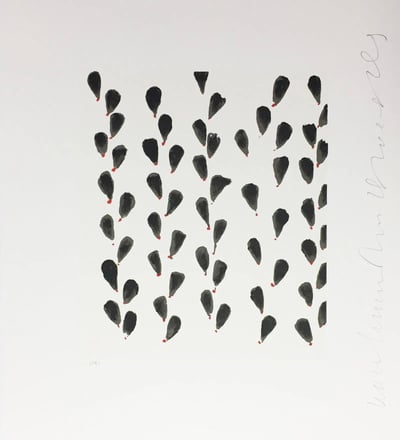
Donald Sultan
Wall Flower IX, 2008
Limited Edition Print
Screen-print
Inquire For Price
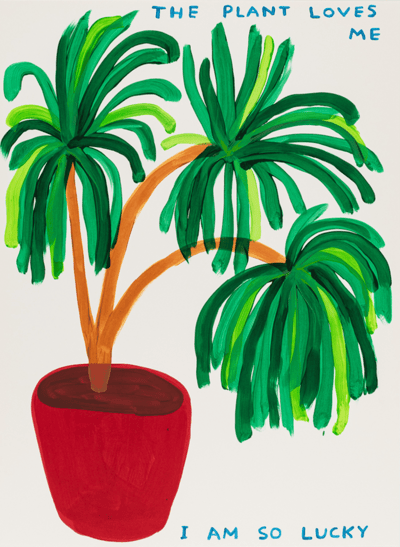
David Shrigley
The Plant Loves Me I Am So Lucky, 2023
Limited Edition Print
Screen-print
USD 2,550

Alex Katz
Ada with Sunglasses , 1990
Limited Edition Print
Screen-print
USD 9,200
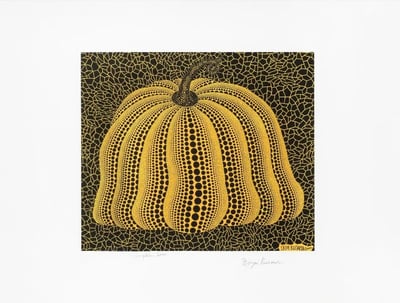
Yayoi Kusama
Pumpkin 2000 (Yellow), 2000
Limited Edition Print
Screen-print
Currently Not Available

Alex Katz
White Roses, 2014
Limited Edition Print
Screen-print
EUR 55,000
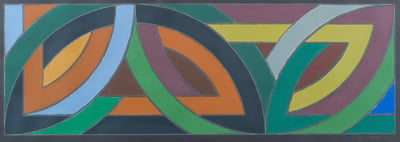
Frank Stella
York Factory II, 1974
Limited Edition Print
Screen-print
Currently Not Available
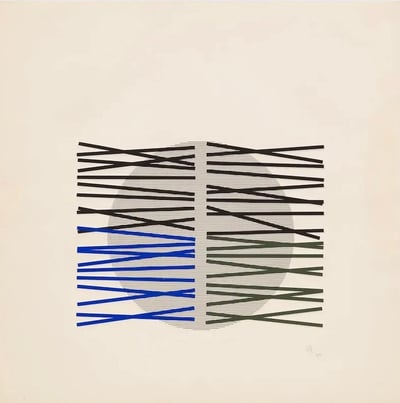
Rafael Jesus Soto
Untitled (circles and lines), 1970
Limited Edition Print
Screen-print
EUR 3,750
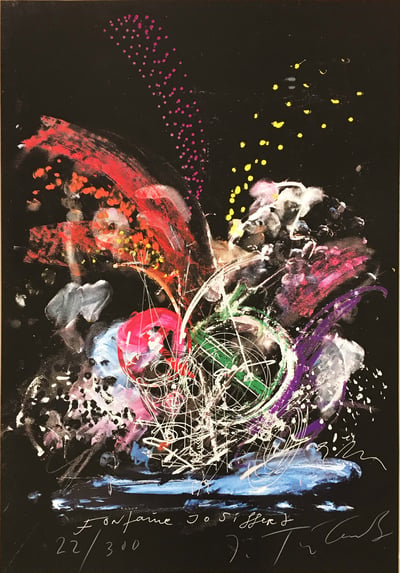
Jean Tinguely
Fontaine Joe Syffert from Eight by Eight, 1984
Limited Edition Print
Screen-print
USD 1,300
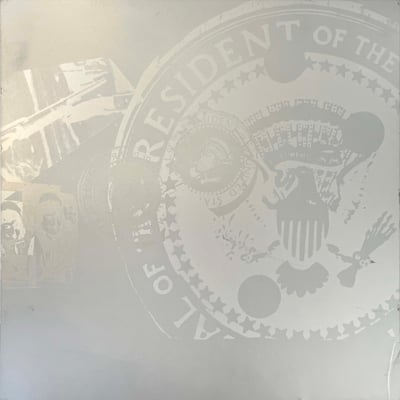
Andy Warhol
Flash - November 22, 1963, II.33, 1968
Limited Edition Print
Screen-print
USD 11,900

Andy Warhol
Sunset, 1972
Limited Edition Print
Screen-print
USD 150,000 - 170,000
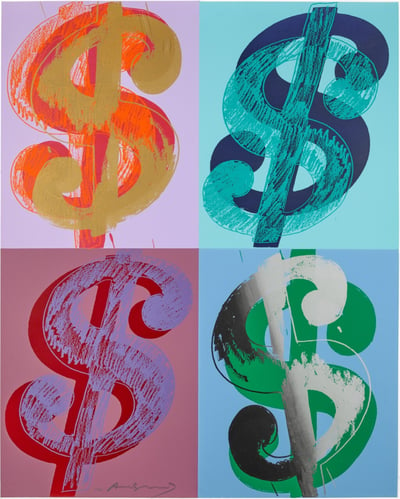
Andy Warhol
$ (Quadrant), II.283, 1982
Limited Edition Print
Screen-print
Inquire For Price
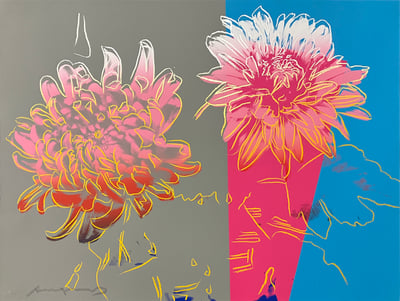
Andy Warhol
Kiku, II.308, 1983
Limited Edition Print
Screen-print
USD 40,000 - 50,000
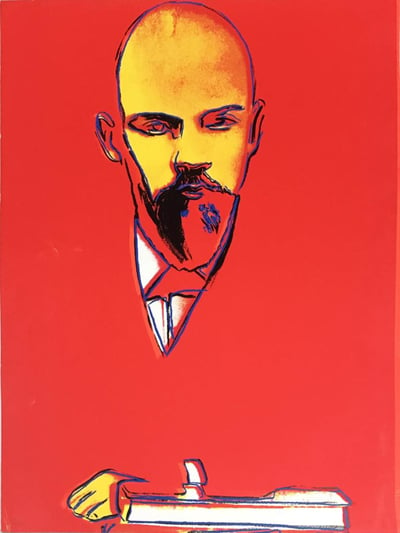
Andy Warhol
Lenin (Red) II.403, 1987
Limited Edition Print
Screen-print
USD 50,000 - 60,000

Victor Vasarely
Album Meta: Seven Plates 7, 1976
Limited Edition Print
Screen-print
USD 3,700
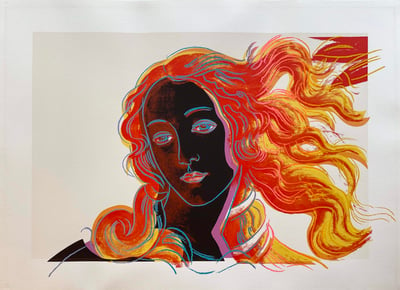
Andy Warhol
Details of Renaissance Paintings (Sandro Botticelli, Birth of Venus, 1482), II.318, 1984
Limited Edition Print
Screen-print
Inquire For Price

Victor Vasarely
Album Meta: Seven Plates 5, 1976
Limited Edition Print
Screen-print
USD 3,700
Related Articles

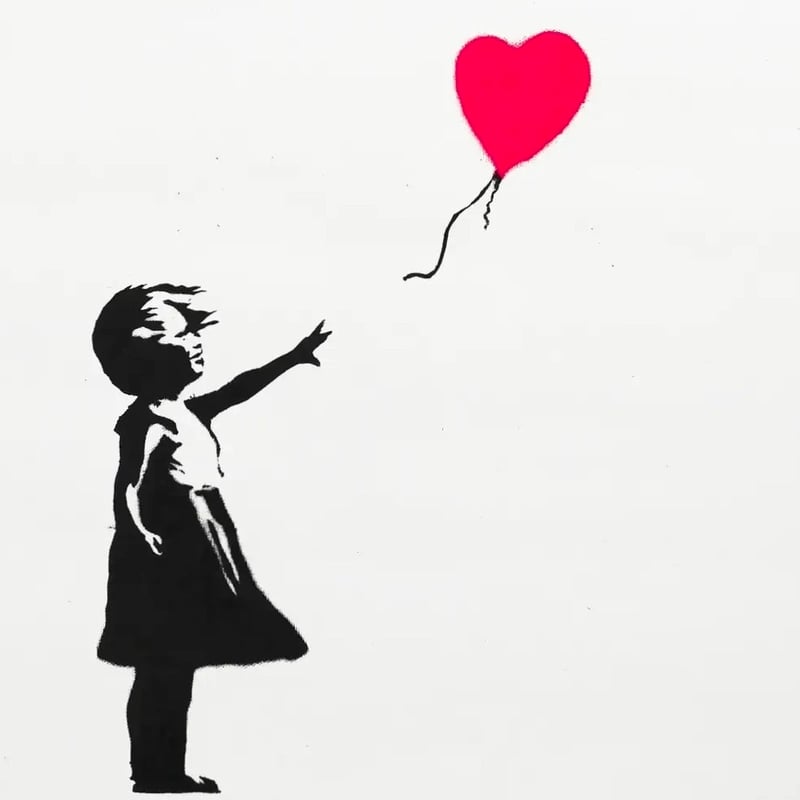

A term coined to describe artworks that are designed to be destroyed during their creation. Gustav Metzger, who developed this concept, outlined key principles: the artwork must disintegrate within 20 years, be self-completing, and involve public participation.

Épreuve d'Artist refers to the artist's proofs in a limited edition of prints. These are a small number of prints reserved by the artist for personal use and are typically marked with the abbreviation E.A. (épreuve d'artist) or AP (artist's proof). Artist’s proofs are usually identical to the regular edition but are often considered more valuable due to their limited quantity.

A plate is a broad, primarily flat vessel used for serving food, but it can also serve ceremonial or decorative purposes. Plates are typically circular, though they can be any shape and made from various water-resistant materials. Most plates have raised edges, either by curving upward or featuring a wider lip. Vessels without a raised edge or with a more rounded profile are often considered bowls or dishes, while very large, plate-shaped vessels might also be classified as dishes.
Can't find your Answer?
Thank you! Your question has been sent — we'll get back to you shortly.
