What is a plate?
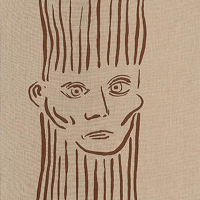
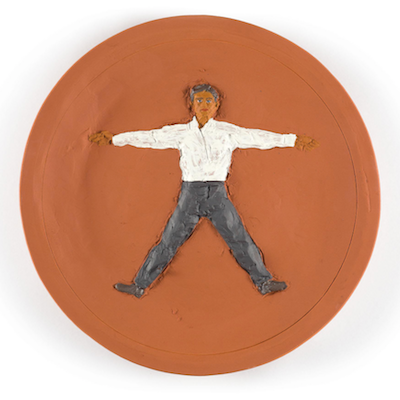
A plate is a broad, primarily flat vessel used for serving food, but it can also serve ceremonial or decorative purposes. Plates are typically circular, though they can be any shape and made from various water-resistant materials. Most plates have raised edges, either by curving upward or featuring a wider lip. Vessels without a raised edge or with a more rounded profile are often considered bowls or dishes, while very large, plate-shaped vessels might also be classified as dishes.
- Show All
- Established
- Discoveries
ARTWORKS RELATED TO PLATE

Rashid Johnson
Anxious Man, 2017/2021
Sculpture / Object
Plate
GBP 1,950 - 2,500

Derrick Adams
Untitled, 2023
Sculpture / Object
Plate
GBP 1,890

Lisa Yuskavage
Greengrapes, 2008 / 2020
Ceramics
Plate
GBP 2,400

Guillaume Corneille
Plat, 1999
Ceramics
Plate
EUR 3,500

Pablo Picasso
Visage de Faune Tourmente, 1956
Ceramics
Plate
USD 18,000

Pablo Picasso
Visage No. 54, 1963
Ceramics
Plate
EUR 9,800

Pablo Picasso
Bulls, 1952
Ceramics
Plate
EUR 4,800

Pablo Picasso
Oursin (A.R. 268), 1955
Sculpture / Object
Plate
USD 7,000 - 9,000

Pablo Picasso
Picador (Bullfighter), 1953
Sculpture / Object
Plate
USD 7,000 - 9,000
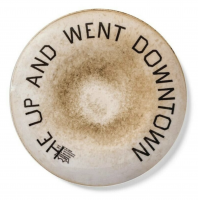
Ed Ruscha
He Up and Went Downtown, 2020
Sculpture / Object
Plate
GBP 2,350
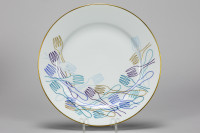
Fernandez Arman
Plate, 1992
Sculpture / Object
Plate
EUR 570
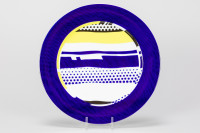
Roy Lichtenstein
Rosenthal plate 2, 2000
Sculpture / Object
Plate
EUR 750
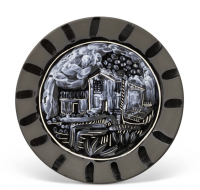
Pablo Picasso
Paysage (Landscape), 1953
Sculpture / Object
Plate
USD 13,000 - 15,000
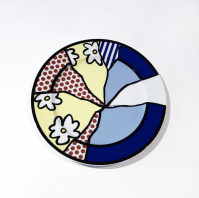
Roy Lichtenstein
Untitled Plate (Waterlily), 1990
Ceramics
Plate
USD 2,500

Pablo Picasso
Deux oiseaux no. 95 (A.R. 487), 1963
Ceramics
Plate
EUR 9,600

Pablo Picasso
Dancers (pair), 1956
Sculpture / Object
Plate
Currently Not Available
Related Articles

Collecting - March 25, 2025
Understanding Editioned Sculptures: What Collectors Need to Know
Explore the value of editioned sculptures, from bronze to electric art. Learn how edition size, material, and artist impact collectability. Read More
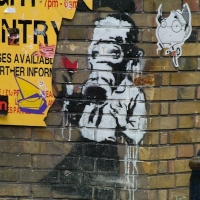
Art Intervention refers to art created with the intention of interacting with an existing situation, structure, artwork, audience, or institution. This form of art gained popularity in the 1960s as artists sought to provoke change within political and social contexts. The concept of Artist-in-Residence programs was influenced by the ideas and practices of this movement.

Meaning School of Things, Mono-ha originated in Tokyo in the mid-1960s. Instead of creating traditional artwork, the artists of Mono-ha used different materials and their natural properties to express dismay at the industrialization taking place in Japan at the time. The movement gained international attention and is now a widely respected form of art, known for its emphasis on the relationship between materials and their environment.