
Details
Artist
Styles
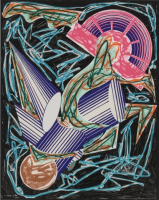
Silkscreen, lithography, and linoleum block with hand-coloring, marbling, and collage on T. H. Saunders and Somerset papers - Axsom 190 - Published by Waddington Graphics, London - Suite: The Moby Dick Prints: The Waves // The Counterpane (from Moby Dick) by Frank Stella, created in 1989, is a mixed media print that blends silkscreen, lithography, and linoleum block techniques with hand-coloring, marbling, and collage. The composition is an intricate and dynamic array of abstract shapes and lines, drawing inspiration from Herman Melville's Moby Dick. This work is part of Stella's Moby Dick Prints series, specifically The Waves. The chaotic and fragmented nature of the image, filled with layered forms in vivid colors like reds, blues, yellows, and black, evokes a sense of movement and complexity. The sharp lines and abstract figures are woven into a richly textured background, representing the tumultuous energy of the sea and the narrative of the novel. The visual complexity of the piece mirrors the psychological and physical struggles within Moby Dick, embodying both the chaos and beauty of the story through Stella's innovative approach to printmaking.
The Counterpane (from Moby Dick), 1989
form
Medium
Size
180.3 x 129.5 cm
- Inches
- Centimeters
Edition
Price
Details
Artist
Styles
Silkscreen, lithography, and linoleum block with hand-coloring, marbling, and collage on T. H. Saunders and Somerset papers - Axsom 190 - Published by Waddington Graphics, London - Suite: The Moby Dick Prints: The Waves // The Counterpane (from Moby Dick) by Frank Stella, created in 1989, is a mixed media print that blends silkscreen, lithography, and linoleum block techniques with hand-coloring, marbling, and collage. The composition is an intricate and dynamic array of abstract shapes and lines, drawing inspiration from Herman Melville's Moby Dick. This work is part of Stella's Moby Dick Prints series, specifically The Waves. The chaotic and fragmented nature of the image, filled with layered forms in vivid colors like reds, blues, yellows, and black, evokes a sense of movement and complexity. The sharp lines and abstract figures are woven into a richly textured background, representing the tumultuous energy of the sea and the narrative of the novel. The visual complexity of the piece mirrors the psychological and physical struggles within Moby Dick, embodying both the chaos and beauty of the story through Stella's innovative approach to printmaking.
- Recently Added
- Price (low-high )
- Price (high-low )
- Year (low-high )
- Year (high-low )

Frank Stella
Private Listing
Drawing / Watercolor
Gouache
Request Info

Frank Stella
Honduras Lottery Co., 1972
Limited Edition Print
Lithograph
Inquire For Price

Frank Stella
Sinjerli Variation IIa, 1977
Limited Edition Print
Mixed Media
USD 18,500

Frank Stella
Moultonboro, 1974
Limited Edition Print
Lithograph
USD 9,400

Frank Stella
Sinjerli Variation I, 1977
Limited Edition Print
Mixed Media
USD 22,000 - 30,000

Frank Stella
Moultonville, 1974
Limited Edition Print
Mixed Media
USD 7,625
Frank Stella
Private Listing
Sculpture / Object
Mixed Media
Request Info

Frank Stella
The Decanter, 1986
Sculpture / Object
Mixed Media
Inquire For Price

Frank Stella
New Madrid, 1971
Limited Edition Print
Lithograph
USD 5,500
Frank Stella
Had Gadya: Front Cover, From Illustrations After El Lissitzky's Had Gadya, 1984
Limited Edition Print
Collage
USD 19,850

Frank Stella
Shards Variant IVa, 1982
Limited Edition Print
Mixed Media
Artwork On Hold

Frank Stella
Gran Cairo (from Multicolored Squares), 1970
Limited Edition Print
Lithograph
USD 7,000

Frank Stella
Cato Manor, 1972
Limited Edition Print
Lithograph
USD 4,865

Frank Stella
Furg, 1975
Limited Edition Print
Mixed Media
USD 4,750

Frank Stella
Noguchi's Okinawa Woodpecker, 1977
Limited Edition Print
Mixed Media
Inquire For Price

Frank Stella
Giuf à E La Berretta Rossa, 1989
Limited Edition Print
Mixed Media
USD 28,750

Frank Stella
Pergusa Three Double, 1984
Limited Edition Print
Mixed Media
USD 50,000 - 60,000

Frank Stella
Inaccessible Island Rail, 1977
Limited Edition Print
Mixed Media
Inquire For Price

Frank Stella
Shards I, 1982
Limited Edition Print
Mixed Media
Inquire For Price

Frank Stella
Shards Variant Ia, 1982
Limited Edition Print
Mixed Media
Inquire For Price

Frank Stella
Eskimo Curlew, 1977
Limited Edition Print
Mixed Media
USD 12,500
Frank Stella
Private Listing
Limited Edition Print
Mixed Media
Request Info

Frank Stella
Union (from Eccentric Polygons), 1974
Limited Edition Print
Mixed Media
USD 9,500

Frank Stella
Sanbornville, 1974
Limited Edition Print
Mixed Media
USD 9,500

Frank Stella
Quathlamba I, 1968
Limited Edition Print
Lithograph
USD 11,900

Frank Stella
Bene Come Il Sale, 1989
Limited Edition Print
Etching And Aquatint
USD 34,900

Frank Stella
Imola Three, I (from The Circuits Series), 1982
Limited Edition Print
Mixed Media
USD 43,000 - 50,000

Frank Stella
Effingham, 1974
Limited Edition Print
Mixed Media
Inquire For Price

Frank Stella
Mysterious Bird Of Ulieta, 1977
Limited Edition Print
Mixed Media
Inquire For Price

Frank Stella
Shards V, 1982
Limited Edition Print
Lithograph
USD 32,500

Frank Stella
A Hungry Cat Ate Up The Goat, 1984
Limited Edition Print
Mixed Media
USD 24,900

Frank Stella
Shards II, 1982
Limited Edition Print
Lithograph
USD 19,500
Frank Stella
Private Listing
Drawing / Watercolor
Mixed Media
Request Info
Frank Stella
Private Listing
Sculpture / Object
Mixed Media
Request Info

Frank Stella
Casa Cornu (First Version), 1968
Limited Edition Print
Lithograph
Currently Not Available

Frank Stella
Wolfeboro, 1974
Limited Edition Print
Mixed Media
Currently Not Available

Frank Stella
Polar Co-ordinates VIII, From Polar Co-ordinates For Ronnie Peterson, 1980
Limited Edition Print
Mixed Media
Currently Not Available

Frank Stella
York Factory II, 1974
Limited Edition Print
Screen-print
Currently Not Available

Frank Stella
Double Grey Scramble (AXSOM 93), 1973
Limited Edition Print
Screen-print
Currently Not Available
Related Artists


Related Articles

Popular, Artists, Art Movements - May 05, 2022
9 Essential Artists of the The Minimalist School
Discover 9 essential artists of the Minimalist movement, including Donald Judd and Agnes Martin. Explore their transformative impact on modern art and design. Read More

What is Colour Field Painting?
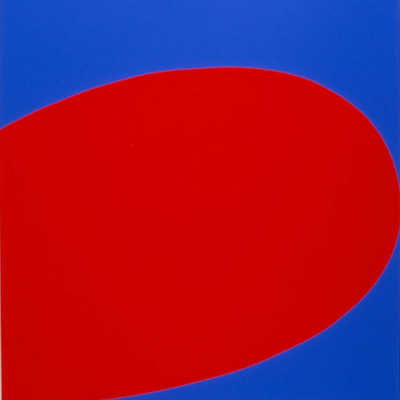
Colour Field Painting is an abstract style characterized by large areas of a single color or simple, solid colors. The term was first used in the 1950s to describe the work of three American Abstract Expressionist painters—Barnett Newman, Mark Rothko, and Clyfford Still. Their work emphasized the emotional power of color and the creation of vast, meditative spaces through expansive color fields.