What is Systems Art?
Systems Art refers to a group of artists who, during the late 1960s and early 1970s, used the frameworks of conceptualism and minimalism to create art that was responsive to its environment. Rejecting traditional art themes, they embraced aesthetic systems and experimented with diverse media. Systems Art often connected with contemporary political movements of the time, emphasizing the interrelationship between the artwork, its context, and the broader social and political environment.
Show All
- Show All
- Established
- Discoveries
Show All
ARTWORKS RELATED TO SYSTEMS ART

Frank Stella
Nowe Miastro (IV), from the Paper Relief Project, 1975
Drawing / Watercolor
Collage
Inquire For Price

Frank Stella
Untitled (study for Sanbornville, from Eccentric Polygons), 1970
Drawing / Watercolor
Mixed Media
Inquire For Price

Sol LeWitt
Plate 1 (from Five Geometric Figures in Five Colors), 1986
Limited Edition Print
Screen-print
USD 1,200

Sol LeWitt
Plate 7 (from Five Geometric Figures in Five Colors), 1986
Limited Edition Print
Screen-print
USD 1,200

Sol LeWitt
Plate 7 (from Five Geometric Figures in Five Colors), 1986
Limited Edition Print
Screen-print
USD 1,200

Sol LeWitt
Plate 15 (from Five Geometric Figures in Five Colors), 1986
Limited Edition Print
Screen-print
USD 1,200

Jean Tinguely
Meta – Matic N9, 1960
Drawing / Watercolor
Pen and ink
EUR 500

Bruce Nauman
Sequence, 1968
Limited Edition Print
Offset Print
EUR 2,700

Sol LeWitt
Lincoln Center Print, 1998
Limited Edition Print
Silkscreen
EUR 2,400

Sol LeWitt
Black lines in Four Directions on Colors, 1991
Limited Edition Print
Silkscreen
Inquire For Price

Frank Stella
La penna di hu (black and white), 1988
Limited Edition Print
Mixed Media
Inquire For Price

Richard Serra
Untitled from The New York Collection for Stockholm, 1973
Limited Edition Print
Lithograph
GBP 7,500 - 9,750

Kenneth Noland
Untitled from The New York Collection for Stockholm, 1973
Limited Edition Print
Screen-print
GBP 1,800

Dan Flavin
Untitled from The New York Collection for Stockholm, 1973
Limited Edition Print
Screen-print
GBP 2,340

Sol LeWitt
Circles from The New York Collection for Stockholm, 1973
Limited Edition Print
Lithograph
GBP 3,300

Frank Stella
Sharpesville, from Multicolored Squares I, 1972
Limited Edition Print
Lithograph
USD 7,000
Related Articles

Artists - October 07, 2024
Picasso’s Ceramics: A Vibrant Legacy in Clay
Explore Picasso’s vibrant ceramics, blending art and functionality. Discover his playful designs, cultural motifs, and innovative legacy in clay. Read More


Glass is a transparent solid that varies in composition depending on the type. Artists use different types of glass to create art forms such as stained glass, blown glass, and various decorated pieces. Glass can be cut, textured, overlaid, engraved, and shaped in many ways to produce intricate and beautiful works of art.
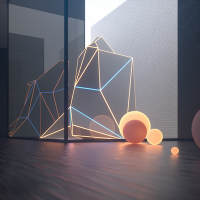
Installation art is a three-dimensional artistic genre that involves site-specific works designed to alter the viewer's perception of space. These works are typically created for interior spaces, such as museums and galleries, but can also be found in private and public locations. Installation art can be temporary or permanent, depending on its purpose and setting.