Details
Artist
Styles
// Rafael Jesús Soto’s Untitled (Circles and Lines), created in 1970, is a screen print that exemplifies the artist's exploration of optical art and kinetic aesthetics. In this work, Soto uses a series of overlapping lines to create a sense of movement and visual depth. The composition features a central circular form that appears to be partially obscured by horizontal lines in black, green, and blue. The interaction of the lines with the underlying circle generates an optical illusion, where the viewer’s perception shifts depending on their focus and the angle of viewing. The addition of blue lines introduces a vibrant contrast, which enhances the dynamic quality of the piece. Soto’s work is known for its ability to manipulate the viewer’s visual experience, creating an almost three-dimensional effect on a two-dimensional surface. This limited edition print is an excellent example of his mastery in blending geometric abstraction with the perceptual effects of light and motion.
Untitled (circles and lines), 1970
form
Medium
Size
93.98 x 93.98 cm
- Inches
- Centimeters
Edition
Price
- USD
- EUR
- GBP
Details
Artist
Styles
// Rafael Jesús Soto’s Untitled (Circles and Lines), created in 1970, is a screen print that exemplifies the artist's exploration of optical art and kinetic aesthetics. In this work, Soto uses a series of overlapping lines to create a sense of movement and visual depth. The composition features a central circular form that appears to be partially obscured by horizontal lines in black, green, and blue. The interaction of the lines with the underlying circle generates an optical illusion, where the viewer’s perception shifts depending on their focus and the angle of viewing. The addition of blue lines introduces a vibrant contrast, which enhances the dynamic quality of the piece. Soto’s work is known for its ability to manipulate the viewer’s visual experience, creating an almost three-dimensional effect on a two-dimensional surface. This limited edition print is an excellent example of his mastery in blending geometric abstraction with the perceptual effects of light and motion.
- Recently Added
- Price (low-high )
- Price (high-low )
- Year (low-high )
- Year (high-low )

Rafael Jesus Soto
Óvalo En El Rojo, 1979
Sculpture / Object
Mixed Media
USD 8,950

Rafael Jesus Soto
Sans Titre, 2001
Sculpture / Object
Acrylic Sculpture
EUR 2,800

Rafael Jesus Soto
Permutation, 1955-1978
Sculpture / Object
Object
EUR 5,500

Rafael Jesus Soto
Permutacion, 1979
Sculpture / Object
Mixed Media
USD 8,950

Rafael Jesus Soto
La Escalera Azul , 1979
Sculpture / Object
Mixed Media
USD 8,950

Rafael Jesus Soto
Cuadrado Y Curvas Virtuales, 1979
Sculpture / Object
Mixed Media
USD 8,950

Rafael Jesus Soto
Mirroire, 2005
Sculpture / Object
Glass
EUR 10,000
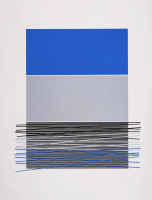
Rafael Jesus Soto
Untitled (Blue Horizon Lines), 1976
Limited Edition Print
Screen-print
USD 1,850

Rafael Jesus Soto
Untitled (circles And Lines), 1970
Limited Edition Print
Screen-print
EUR 3,700

Rafael Jesus Soto
Composición, 1971
Limited Edition Print
Silkscreen
EUR 3,100

Rafael Jesus Soto
Escritura, 1979
Sculpture / Object
Mixed Media
USD 8,950

Rafael Jesus Soto
Sotomagie II, 1967
Sculpture / Object
Mixed Media
USD 8,950

Rafael Jesus Soto
Caroni, 1971
Limited Edition Print
Silkscreen
EUR 1,270

Rafael Jesus Soto
Untitled (Silver Lines)
Limited Edition Print
Screen-print
GBP 2,800

Rafael Jesus Soto
Homage To Federico Garcia Lorca, 1999
Limited Edition Print
Silkscreen
EUR 800

Rafael Jesus Soto
Vibrations, 1967
Sculpture / Object
Acrylic Sculpture
Inquire For Price

Rafael Jesus Soto
Espiral Doble, 1979
Sculpture / Object
Mixed Media
USD 8,950

Rafael Jesus Soto
Dos Cuadraditos, 1972
Sculpture / Object
Object
Currently Not Available

Rafael Jesus Soto
Spiral, 1955-83
Limited Edition Print
Silkscreen
Currently Not Available

Rafael Jesus Soto
Cube With Ambiguous Space , 1981
Sculpture / Object
Object
Currently Not Available
Related Artists


Related Articles
Popular, Collecting - July 23, 2025
Sculpture Care and Display: From Plinths to Pedestals in Your Home
Learn how to display and care for sculpture at home—from lighting tips to material care—so your art can truly shine in any space. Read More

What is kinetic art?
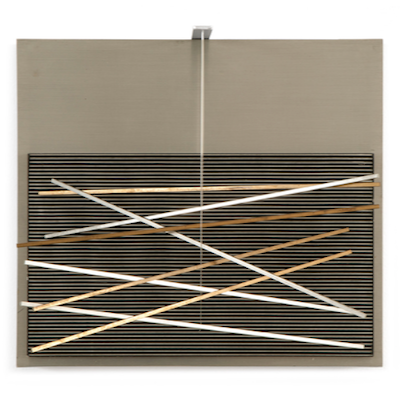
Kinetic art is an international movement that emerged in the 1920s and gained prominence in the 1960s, referring to art that involves both apparent and real motion. It encompasses any medium that includes movement, either relying on actual motion for its effect or being perceived as moving by the viewer. Early examples include canvas paintings designed to create optical illusions of movement. Today, kinetic art often refers to three-dimensional figures and sculptures, such as those operated by machines or those that move naturally. The movement covers a variety of styles and techniques that frequently overlap.