What is interactive art?
Interactive art is a form of art where the spectator is actively involved by the artist to achieve the artwork's purpose. This involvement can include allowing the visitor to walk around, in, or on the art installation, or even becoming a part of the artwork itself. Works in this category often feature computers, sensors, and interfaces that respond to various inputs such as meteorological changes, heat, motion, or other types of data programmed by the artist.
- Show All
- Established
- Discoveries
ARTWORKS RELATED TO INTERACTIVE ART

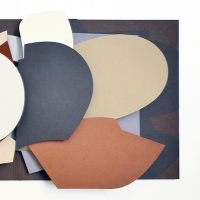
Michelangelo Pistoletto
Balloon, 1983
Limited Edition Print
Silkscreen
Inquire For Price

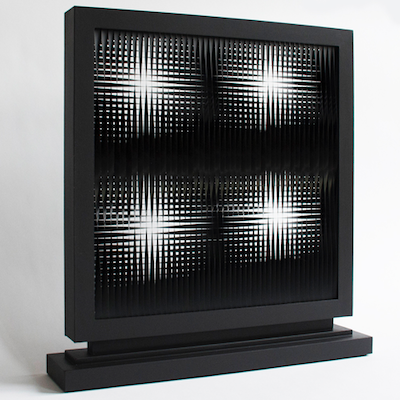
Rafael Jesus Soto
Kinetic Box, 1964
Sculpture / Object
Screen-print
USD 22,000

Richard Serra
Untitled from The New York Collection for Stockholm, 1973
Limited Edition Print
Lithograph
GBP 7,500 - 9,750
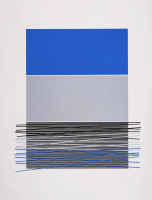
Rafael Jesus Soto
Untitled (Blue Horizon Lines), 1976
Limited Edition Print
Screen-print
USD 1,850
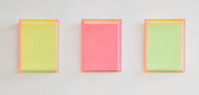
Regine Schumann
Colormirror glow after rose gent, 2025
Sculpture / Object
Acrylic sculpture
EUR 3,600
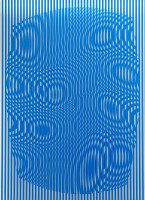
Alberto Biasi
Gocce Celesti, 2024
Sculpture / Object
Mixed Media
EUR 3,000
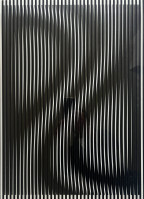
Alberto Biasi
Break Dance, 2024
Sculpture / Object
Mixed Media
EUR 3,000

Richard Serra
Abu Ghraib, 2004
Limited Edition Print
Lithograph
Inquire For Price

Richard Serra
Between the Torus and the Sphere III, 2006
Limited Edition Print
Etching
EUR 20,000 - 30,000

Richard Serra
Between the Torus and the Sphere IV, 2006
Limited Edition Print
Etching
EUR 20,000 - 30,000

Richard Serra
Transversal #4, 2004
Limited Edition Print
Etching
EUR 35,000 - 50,000

Rafael Jesus Soto
Untitled (circles and lines), 1970
Limited Edition Print
Screen-print
EUR 3,700

Rafael Jesus Soto
Composición, 1971
Limited Edition Print
Silkscreen
EUR 3,100

Richard Serra
Extensión # 3, 2004
Limited Edition Print
Etching
EUR 24,800

Ernesto Neto
Untitled, 1999
Drawing / Watercolor
Mixed Media
Inquire For Price

Rafael Jesus Soto
Espiral Doble, 1979
Sculpture / Object
Mixed Media
USD 8,950
Related Articles

Artists - March 28, 2023
Checkerboard Sensations, Sculptures and Squares: the Op Art Odyssey of Bridget Riley
Explore Bridget Riley’s Op Art legacy, where bold patterns and optical illusions redefine perception. Discover her influence on modern geometric abstraction. Read More


Digital art refers to art which is created using digital technology. It can be generated by computer, drawn or scanned with a tablet using a mouse. Video may be downloaded to computers so artists can manipulate images filmed with a video camera.

Silkscreen is a printmaking method that uses a screen made of silk or other mesh fabric. The screen is treated with a substance that blocks ink in certain areas, allowing ink to pass through only in the desired sections. Each color in the print requires a separate screen.