Details
Artist
Styles
Screenprint // Jean Tinguely’s Fontaine Joe Syffert from Eight by Eight, 1984 is a vibrant and chaotic screen-print that exudes energy and movement. The composition bursts with color, featuring dynamic swirls of red, pink, yellow, and green against a deep black background. The abstract forms seem to explode from the center, giving the piece a sense of spontaneity and action. Tinguely’s use of vibrant paint splatters and bold strokes creates a sense of both chaos and harmony. The handwritten elements and signatures at the bottom add a personal and playful touch to this limited edition work, typical of Tinguely’s style, which often embraces mechanical movement and playful abstraction.
Fontaine Joe Syffert from Eight by Eight, 1984
form
Medium
Size
104.8 x 73 cm
- Inches
- Centimeters
Edition
Price
- USD
- EUR
- GBP
Details
Artist
Styles
Screenprint // Jean Tinguely’s Fontaine Joe Syffert from Eight by Eight, 1984 is a vibrant and chaotic screen-print that exudes energy and movement. The composition bursts with color, featuring dynamic swirls of red, pink, yellow, and green against a deep black background. The abstract forms seem to explode from the center, giving the piece a sense of spontaneity and action. Tinguely’s use of vibrant paint splatters and bold strokes creates a sense of both chaos and harmony. The handwritten elements and signatures at the bottom add a personal and playful touch to this limited edition work, typical of Tinguely’s style, which often embraces mechanical movement and playful abstraction.
- Recently Added
- Price (low-high )
- Price (high-low )
- Year (low-high )
- Year (high-low )

Jean Tinguely
Shooting Paintings, 1970
Drawing / Watercolor
Ink
EUR 4,000

Jean Tinguely
Fontaine Joe Syffert From Eight By Eight, 1984
Limited Edition Print
Screen-print
USD 1,300

Jean Tinguely
Chaos I, 1973
Limited Edition Print
Etching
Currently Not Available

Jean Tinguely
Roto Zaza No. 1, 1975
Limited Edition Print
Screen-print
Currently Not Available
Related Artists


Related Articles

Popular, Artists - October 24, 2024
David Hockney's Pool Paintings: Splashes of California Dreams
Dive into David Hockney’s iconic pool paintings. Explore their vibrant portrayal of California’s allure, blending light, color, and modernist innovation. Read More
Art Movements - December 21, 2023
Revelations and Taboos: Unveiling the Naked Truths in Art
Dive into the evolving role of nudity in art, from historical taboos to modern revelations. Explore artists and works that redefine cultural perceptions. Read More
Collecting - March 29, 2023
Valuation in the Art Market: How to Accurately Estimate the Price of Artworks
The value of a work of art is often determined by factors which are not always easily discernible at first . Are there any specific methods or rules of thumb, available to buyers and sellers, to ascertain the monetary value of artworks? Can we understand the factors that have an effect on the prodigious prices of great artistic masterpieces? Read More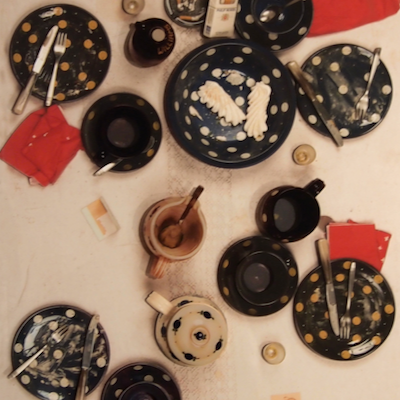
What is Nouveau Realism?
Nouveau Réalisme is an artistic movement founded in 1960 by art critic Pierre Restany and painter Yves Klein during a collective exhibition at a gallery in Milan. Restany wrote the original manifesto in April 1960, proclaiming the movement. In October of that year, nine artists, including Martial Raysse, Yves Klein, Daniel Spoerri, Jean Tinguely, Arman, Pierre Restany, and three Ultra-Lettrists—Jacques de la Villeglé, François Dufrêne, and Raymond Hains—signed the declaration. In 1961, the movement expanded to include Mimmo Rotella, Niki de Saint Phalle, Gérard Deschamps, and César. The movement emphasized a return to reality in art, often incorporating everyday objects and exploring the boundaries between art and life.