What is concrete art?
Concrete Art is an art movement founded by the Dutch artist Theo van Doesburg in the 1930s. The movement emphasizes pure abstraction, focusing on geometric shapes and colors without any reference to the natural world or symbolic meaning. Unlike other forms of abstract art, Concrete Art is entirely non-representational and is based on mathematical principles and precise execution. It aims to create universal, timeless works by using simple, clear forms that emphasize objectivity and clarity.
Show All
- Show All
- Established
- Discoveries
A,B,C
ARTWORKS RELATED TO CONCRETE ART

Victor Vasarely
Gordes Gestalt, 1948
Limited Edition Print
Etching
EUR 1,500

Victor Vasarely
Gordes Taira, 1971
Limited Edition Print
Lithograph
EUR 1,500

Victor Vasarely
La Certa, 1981
Limited Edition Print
Screen-print
EUR 1,400

Victor Vasarely
Gordes Tabor, 1971
Limited Edition Print
Lithograph
EUR 1,400

Almir Mavignier
Untiteld from 9x5 Konkret Portfolio, 1979
Limited Edition Print
Screen-print
EUR 1,600

Almir Mavignier
der künstler ist ein beamter....., 1979
Sculpture / Object
Plate
EUR 980

Heinz Mack
Sandflügel, 1976
Sculpture / Object
Mixed Media
Inquire For Price

Francois Morellet
Trame, 1957-1975
Limited Edition Print
Silkscreen
EUR 1,800

Piero Dorazio
La Ribambelle Des Gobelins II, 1992
Limited Edition Print
Silkscreen
EUR 1,750

Piero Dorazio
La Ribambelle Des Gobelins I, 1992
Limited Edition Print
Silkscreen
EUR 1,750

Piero Dorazio
Ellisse blu, 1989
Limited Edition Print
Silkscreen
EUR 2,400

Piero Dorazio
La Ribambelle Des Gobelins IV, 1992
Limited Edition Print
Silkscreen
EUR 1,750

Piero Dorazio
La Ribambelle Des Gobelins V, 1992
Limited Edition Print
Silkscreen
EUR 1,750

Piero Dorazio
Pink Abstract, 1992
Limited Edition Print
Silkscreen
EUR 1,750

Victor Vasarely
Olla, 1988
Limited Edition Print
Silkscreen
Inquire For Price

Victor Vasarely
Thez I, 1986
Limited Edition Print
Silkscreen
Inquire For Price
Related Articles

Artists - October 30, 2024
Yaacov Agam: Revolutionizing Visual Perception Through Motion
Discover Yaacov Agam’s kinetic art revolution. Explore his mastery of motion, time, and perception, transforming how we engage with visual art. Read More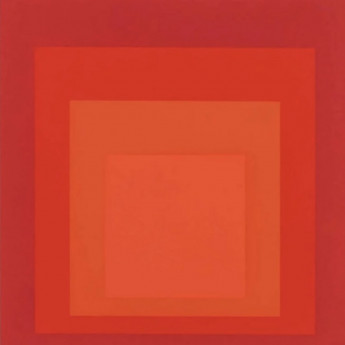


Cyanotype is a photographic technique that creates images in shades of blue, commonly known as blueprints. It involves coating a surface with a mixture of two chemicals, typically ferric ammonium citrate and potassium ferricyanide. When exposed to UV light and then washed in water, the process produces white images on a deep blue background.
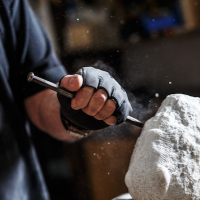
Marble is a rare and expensive metamorphic rock composed of recrystallized limestone. It has been used for centuries to create statues, decorative floors, and walls due to its translucency and durability. Marble is ideal for both free-standing statues and relief sculptures. When carving, the material is chiseled away in small increments to achieve the desired form.