Details
Artist
Styles
Acrylic multiple with screenprinting in blue and black, 1981, inscribed with the signature and numbered. Published by Meissner Edition, Hamburg // Cube with Ambiguous Space by Rafael Jesus Soto, created in 1981, is an acrylic sculpture that exemplifies the artist's exploration of optical illusions and spatial ambiguity. This cube features screen-printed patterns in blue and black on transparent acrylic surfaces, creating an intricate play of lines and reflections. The intersecting lines produce a sense of depth and shifting perspectives, encouraging viewers to engage with the piece from multiple angles. As one moves around the cube, the internal and external spaces appear to morph, challenging the viewer’s perception of volume and depth. Published by Meissner Edition in Hamburg, this work is part of a limited edition of 75 pieces, each signed and numbered, capturing Soto's mastery in kinetic and optical art.
Cube with Ambiguous Space , 1981
form
Medium
Size
20 x 20 X 20 cm
- Inches
- Centimeters
Edition
Price
Details
Artist
Styles
Acrylic multiple with screenprinting in blue and black, 1981, inscribed with the signature and numbered. Published by Meissner Edition, Hamburg // Cube with Ambiguous Space by Rafael Jesus Soto, created in 1981, is an acrylic sculpture that exemplifies the artist's exploration of optical illusions and spatial ambiguity. This cube features screen-printed patterns in blue and black on transparent acrylic surfaces, creating an intricate play of lines and reflections. The intersecting lines produce a sense of depth and shifting perspectives, encouraging viewers to engage with the piece from multiple angles. As one moves around the cube, the internal and external spaces appear to morph, challenging the viewer’s perception of volume and depth. Published by Meissner Edition in Hamburg, this work is part of a limited edition of 75 pieces, each signed and numbered, capturing Soto's mastery in kinetic and optical art.
- Recently Added
- Price (low-high )
- Price (high-low )
- Year (low-high )
- Year (high-low )

Rafael Jesus Soto
Óvalo En El Rojo, 1979
Sculpture / Object
Mixed Media
USD 8,950

Rafael Jesus Soto
Sans Titre, 2001
Sculpture / Object
Acrylic Sculpture
EUR 2,800

Rafael Jesus Soto
Permutation, 1955-1978
Sculpture / Object
Object
EUR 5,500

Rafael Jesus Soto
Permutacion, 1979
Sculpture / Object
Mixed Media
USD 8,950

Rafael Jesus Soto
La Escalera Azul , 1979
Sculpture / Object
Mixed Media
USD 8,950

Rafael Jesus Soto
Cuadrado Y Curvas Virtuales, 1979
Sculpture / Object
Mixed Media
USD 8,950

Rafael Jesus Soto
Mirroire, 2005
Sculpture / Object
Glass
EUR 10,000
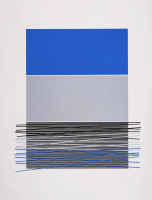
Rafael Jesus Soto
Untitled (Blue Horizon Lines), 1976
Limited Edition Print
Screen-print
USD 1,850

Rafael Jesus Soto
Untitled (circles And Lines), 1970
Limited Edition Print
Screen-print
EUR 3,700

Rafael Jesus Soto
Composición, 1971
Limited Edition Print
Silkscreen
EUR 3,100

Rafael Jesus Soto
Escritura, 1979
Sculpture / Object
Mixed Media
USD 8,950

Rafael Jesus Soto
Sotomagie II, 1967
Sculpture / Object
Mixed Media
USD 8,950

Rafael Jesus Soto
Caroni, 1971
Limited Edition Print
Silkscreen
EUR 1,270

Rafael Jesus Soto
Untitled (Silver Lines)
Limited Edition Print
Screen-print
GBP 2,800

Rafael Jesus Soto
Homage To Federico Garcia Lorca, 1999
Limited Edition Print
Silkscreen
EUR 800

Rafael Jesus Soto
Vibrations, 1967
Sculpture / Object
Acrylic Sculpture
Inquire For Price

Rafael Jesus Soto
Espiral Doble, 1979
Sculpture / Object
Mixed Media
USD 8,950

Rafael Jesus Soto
Dos Cuadraditos, 1972
Sculpture / Object
Object
Currently Not Available

Rafael Jesus Soto
Spiral, 1955-83
Limited Edition Print
Silkscreen
Currently Not Available

Rafael Jesus Soto
Cube With Ambiguous Space , 1981
Sculpture / Object
Object
Currently Not Available
Related Artists


Related Articles

Popular, Collecting - February 21, 2025
Sculpture 101: From Clay to Bronze – How Sculptures Are Made
Discover the art of sculpture! Explore traditional techniques like carving and bronze casting, plus modern innovations like 3D printing. A journey in creativity! Read More

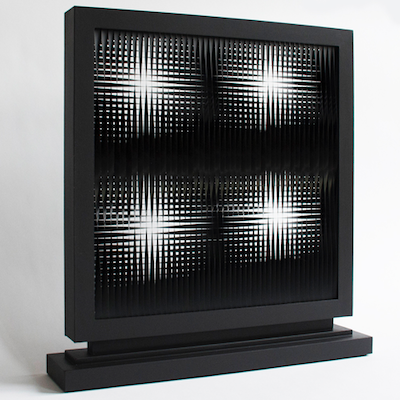
What is interactive art?
Interactive art is a form of art where the spectator is actively involved by the artist to achieve the artwork's purpose. This involvement can include allowing the visitor to walk around, in, or on the art installation, or even becoming a part of the artwork itself. Works in this category often feature computers, sensors, and interfaces that respond to various inputs such as meteorological changes, heat, motion, or other types of data programmed by the artist.