Sam Francis

Untitled, 1984

106.7 X 73 inch

« previous

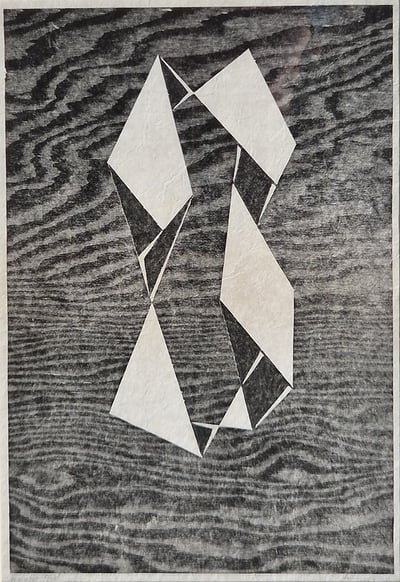
Astatic (Danilowitz 116)

next »

JHM-II

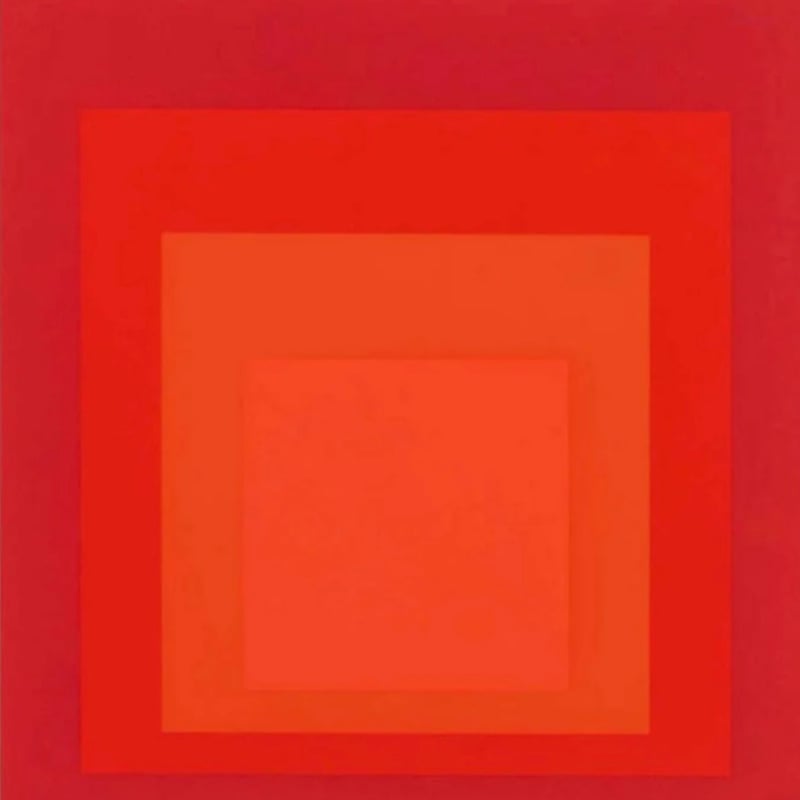
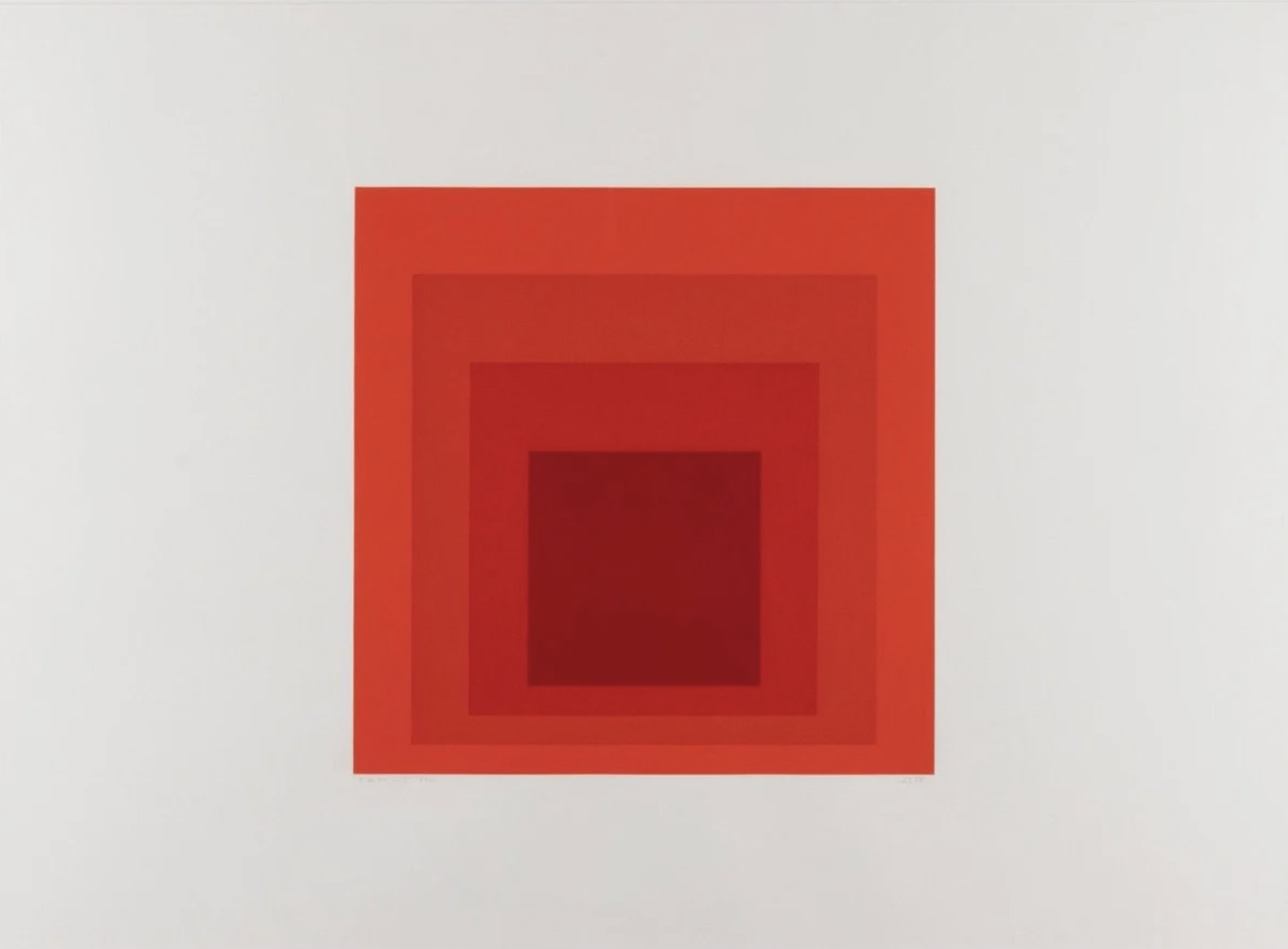
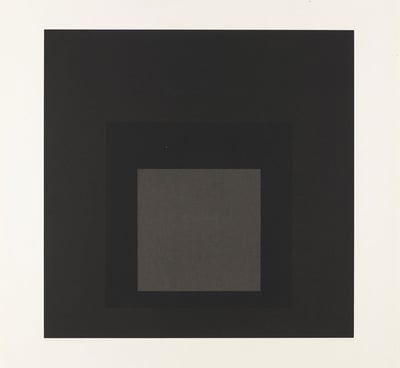
Josef Albers JHM-I screenprint with nested red squares on white background exploring optical color interaction.

From the Josef Albers Honors the Hirshhorn Museum and Sculpture Garden portfolio. Color Screenprint on German Etching paper. Signed, Dated and Numbered. Published by Ives-Sillman, Inc., New Haven and produced for HLK Ltd., Boston and Parasol Press, New York on behalf of the Hirshhorn Museum and Sculpture Garden, Washington, D.C. Cat. Raisonne: Danilowitz 2010, no. 224.1 JHM-I by Josef Albers, created in 1973, is a color screenprint from the Josef Albers Honors the Hirshhorn Museum and Sculpture Garden portfolio. Continuing his iconic Homage to the Square series, Albers arranges four nested squares in graduated red tones, from vibrant outer edges to a deep, saturated center. This minimalist composition investigates the optical effects of color interaction and spatial depth, central themes in Albers’ teaching and artistic practice. Printed on German Etching paper in an edition of 144, the work invites viewers to perceive subtle shifts in hue and intensity through precise visual structure.

Artwork Copyright © Josef Albers

JHM-I, 1973

form

Medium

Edition

From the Josef Albers Honors the Hirshhorn Museum and Sculpture Garden portfolio. Color Screenprint on German Etching paper. Signed, Dated and Numbered. Published by Ives-Sillman, Inc., New Haven and produced for HLK Ltd., Boston and Parasol Press, New York on behalf of the Hirshhorn Museum and Sculpture Garden, Washington, D.C. Cat. Raisonne: Danilowitz 2010, no. 224.1 JHM-I by Josef Albers, created in 1973, is a color screenprint from the Josef Albers Honors the Hirshhorn Museum and Sculpture Garden portfolio. Continuing his iconic Homage to the Square series, Albers arranges four nested squares in graduated red tones, from vibrant outer edges to a deep, saturated center. This minimalist composition investigates the optical effects of color interaction and spatial depth, central themes in Albers’ teaching and artistic practice. Printed on German Etching paper in an edition of 144, the work invites viewers to perceive subtle shifts in hue and intensity through precise visual structure.

Artwork Copyright © Josef Albers

Josef Albers

Astatic (Danilowitz 116), 1944

Limited Edition Print

Woodcut

USD 10,200
Josef Albers

JHM-I, 1973

Limited Edition Print

Screen-print

Inquire For Price
Josef Albers

JHM-II, 1973

Limited Edition Print

Screen-print

Inquire For Price
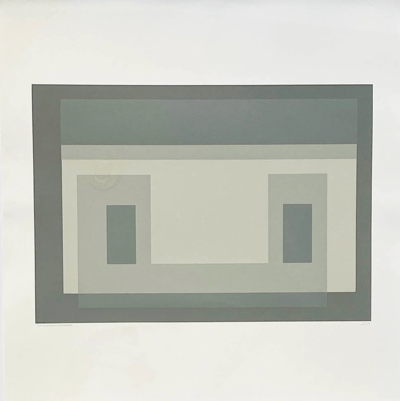
Josef Albers

Variants-III (from The Ten Variants Series), 1966

Limited Edition Print

Screen-print

Inquire For Price
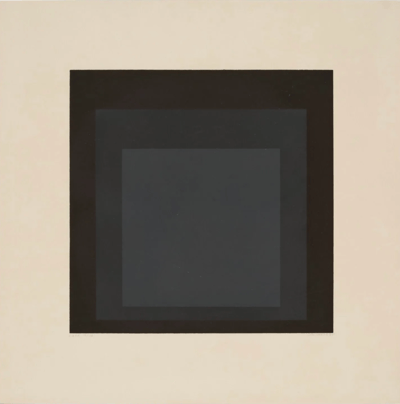
Josef Albers

Late, From Soft Edge-Hard Edge, 1965

Limited Edition Print

Screen-print

USD 10,000 - 15,000

Josef Albers

Midnight + Noon I, 1964

Limited Edition Print

Lithograph

USD 40,000 - 50,000

Josef Albers

Variants II, From Ten Variants, 1966

Limited Edition Print

Screen-print

USD 5,400

Josef Albers

Variants I, From Ten Variants, 1966

Limited Edition Print

Screen-print

USD 5,400

Josef Albers

Variants IV, From Ten Variants, 1966

Limited Edition Print

Screen-print

USD 5,400

Josef Albers

GB 2 (From Homage To The Square), 1969

Limited Edition Print

Screen-print

Currently Not Available
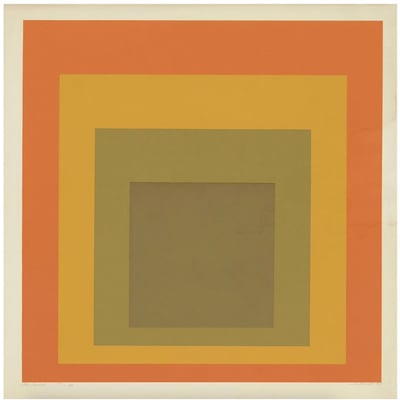
Josef Albers

Concord (From Dei Oberflache), 1965

Limited Edition Print

Screen-print

Currently Not Available
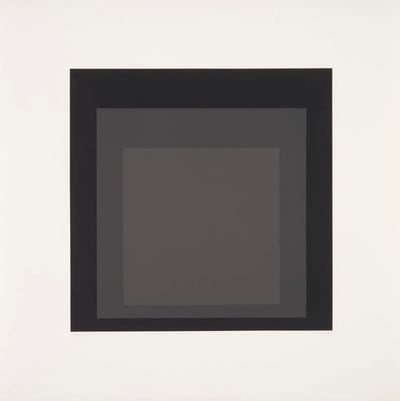
Josef Albers

Homage To The Square, 1970

Limited Edition Print

Screen-print

Currently Not Available
Stay Updated on Josef Albers

Subscribe to receive updates on new artworks, exhibitions and news about Josef Albers.

We respect your privacy and protect your information.

What is concrete art?

Concrete Art is an art movement founded by the Dutch artist Theo van Doesburg in the 1930s. The movement emphasizes pure abstraction, focusing on geometric shapes and colors without any reference to the natural world or symbolic meaning. Unlike other forms of abstract art, Concrete Art is entirely non-representational and is based on mathematical principles and precise execution. It aims to create universal, timeless works by using simple, clear forms that emphasize objectivity and clarity.

RECENTLY VIEWED

-->