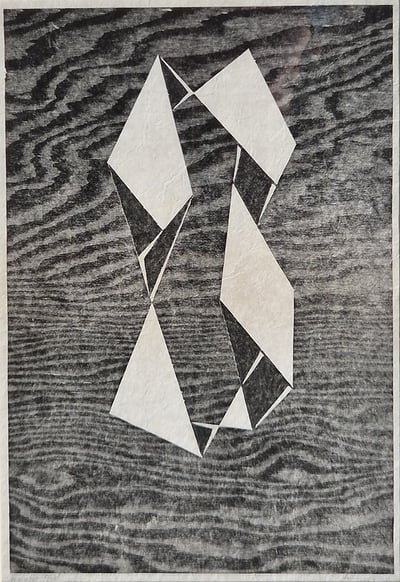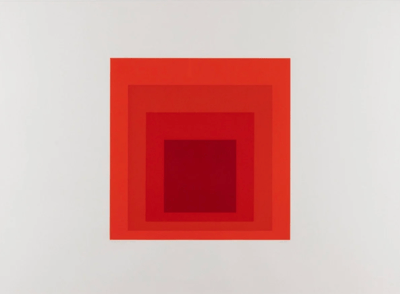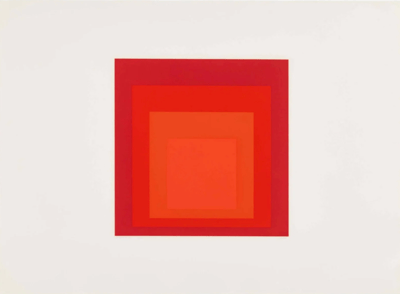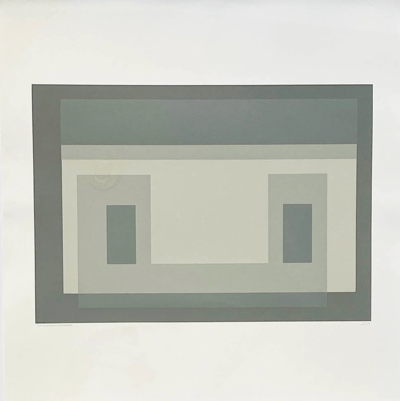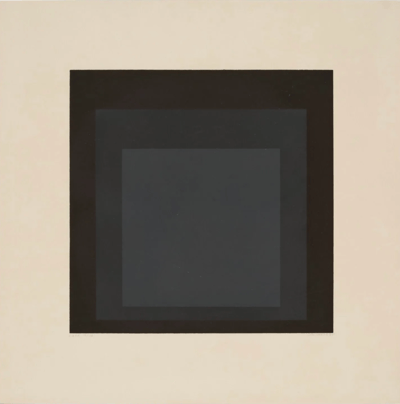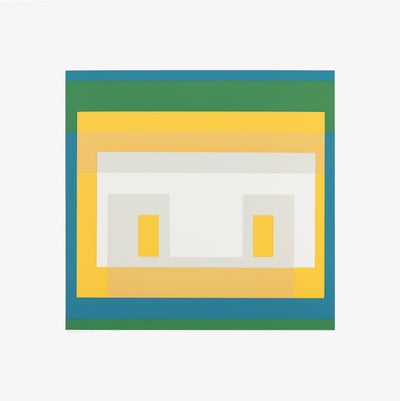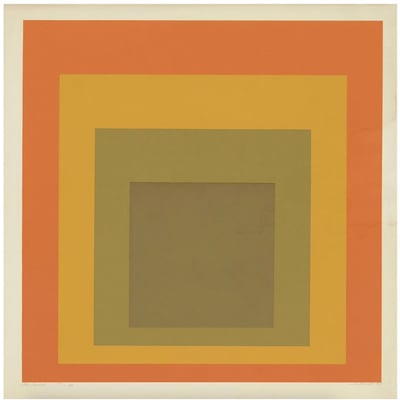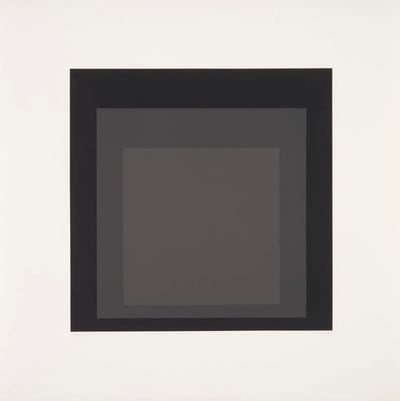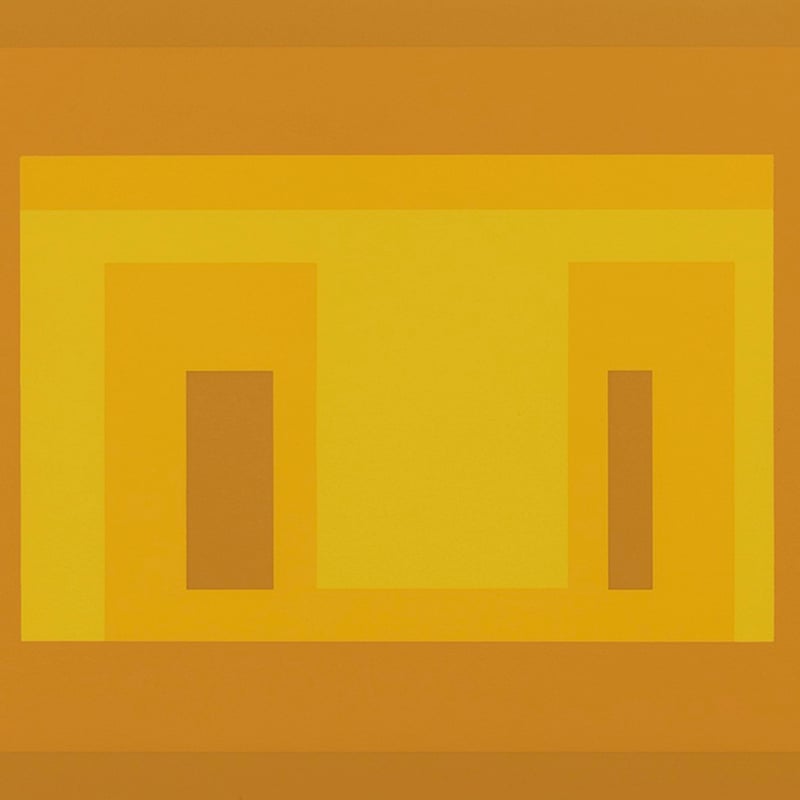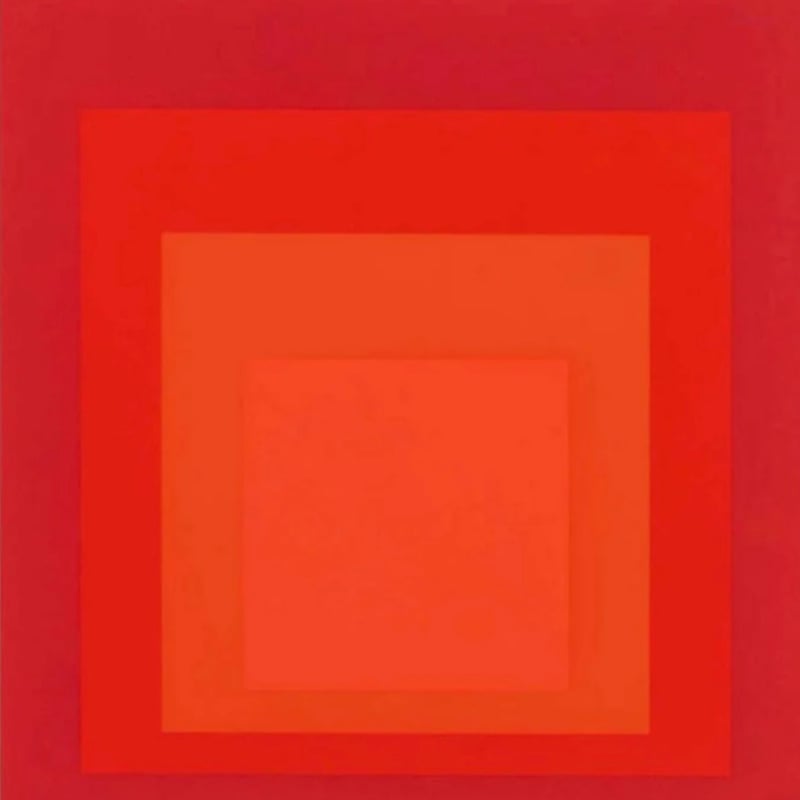
Edition of 150 - The complete set of six color screenprints on Arches in paper - Each pencil signed, dated and inscribed sequentially 'I-S Va 1' through 'I-S Va 6’ - In mint condition
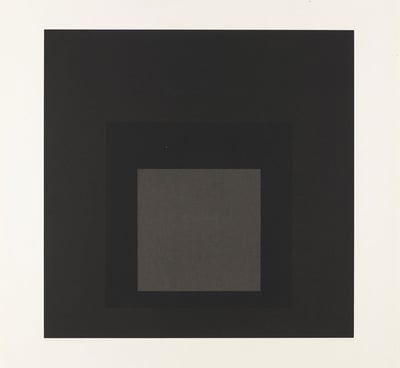
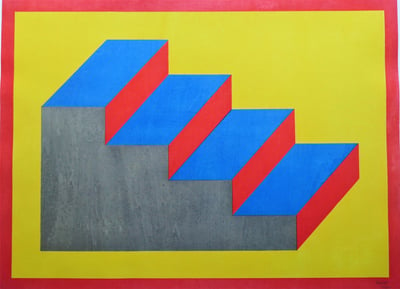
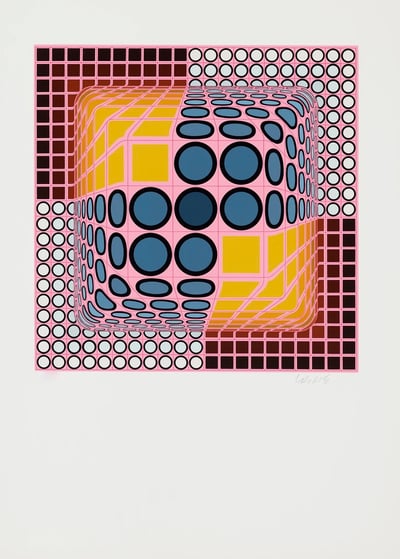
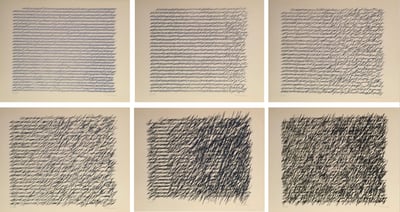
Josef Albers' Six Variants, created in 1969, is a series of six screen prints that reflect the artist’s exploration of color theory and spatial relationships. Each print presents layered, overlapping rectangles in distinct color schemes, with shades that range from warm oranges and yellows to cool blues and greens. The compositions vary subtly in each piece, creating shifts in perception and depth as the viewer examines the interaction between color blocks. Albers’ meticulous approach to color and form in this series allows for a study in how colors influence each other, inviting contemplation of visual harmony and contrast. This complete set of six prints, limited to an edition of 150, is pencil signed, dated, and sequentially inscribed by Albers, embodying his iconic abstract style and deep understanding of color dynamics.
Josef Albers (Germany/USA, 1888–1976) was a groundbreaking artist, designer, and educator central to the Bauhaus movement and modern art. Known for his Homage to the Square series, he explored color theory and perception. Albers’ teachings and writings, like Interaction of Color, have profoundly influenced contemporary art and design education.
Screen-printScreen printing is a technique where ink is transferred through a mesh onto a substrate, with areas blocked by a stencil to prevent ink from passing through. This method, also known as serigraphy or silkscreen printing, is commonly used to produce prints on posters, T-shirts, vinyl, stickers, wood, and other materials. The process is a type of stencil printing, allowing for vibrant, detailed designs on various surfaces.
Edition of 150 - The complete set of six color screenprints on Arches in paper - Each pencil signed, dated and inscribed sequentially 'I-S Va 1' through 'I-S Va 6’ - In mint condition
Josef Albers' Six Variants, created in 1969, is a series of six screen prints that reflect the artist’s exploration of color theory and spatial relationships. Each print presents layered, overlapping rectangles in distinct color schemes, with shades that range from warm oranges and yellows to cool blues and greens. The compositions vary subtly in each piece, creating shifts in perception and depth as the viewer examines the interaction between color blocks. Albers’ meticulous approach to color and form in this series allows for a study in how colors influence each other, inviting contemplation of visual harmony and contrast. This complete set of six prints, limited to an edition of 150, is pencil signed, dated, and sequentially inscribed by Albers, embodying his iconic abstract style and deep understanding of color dynamics.
Josef Albers (Germany/USA, 1888–1976) was a groundbreaking artist, designer, and educator central to the Bauhaus movement and modern art. Known for his Homage to the Square series, he explored color theory and perception. Albers’ teachings and writings, like Interaction of Color, have profoundly influenced contemporary art and design education.
Abstraction is real, probably more real than nature.
- Josef Albers
Often cited as one of the founders of minimalist and conceptual art, Josef Albers is widely acclaimed for his theoretical teachings on art and his interplay between shape and colour. Among his most recognised works, Homage to the Square is a series which spanned across the 50’s and the 60’s, and features a range of rigid, geometric productions applied to canvas, all of which were offset by whichever colour palette he had chosen to adopt – the combination of the geometry and colour creates various optical effects, for which Albers has become renowned. Albers has stated ‘abstraction is real, probably more real than nature’ - his work is an attempt to portray this philosophy, and he challenges the viewer to analyse their own perspective with each piece; Structural Constellations is perhaps is most celebrated work of this kind, a subtle piece composed of simple lines that combine to create illusory forms. (Artist website)
Abstract art uses form, shape, line, and color to create a visual experience without attempting to represent external reality. The composition exists independently of the world's visual references, focusing on expressing ideas and emotions through non-representational means.