Details
Artist
Styles
Screenprint in colors, on Rives BFK paper - Signed, Titled, Dated and Numbered - Published by Ives-Sillman, Inc., New Haven (with their blindstamp) // Josef Albers's Variants IV, from Ten Variants (1966) is a screen print that exemplifies his mastery in exploring color relationships and geometric abstraction. This piece, printed on Rives BFK paper, features a structured composition of nested rectangles in various shades of blue, gray, and black. The use of precise shapes and tonal gradation creates a sense of depth and dimensionality, making the flat image appear almost three-dimensional. Albers's approach focuses on the interaction of colors and their effect on perception, inviting the viewer to engage with the visual shifts and optical illusions created by the overlapping forms. This limited edition print, signed, titled, dated, and numbered, was published by Ives-Sillman, Inc. and bears their blindstamp, reflecting the artist's dedication to precision and form.
Variants IV, from Ten Variants, 1966
form
Medium
Size
43.2 x 43.2 cm
- Inches
- Centimeters
Edition
Price
- USD
- EUR
- GBP
Details
Artist
Styles
Screenprint in colors, on Rives BFK paper - Signed, Titled, Dated and Numbered - Published by Ives-Sillman, Inc., New Haven (with their blindstamp) // Josef Albers's Variants IV, from Ten Variants (1966) is a screen print that exemplifies his mastery in exploring color relationships and geometric abstraction. This piece, printed on Rives BFK paper, features a structured composition of nested rectangles in various shades of blue, gray, and black. The use of precise shapes and tonal gradation creates a sense of depth and dimensionality, making the flat image appear almost three-dimensional. Albers's approach focuses on the interaction of colors and their effect on perception, inviting the viewer to engage with the visual shifts and optical illusions created by the overlapping forms. This limited edition print, signed, titled, dated, and numbered, was published by Ives-Sillman, Inc. and bears their blindstamp, reflecting the artist's dedication to precision and form.
- Recently Added
- Price (low-high )
- Price (high-low )
- Year (low-high )
- Year (high-low )
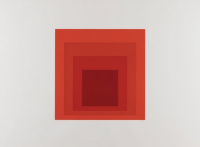
Josef Albers
JHM-I, 1973
Limited Edition Print
Screen-print
Inquire For Price
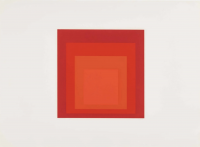
Josef Albers
JHM-II, 1973
Limited Edition Print
Screen-print
Inquire For Price
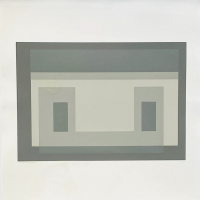
Josef Albers
Variants-III (from The Ten Variants Series), 1966
Limited Edition Print
Screen-print
Inquire For Price
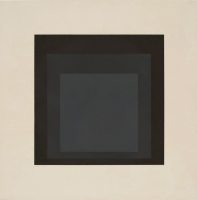
Josef Albers
Late, From Soft Edge-Hard Edge, 1965
Limited Edition Print
Screen-print
USD 10,000 - 15,000

Josef Albers
Midnight + Noon I, 1964
Limited Edition Print
Lithograph
USD 40,000 - 50,000
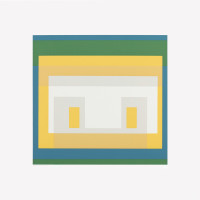
Josef Albers
Variants II, From Ten Variants, 1966
Limited Edition Print
Screen-print
USD 5,400
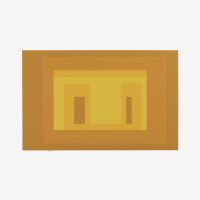
Josef Albers
Variants I, From Ten Variants, 1966
Limited Edition Print
Screen-print
USD 5,400

Josef Albers
Variants IV, From Ten Variants, 1966
Limited Edition Print
Screen-print
USD 5,400

Josef Albers
GB 2 (From Homage To The Square), 1969
Limited Edition Print
Screen-print
Currently Not Available

Josef Albers
Concord (From Dei Oberflache), 1965
Limited Edition Print
Screen-print
Currently Not Available

Josef Albers
Homage To The Square, 1970
Limited Edition Print
Screen-print
Currently Not Available
Related Artists


Related Articles
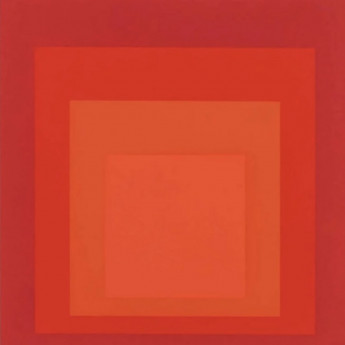
Popular, Artists - January 27, 2025
Josef Albers: Master of Color Interaction and Perception
Explore Josef Albers' groundbreaking work in color theory and perception. Discover how 'Homage to the Square' redefined art and continues to inspire today. Read More


What is minimalism?
Minimalism is a style in music and visual arts characterized by pared-down designs and simplicity. It began in Western art after World War II, gaining prominence particularly in American visual arts. Minimalism draws heavily on aspects of modernism and is often viewed as a reaction against Abstract Expressionism, as well as a precursor to post-minimal art practices. Prominent minimalist artists include Agnes Martin, Donald Judd, Robert Morris, Frank Stella, and Dan Flavin.