Details
Artist
Styles
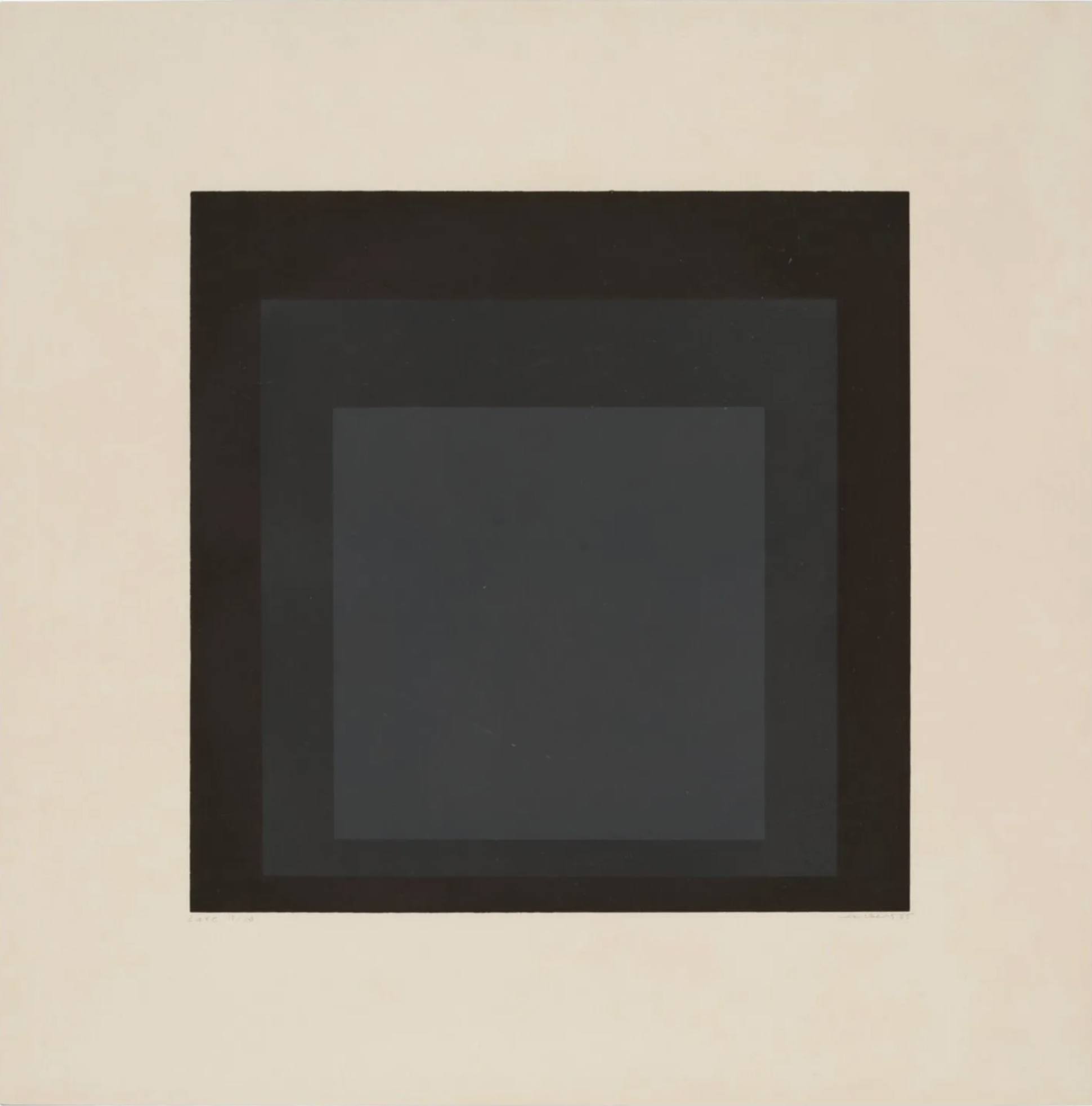
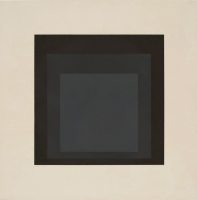
Color Screenprint. Signed, Numbered, and Dated. Late (1965) by Josef Albers is a striking example from his Soft Edge-Hard Edge series, exploring the relationship between color, shape, and perception. This 11-inch square screenprint features concentric squares in subtly shifting tones of black and deep gray, anchored on a cream background. Albers’ precise geometry and the optical effect of nested squares demonstrate his ongoing interest in how color interacts within defined spatial structures. This minimalist composition is both meditative and methodical, reflecting his Bauhaus roots and his influential role in color theory.
Late, from Soft Edge-Hard Edge, 1965
form
Medium
Size
27.9 x 27.9 cm
- Inches
- Centimeters
Edition
Range
- USD
- EUR
- GBP
Details
Artist
Styles
Color Screenprint. Signed, Numbered, and Dated. Late (1965) by Josef Albers is a striking example from his Soft Edge-Hard Edge series, exploring the relationship between color, shape, and perception. This 11-inch square screenprint features concentric squares in subtly shifting tones of black and deep gray, anchored on a cream background. Albers’ precise geometry and the optical effect of nested squares demonstrate his ongoing interest in how color interacts within defined spatial structures. This minimalist composition is both meditative and methodical, reflecting his Bauhaus roots and his influential role in color theory.
- Recently Added
- Price (low-high )
- Price (high-low )
- Year (low-high )
- Year (high-low )
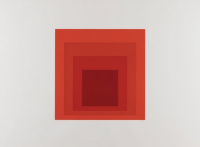
Josef Albers
JHM-I, 1973
Limited Edition Print
Screen-print
Inquire For Price
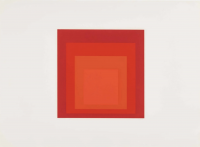
Josef Albers
JHM-II, 1973
Limited Edition Print
Screen-print
Inquire For Price
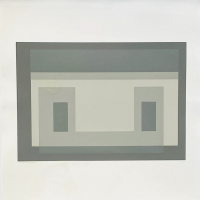
Josef Albers
Variants-III (from The Ten Variants Series), 1966
Limited Edition Print
Screen-print
Inquire For Price
Josef Albers
Late, From Soft Edge-Hard Edge, 1965
Limited Edition Print
Screen-print
USD 10,000 - 15,000

Josef Albers
Midnight + Noon I, 1964
Limited Edition Print
Lithograph
USD 40,000 - 50,000
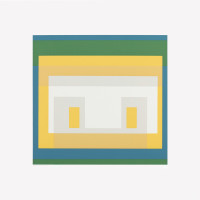
Josef Albers
Variants II, From Ten Variants, 1966
Limited Edition Print
Screen-print
USD 5,400
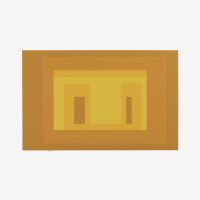
Josef Albers
Variants I, From Ten Variants, 1966
Limited Edition Print
Screen-print
USD 5,400

Josef Albers
Variants IV, From Ten Variants, 1966
Limited Edition Print
Screen-print
USD 5,400

Josef Albers
GB 2 (From Homage To The Square), 1969
Limited Edition Print
Screen-print
Currently Not Available

Josef Albers
Concord (From Dei Oberflache), 1965
Limited Edition Print
Screen-print
Currently Not Available

Josef Albers
Homage To The Square, 1970
Limited Edition Print
Screen-print
Currently Not Available
Related Artists


Related Articles
Popular, Artists - January 27, 2025
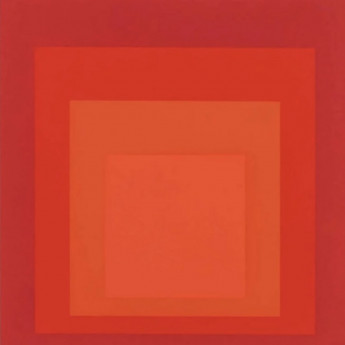
Josef Albers: Master of Color Interaction and Perception
Explore Josef Albers' groundbreaking work in color theory and perception. Discover how 'Homage to the Square' redefined art and continues to inspire today. Read More

What is Bauhaus?
Bauhaus was a school of art, design and architecture established in Weimar, Germany. Architect Wlater Gropius established it in 1919. Bauhaus used a method for teaching within a community of artists working together and incorporating art in the fundamentals of daily life.