Details
Artist
Styles
Silkscreen on plexiglas. Incised with artist's signature and stamped Editions Denise René, 1967. 11½ by 16? by 3¼ in. (29.2 by 42.9 by 8.3 cm.) Executed in 1967, from an edition of 100. Published by Galerie Denise René. // Vibrations by Rafael Jesus Soto is an acrylic sculpture created in 1967, known for its optical and kinetic effects. This artwork utilizes silkscreen on plexiglass, intricately layering lines and geometric forms to produce a sense of movement and dynamic vibration. Soto’s innovative use of parallel lines and intersecting angles creates a rhythmic visual experience, encouraging viewers to explore perception and depth. The piece measures 29.2 x 42.9 x 8.3 cm and is part of an edition of 100, published by the renowned Galerie Denise René, a key supporter of kinetic and op art. The incised signature and stamp authenticate its place within Soto's exploration of optical illusions and viewer interaction.
Details
Artist
Styles
Silkscreen on plexiglas. Incised with artist's signature and stamped Editions Denise René, 1967. 11½ by 16? by 3¼ in. (29.2 by 42.9 by 8.3 cm.) Executed in 1967, from an edition of 100. Published by Galerie Denise René. // Vibrations by Rafael Jesus Soto is an acrylic sculpture created in 1967, known for its optical and kinetic effects. This artwork utilizes silkscreen on plexiglass, intricately layering lines and geometric forms to produce a sense of movement and dynamic vibration. Soto’s innovative use of parallel lines and intersecting angles creates a rhythmic visual experience, encouraging viewers to explore perception and depth. The piece measures 29.2 x 42.9 x 8.3 cm and is part of an edition of 100, published by the renowned Galerie Denise René, a key supporter of kinetic and op art. The incised signature and stamp authenticate its place within Soto's exploration of optical illusions and viewer interaction.
- Recently Added
- Price (low-high )
- Price (high-low )
- Year (low-high )
- Year (high-low )

Rafael Jesus Soto
Óvalo En El Rojo, 1979
Sculpture / Object
Mixed Media
USD 8,950

Rafael Jesus Soto
Sans Titre, 2001
Sculpture / Object
Acrylic Sculpture
EUR 2,800

Rafael Jesus Soto
Permutation, 1955-1978
Sculpture / Object
Object
EUR 5,500

Rafael Jesus Soto
Permutacion, 1979
Sculpture / Object
Mixed Media
USD 8,950

Rafael Jesus Soto
La Escalera Azul , 1979
Sculpture / Object
Mixed Media
USD 8,950

Rafael Jesus Soto
Cuadrado Y Curvas Virtuales, 1979
Sculpture / Object
Mixed Media
USD 8,950

Rafael Jesus Soto
Mirroire, 2005
Sculpture / Object
Glass
EUR 10,000
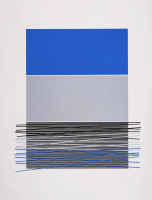
Rafael Jesus Soto
Untitled (Blue Horizon Lines), 1976
Limited Edition Print
Screen-print
USD 1,850

Rafael Jesus Soto
Untitled (circles And Lines), 1970
Limited Edition Print
Screen-print
EUR 3,700

Rafael Jesus Soto
Composición, 1971
Limited Edition Print
Silkscreen
EUR 3,100

Rafael Jesus Soto
Escritura, 1979
Sculpture / Object
Mixed Media
USD 8,950

Rafael Jesus Soto
Sotomagie II, 1967
Sculpture / Object
Mixed Media
USD 8,950

Rafael Jesus Soto
Caroni, 1971
Limited Edition Print
Silkscreen
EUR 1,270

Rafael Jesus Soto
Untitled (Silver Lines)
Limited Edition Print
Screen-print
GBP 2,800

Rafael Jesus Soto
Homage To Federico Garcia Lorca, 1999
Limited Edition Print
Silkscreen
EUR 800

Rafael Jesus Soto
Vibrations, 1967
Sculpture / Object
Acrylic Sculpture
Inquire For Price

Rafael Jesus Soto
Espiral Doble, 1979
Sculpture / Object
Mixed Media
USD 8,950

Rafael Jesus Soto
Dos Cuadraditos, 1972
Sculpture / Object
Object
Currently Not Available

Rafael Jesus Soto
Spiral, 1955-83
Limited Edition Print
Silkscreen
Currently Not Available

Rafael Jesus Soto
Cube With Ambiguous Space , 1981
Sculpture / Object
Object
Currently Not Available
Related Artists


Related Articles

Collecting - March 25, 2025
Understanding Editioned Sculptures: What Collectors Need to Know
Explore the value of editioned sculptures, from bronze to electric art. Learn how edition size, material, and artist impact collectability. Read More

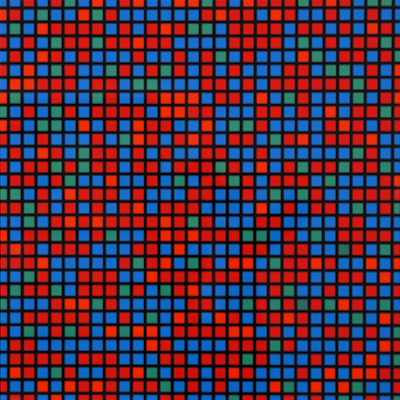
What is geometric abstract art?
Geometric abstraction is a form of abstract art that uses geometric shapes arranged in a non-illusionistic space (though not always) and combined into non-representational (non-objective) compositions. Based on years of artistic research, some artists have proposed that geometric abstraction offers a solution to modern challenges by rejecting traditional illusionistic practices in favor of clarity and simplicity.