Details
Artist
Styles
From Síntesis Series - Shadow box construction with screen-printed Plexiglas and chromed aluminum metal bars - Signed and numbered on a label affixed to the reverse // Rafael Jesus Soto's Escritura is a captivating mixed-media sculpture that uses the interplay of lines, transparency, and shadow to create a sense of movement and spatial depth. Part of the Síntesis series, the artwork consists of screen-printed Plexiglas panels, with chromed aluminum metal bars creating a layered effect that manipulates light and visual perception. The abstract lines across the panels resemble flowing calligraphy or dynamic writing, hence the title Escritura (Writing). The combination of precise geometry with optical illusions is central to Soto’s work, encouraging viewers to engage with the piece from multiple angles. As light and perspective shift, the static lines seem to vibrate or oscillate, evoking a sense of motion. Signed and numbered on a label affixed to the reverse, Escritura reflects Soto’s mastery in kinetic and optical art, where visual perception becomes an active experience.
Escritura, 1979
form
Medium
Size
30 x 70 X 9 cm
- Inches
- Centimeters
Edition
Price
- USD
- EUR
- GBP
Details
Artist
Styles
From Síntesis Series - Shadow box construction with screen-printed Plexiglas and chromed aluminum metal bars - Signed and numbered on a label affixed to the reverse // Rafael Jesus Soto's Escritura is a captivating mixed-media sculpture that uses the interplay of lines, transparency, and shadow to create a sense of movement and spatial depth. Part of the Síntesis series, the artwork consists of screen-printed Plexiglas panels, with chromed aluminum metal bars creating a layered effect that manipulates light and visual perception. The abstract lines across the panels resemble flowing calligraphy or dynamic writing, hence the title Escritura (Writing). The combination of precise geometry with optical illusions is central to Soto’s work, encouraging viewers to engage with the piece from multiple angles. As light and perspective shift, the static lines seem to vibrate or oscillate, evoking a sense of motion. Signed and numbered on a label affixed to the reverse, Escritura reflects Soto’s mastery in kinetic and optical art, where visual perception becomes an active experience.
- Recently Added
- Price (low-high )
- Price (high-low )
- Year (low-high )
- Year (high-low )

Rafael Jesus Soto
Óvalo En El Rojo, 1979
Sculpture / Object
Mixed Media
USD 8,950

Rafael Jesus Soto
Sans Titre, 2001
Sculpture / Object
Acrylic Sculpture
EUR 2,800

Rafael Jesus Soto
Permutation, 1955-1978
Sculpture / Object
Object
EUR 5,500

Rafael Jesus Soto
Permutacion, 1979
Sculpture / Object
Mixed Media
USD 8,950

Rafael Jesus Soto
La Escalera Azul , 1979
Sculpture / Object
Mixed Media
USD 8,950

Rafael Jesus Soto
Cuadrado Y Curvas Virtuales, 1979
Sculpture / Object
Mixed Media
USD 8,950

Rafael Jesus Soto
Mirroire, 2005
Sculpture / Object
Glass
EUR 10,000
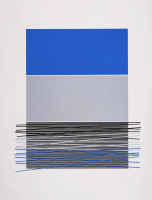
Rafael Jesus Soto
Untitled (Blue Horizon Lines), 1976
Limited Edition Print
Screen-print
USD 1,850

Rafael Jesus Soto
Untitled (circles And Lines), 1970
Limited Edition Print
Screen-print
EUR 3,700

Rafael Jesus Soto
Composición, 1971
Limited Edition Print
Silkscreen
EUR 3,100

Rafael Jesus Soto
Escritura, 1979
Sculpture / Object
Mixed Media
USD 8,950

Rafael Jesus Soto
Sotomagie II, 1967
Sculpture / Object
Mixed Media
USD 8,950

Rafael Jesus Soto
Caroni, 1971
Limited Edition Print
Silkscreen
EUR 1,270

Rafael Jesus Soto
Untitled (Silver Lines)
Limited Edition Print
Screen-print
GBP 2,800

Rafael Jesus Soto
Homage To Federico Garcia Lorca, 1999
Limited Edition Print
Silkscreen
EUR 800

Rafael Jesus Soto
Vibrations, 1967
Sculpture / Object
Acrylic Sculpture
Inquire For Price

Rafael Jesus Soto
Espiral Doble, 1979
Sculpture / Object
Mixed Media
USD 8,950

Rafael Jesus Soto
Dos Cuadraditos, 1972
Sculpture / Object
Object
Currently Not Available

Rafael Jesus Soto
Spiral, 1955-83
Limited Edition Print
Silkscreen
Currently Not Available

Rafael Jesus Soto
Cube With Ambiguous Space , 1981
Sculpture / Object
Object
Currently Not Available
Related Artists


Related Articles

Collecting - March 25, 2025
Understanding Editioned Sculptures: What Collectors Need to Know
Explore the value of editioned sculptures, from bronze to electric art. Learn how edition size, material, and artist impact collectability. Read More
What is the Zero Movement?
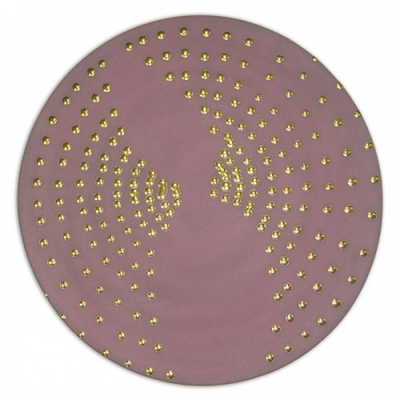
ZERO was an art movement founded by Otto Piene and Heinz Mack, aiming to develop into a large international and cross-border movement. The name ZERO originated from a magazine founded by Heinz Mack in 1957, which became a platform for the group's ideas. The magazine was published for several years before ceasing in 1967. The ZERO movement sought to create a new beginning in art, emphasizing light, space, and movement, and became influential in post-war European art.