Details
Artist
Styles
Bronze sculpture, signed and numbered by the artist // Candélabre africain by Arman Fernandez, created in 2003, is a sculptural piece in bronze that takes the form of an abstracted, organic candelabrum. With curving branches and leaf-like structures, the piece suggests both natural forms and traditional African aesthetics, merging cultural references with Arman’s unique approach to form and material. The smooth, polished surfaces of the bronze give the piece a luxurious sheen, enhancing its presence as a functional yet artistic object. Measuring 44 x 36 x 20 cm, this limited edition of 99 sculptures is signed and numbered by the artist, exemplifying Arman’s exploration of everyday objects transformed into art with expressive, dynamic forms.
Candélabre africain, 2003
form
Medium
Size
44 x 36 X 20 cm
- Inches
- Centimeters
Edition
Price
- USD
- EUR
- GBP
Details
Artist
Styles
Bronze sculpture, signed and numbered by the artist // Candélabre africain by Arman Fernandez, created in 2003, is a sculptural piece in bronze that takes the form of an abstracted, organic candelabrum. With curving branches and leaf-like structures, the piece suggests both natural forms and traditional African aesthetics, merging cultural references with Arman’s unique approach to form and material. The smooth, polished surfaces of the bronze give the piece a luxurious sheen, enhancing its presence as a functional yet artistic object. Measuring 44 x 36 x 20 cm, this limited edition of 99 sculptures is signed and numbered by the artist, exemplifying Arman’s exploration of everyday objects transformed into art with expressive, dynamic forms.
- Recently Added
- Price (low-high )
- Price (high-low )
- Year (low-high )
- Year (high-low )

Fernandez Arman
Venus Hairspray, 1996
Sculpture / Object
Bronze
USD 28,000

Fernandez Arman
Trompettes Découpées, 1989
Sculpture / Object
Bronze
EUR 9,500

Fernandez Arman
What Happened To The Flowers - Homage To Warhol
Sculpture / Object
Mixed Media
USD 45,000 - 50,000

Fernandez Arman
Candy, 1970
Sculpture / Object
Assemblage
EUR 14,850

Fernandez Arman
Violin, 1999
Sculpture / Object
Bronze
EUR 25,000 - 35,000

Fernandez Arman
Violon Spiralé, 2001-2002
Sculpture / Object
Bronze
EUR 17,000 - 20,000

Fernandez Arman
Paintbrushes, 1990
Sculpture / Object
Assemblage
EUR 14,500

Fernandez Arman
Plate, 1992
Sculpture / Object
Plate
EUR 570
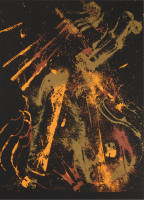
Fernandez Arman
Romanticism In Gold, 1978
Limited Edition Print
Screen-print
Inquire For Price
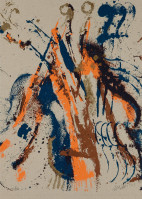
Fernandez Arman
Grey Mood Variation, 1977
Limited Edition Print
Screen-print
Inquire For Price

Fernandez Arman
Aesculapius Hammer, 1977
Limited Edition Print
Lithograph
EUR 640

Fernandez Arman
Hypored, 1977
Limited Edition Print
Lithograph
EUR 640

Fernandez Arman
Inside Story, 1977
Limited Edition Print
Lithograph
EUR 640

Fernandez Arman
Rien Ne Bat Plus, 1977
Limited Edition Print
Lithograph
EUR 640
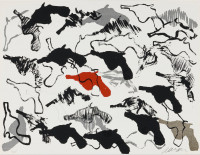
Fernandez Arman
Boom Boom, 1966
Limited Edition Print
Screen-print
Inquire For Price

Fernandez Arman
Shortened Trip
Sculpture / Object
Mixed Media
USD 4,550

Fernandez Arman
Untitled (Allegro Vivaldi), 1978
Limited Edition Print
Silkscreen
EUR 1,290

Fernandez Arman
Gothic, 1977
Limited Edition Print
Lithograph
Inquire For Price

Fernandez Arman
Passe Temps, 1971
Limited Edition Print
Mixed Media
EUR 4,000

Fernandez Arman
Red Tubes, 1980
Painting
Mixed Media
EUR 34,000

Fernandez Arman
Candélabre Africain, 2003
Sculpture / Object
Bronze
EUR 6,000

Fernandez Arman
Colere De Paganini / Paganini's Anger, 2004
Sculpture / Object
Mixed Media
EUR 14,500

Fernandez Arman
Cavaquinho, 2002
Sculpture / Object
Metal
EUR 5,970

Fernandez Arman
Accumulation, Tee, 1994
Sculpture / Object
Assemblage
Currently Not Available

Fernandez Arman
Venus Au Violon, 1991
Sculpture / Object
Bronze
Currently Not Available
Related Artists


Related Articles

Popular, Art Movements - January 24, 2025
Exploring Dadaism: Art in the Absurd
Discover Dadaism, the radical 20th-century art movement that challenged norms with absurdity and defiance. Explore its origins, techniques, and lasting legacy. Read More

What is Nouveau Realism?
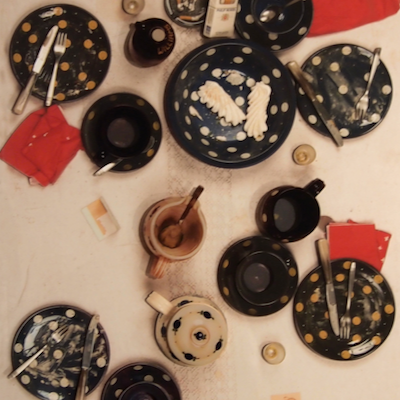
Nouveau Réalisme is an artistic movement founded in 1960 by art critic Pierre Restany and painter Yves Klein during a collective exhibition at a gallery in Milan. Restany wrote the original manifesto in April 1960, proclaiming the movement. In October of that year, nine artists, including Martial Raysse, Yves Klein, Daniel Spoerri, Jean Tinguely, Arman, Pierre Restany, and three Ultra-Lettrists—Jacques de la Villeglé, François Dufrêne, and Raymond Hains—signed the declaration. In 1961, the movement expanded to include Mimmo Rotella, Niki de Saint Phalle, Gérard Deschamps, and César. The movement emphasized a return to reality in art, often incorporating everyday objects and exploring the boundaries between art and life.