France
Contemporary Art in France is a testament to the country's rich artistic heritage and its innovative spirit. French artists, such as Pierre Soulages and Yves Klein, have made significant contributions to the global art scene, creating works that span various mediums and explore themes from societal issues to personal experiences. Paris, the heart of France's art scene, is home to numerous galleries and museums, including the Centre Pompidou, which houses Europe's largest collection of modern and contemporary art. French contemporary art, thus, serves as a powerful platform for dialogue and expression, pushing boundaries and challenging conventions.
Notable Artists from france

From Nouveau Réalisme to today
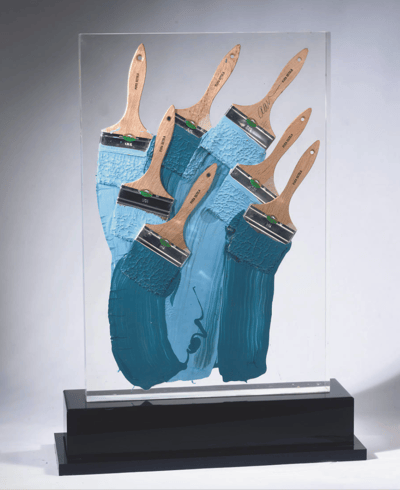
Post-war France produced several movements that still anchor the collecting field. Nouveau Réalisme, launched in 1960 around the critic Pierre Restany, brought together Yves Klein, Arman, César and Niki de Saint Phalle — artists who worked with real objects, accumulation, compression and pure pigment rather than conventional painting. Klein's patented ultramarine, International Klein Blue, remains one of the most recognisable signatures in modern art.
"Blue has no dimensions, it is beyond dimensions."
Yves Klein
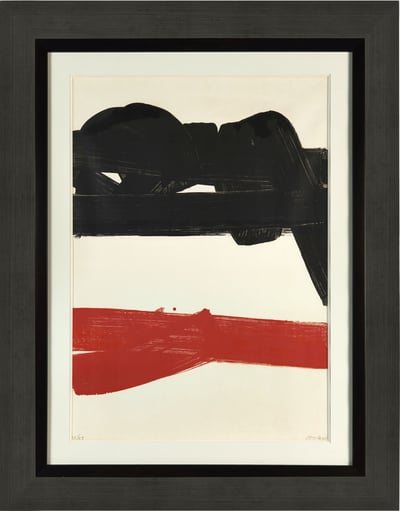
Alongside them, Pierre Soulages built a seven-decade career on black — his late Outrenoir paintings, begun in 1979, treat black paint as a surface for reflecting light rather than absorbing it. The 1970s brought Supports/Surfaces, a group including Claude Viallat and Daniel Dezeuze who deconstructed painting into stretcher, canvas and repeated motif; the 1980s answered with the brash, comic-inflected Figuration Libre of Robert Combas and Hervé Di Rosa. More recently, French artists such as JR and Invader have carried street-born practices into museums and the international market.
Where the market lives now
Paris has regained real momentum as a market capital over the past decade. The Fondation Louis Vuitton opened in 2014, the Bourse de Commerce — Pinault Collection followed in 2021, and Art Basel's Paris fair, launched in 2022, confirmed the city's renewed pull for international galleries and collectors. Major dealers have opened or expanded Paris spaces, and the auction houses maintain significant salerooms there.
For collectors, this matters in practical terms. French post-war names with strong institutional backing — Soulages, Klein, César, Niki de Saint Phalle, Martial Raysse — have deep auction records that make pricing relatively transparent. Mid-career and emerging French artists are often more affordably priced than their equivalents in London or New York, partly because the French gallery system historically supported artists over long careers rather than pushing rapid price escalation. That can make France a rewarding hunting ground: look for artists with consistent gallery representation, museum acquisitions (the Centre Pompidou and the regional FRAC collections are useful signals), and a coherent body of work rather than a single fashionable series.
Droit de suite: a French invention
France created the artist's resale right — the droit de suite — in 1920, and it remains a defining feature of buying and selling art with a French connection. When a work is resold through an art-market professional in France (or elsewhere in the EU and the UK), a royalty on the resale price is owed to the artist or, for seventy years after death, to their heirs. It is calculated on a sliding scale starting at 4% and is capped at €12,500 per sale. In France the royalty is typically collected by ADAGP, the visual artists' rights society. Factor it into your costs when reselling: auction houses and dealers will state who bears the charge, and it applies to living French artists and recently deceased ones alike.
Paperwork, authenticity and export
France has an unusually formalised authentication culture. For many modern and post-war French artists, the recognised authority is a catalogue raisonné committee or the artist's estate — often organised through the comité system. Before buying a significant secondary-market work, check whether it appears in the catalogue raisonné or carries a certificate from the relevant committee; works lacking that documentation can be difficult to resell regardless of how convincing they look. For editions and prints, expect a justification of the edition (numbering such as 12/50, plus artist's proofs marked EA or HC) and, ideally, a publisher's or gallery invoice tracing the work back to source.
Export is rarely an obstacle for contemporary work: French export certificates are generally only required for cultural goods over fifty years old that exceed set value thresholds. But if you are buying older post-war material — a 1960s Nouveau Réaliste piece, for instance — confirm with the seller that the export paperwork, sometimes called the passport, is in order before the work travels.
What to watch for
The strength of the big French names attracts imitations, particularly of highly reproducible signatures such as Klein blue monochromes and César compressions. Buy from established galleries or auction houses, insist on a documented provenance chain, and treat any bargain-priced work by a blue-chip French artist with healthy suspicion. Solid paperwork protects value as much as condition does.
Artworks Related to France

Mr. Brainwash
Everyday Life, 2025
Limited Edition Print
Mixed Media
EUR 23,500

Invader
Still Life with Pocari Can, 2014
Limited Edition Print
Screen-print
Inquire For Price

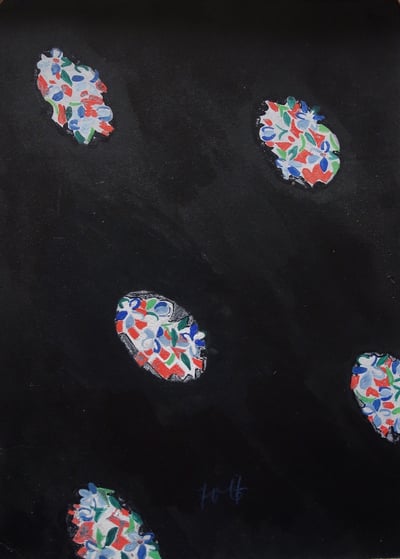
Sonia Delaunay
Diagonal X, 1975
Limited Edition Print
Lithograph
Inquire For Price

Marc Chagall
The Concert, 1957
Limited Edition Print
Lithograph
Inquire For Price

Marc Chagall
Plate 26, from Psalms of David, 1980
Limited Edition Print
Etching and Aquatint
Inquire For Price

Sonia Delaunay
Arlequin (Harlequin), 1974
Limited Edition Print
Lithograph
Inquire For Price
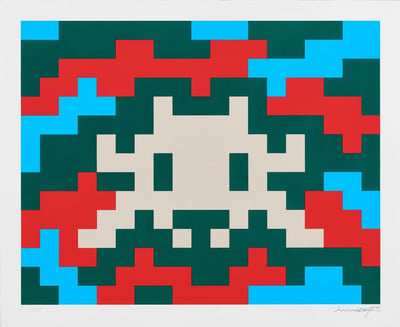
Invader
CAMO M-4C-M2, 2024
Limited Edition Print
Screen-print
GBP 5,500 - 7,000
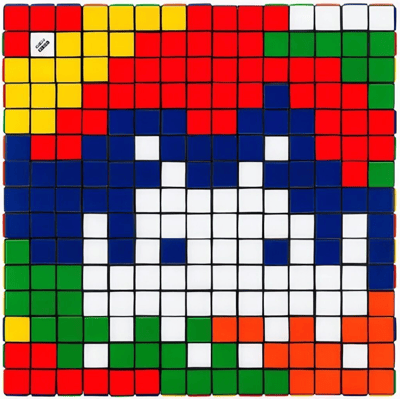
Invader
Rubik Camouflage NVDR1-2, 2023
Limited Edition Print
Giclée printing
EUR 4,250
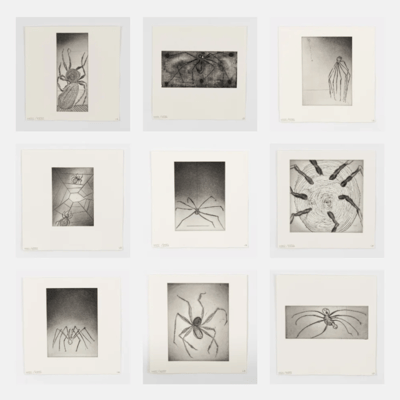
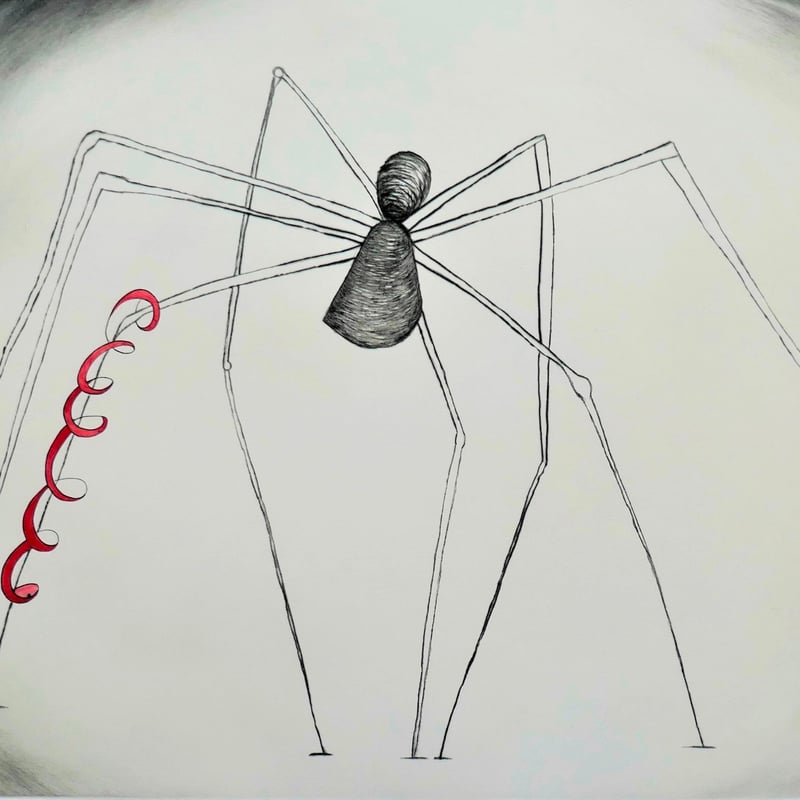
Louise Bourgeois
Ode à Ma Mère, 1995
Limited Edition Print
Drypoint
GBP 61,000 - 76,000
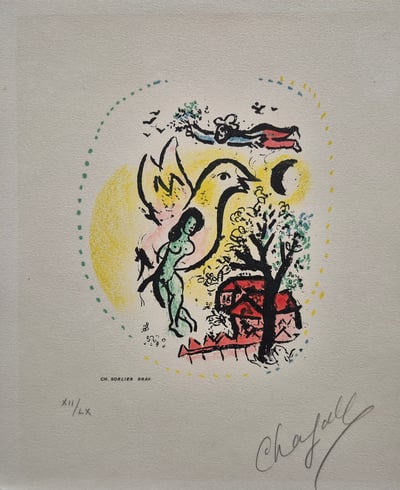
Marc Chagall
Vocation, 1969
Limited Edition Print
Lithograph
EUR 5,600
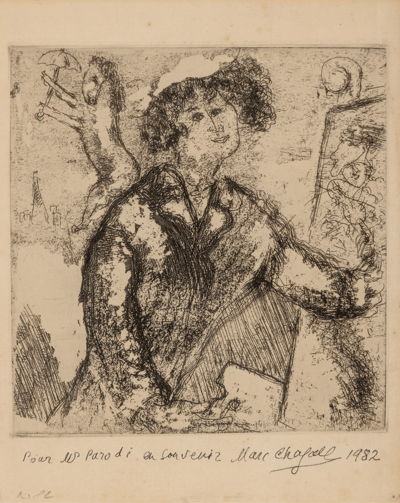
Marc Chagall
Autoportrait au chevalet (from Chagall et l'Ame Juive) , 1931
Limited Edition Print
Etching
USD 4,100
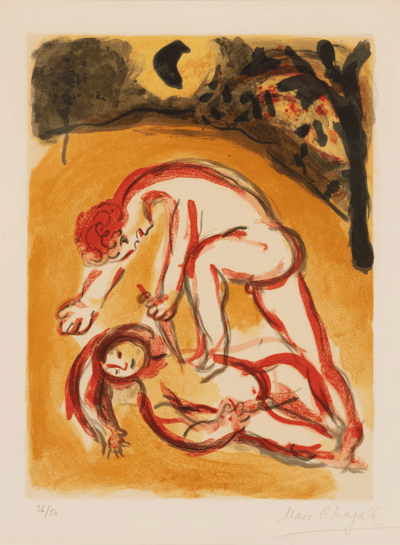
Marc Chagall
Caïn et Abel (from Dessins pour la Bible), 1960
Limited Edition Print
Lithograph
Inquire For Price
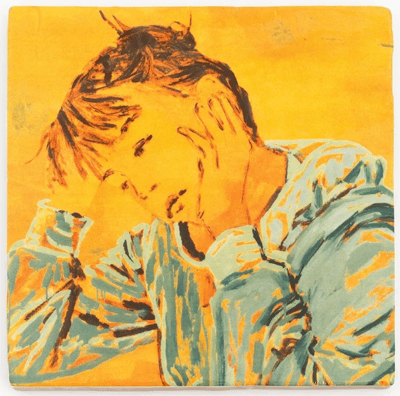
Claire Tabouret
Self-portrait at the Table, 2025
Ceramics
Ceramic
GBP 1,850
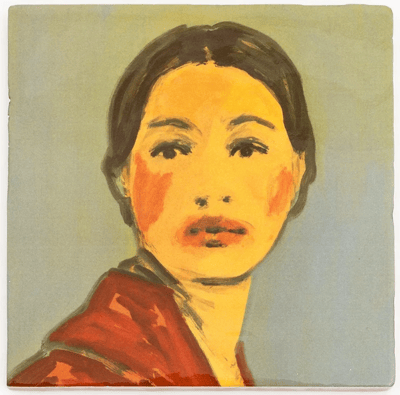
Claire Tabouret
Makeup (red coat), 2025
Ceramics
Ceramic
GBP 1,850
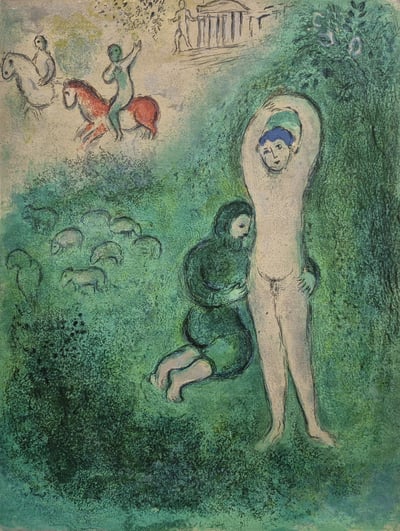
Marc Chagall
Daphins and Gnathon, 1961
Limited Edition Print
Lithograph
EUR 2,900
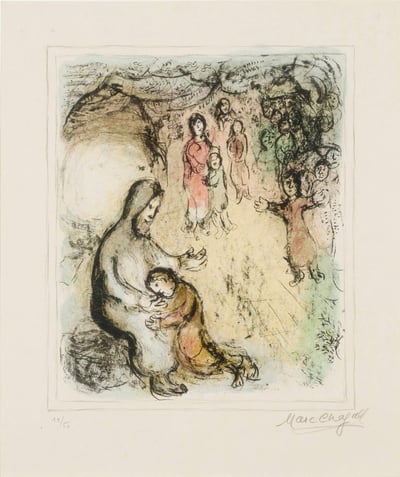
Marc Chagall
La Bénédiction de Jacob, 1979
Limited Edition Print
Lithograph
USD 6,800
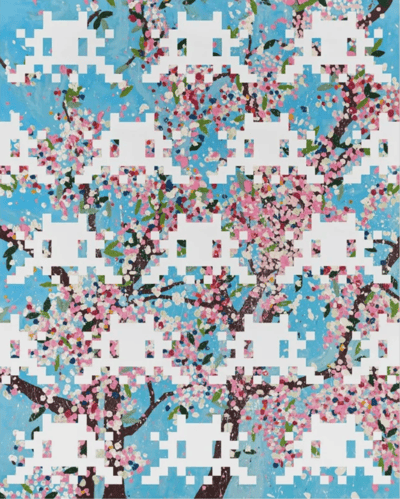
Invader
Invaded Blossom, 2026
Limited Edition Print
Giclée printing
EUR 6,500 - 9,000
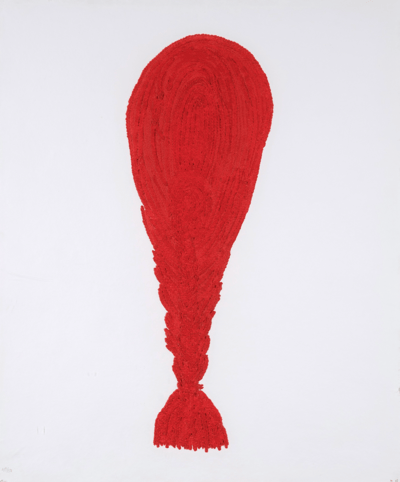
Louise Bourgeois
Crochet V, 1998
Limited Edition Print
Mixed Media
USD 34,750
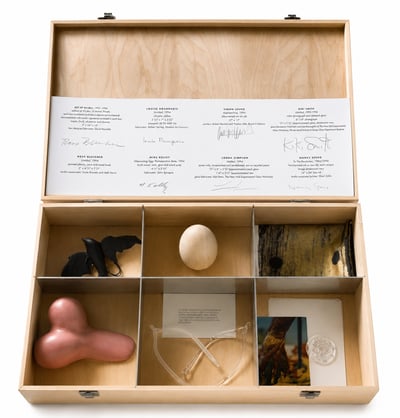
Louise Bourgeois
ACT UP Art Box, 1994
Sculpture / Object
Mixed Media
EUR 11,500
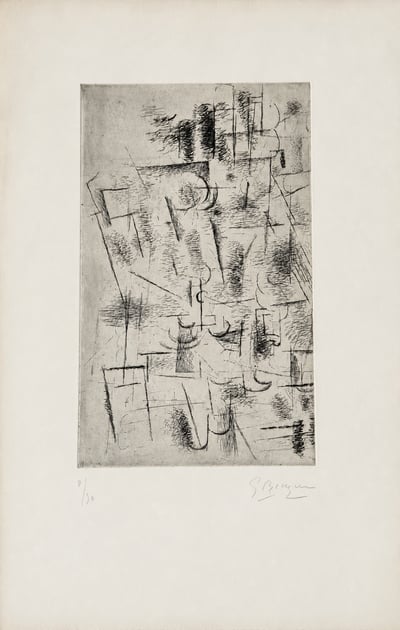
Georges Braque
Still Life with Glass, 1912-1950
Limited Edition Print
Etching
EUR 12,000
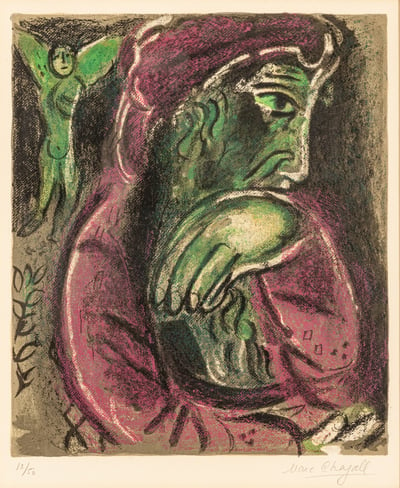
Marc Chagall
Job in Despair, 1960
Limited Edition Print
Lithograph
USD 5,300
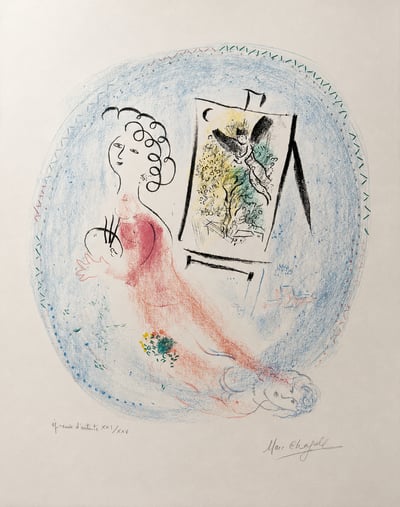
Marc Chagall
The Easel, 1969
Limited Edition Print
Lithograph
EUR 8,500
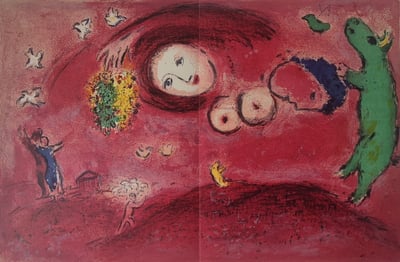
Marc Chagall
Printemps au Pré (from Daphnis and Chloe), 1961
Limited Edition Print
Lithograph
EUR 5,625
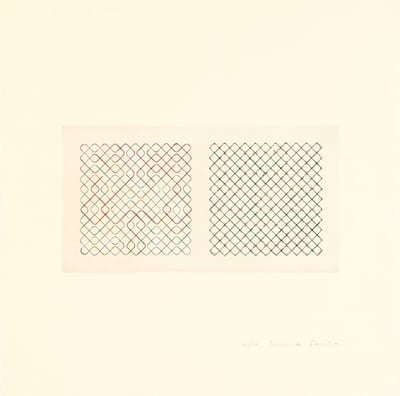
Bernard Frize
Suite à onze, 2009
Limited Edition Print
Drypoint
EUR 2,000
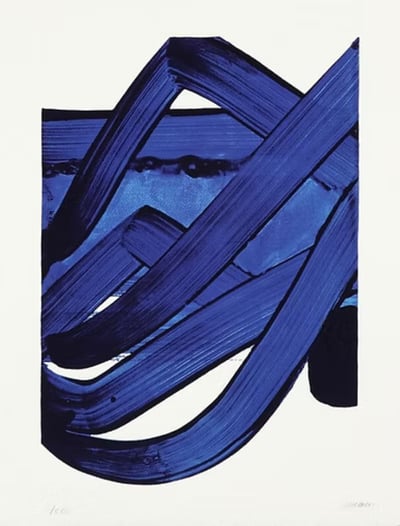
Pierre Soulages
Composition, Sérigraphie No 18, 1988
Limited Edition Print
Lithograph
GBP 18,500 - 24,000
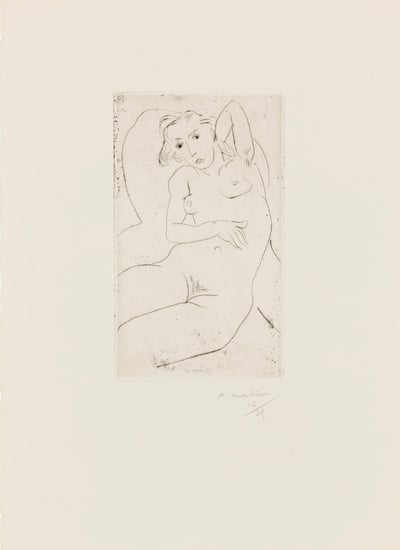
Henri Matisse
Nu assis-les yeux noris, 1926 / 1948
Limited Edition Print
Drypoint
USD 8,350
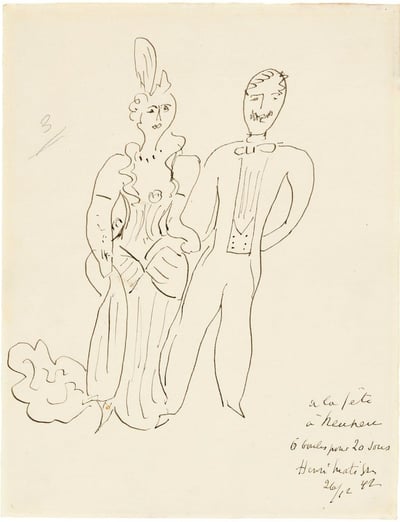
Henri Matisse
Homme et Femme, 1942
Drawing / Watercolor
Ink
Inquire For Price
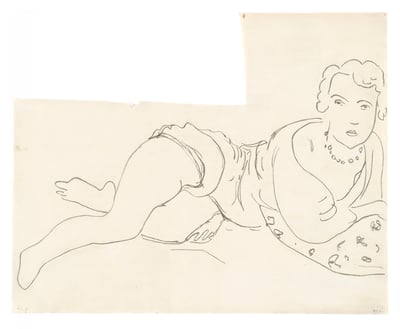
Henri Matisse
Nu, main gauche près de l'épaule, 1926
Drawing / Watercolor
Chalk
Inquire For Price
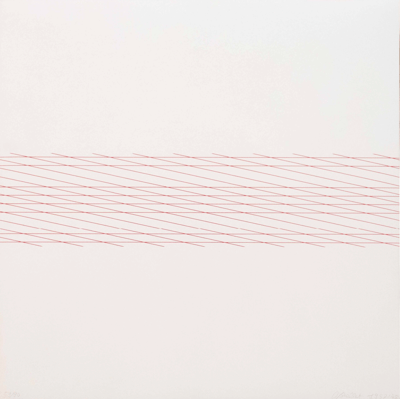
Francois Morellet
Trame, 1957-1975
Limited Edition Print
Silkscreen
EUR 1,800
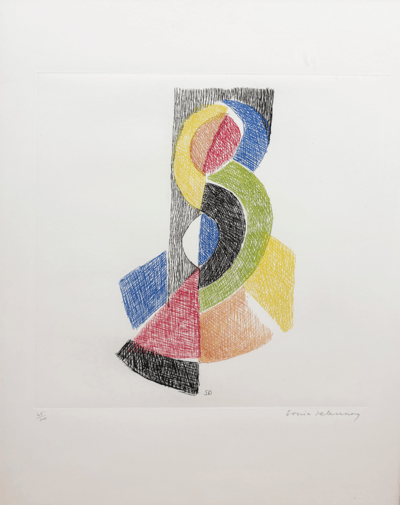
Sonia Delaunay
Rhythm Coleur VI, 1966
Limited Edition Print
Etching
EUR 4,800
Related Articles
Can't find your Answer?
Thank you! Your question has been sent — we'll get back to you shortly.
