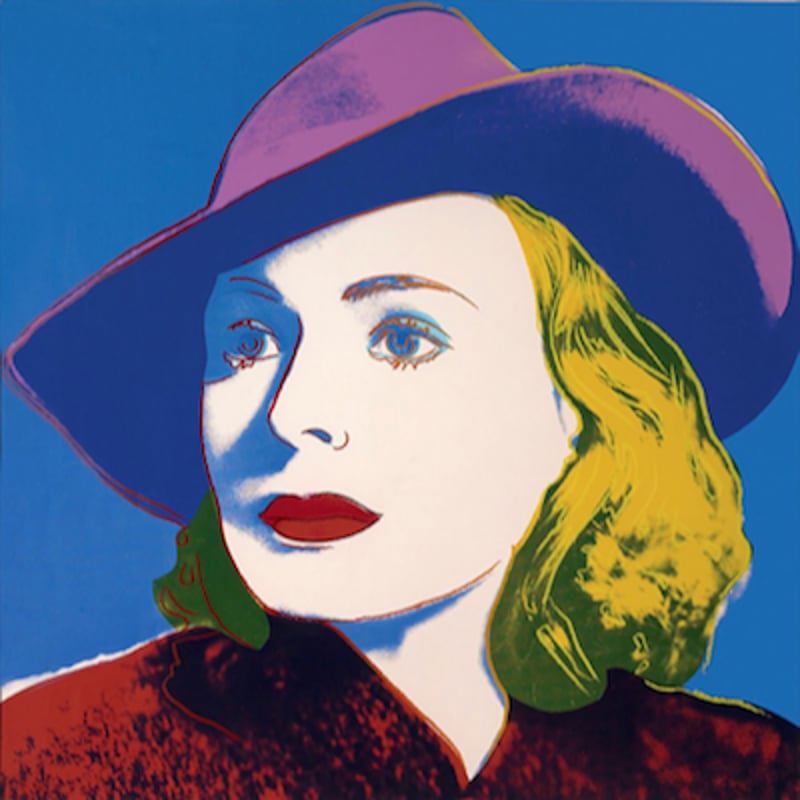
What is pop-art?
Pop Art is an art movement that began in Britain in 1955 and in the late 1950s in the U.S. It challenged traditional fine arts by incorporating imagery from popular culture, such as news, advertising, and comic books. Pop Art often isolates and recontextualizes materials, combining them with unrelated elements. The movement is more about the attitudes and ideas that inspired it than the specific art itself. Pop Art is seen as a reaction against the dominant ideas of Abstract Expressionism, bringing everyday consumer culture into the realm of fine art.
Notable Artists Working in pop art
![Mickey Mouse [II.265] Myths](https://images.composition.gallery/cdn-cgi/image/width=400,fit=contain,format=auto,quality=85,onerror=redirect/70079/andy-warhol-mickey-mouse-ii265-myths-screen-print-available-for-sale-on-composition-gallery1786995774-82061.jpg)

Two beginnings, one attitude
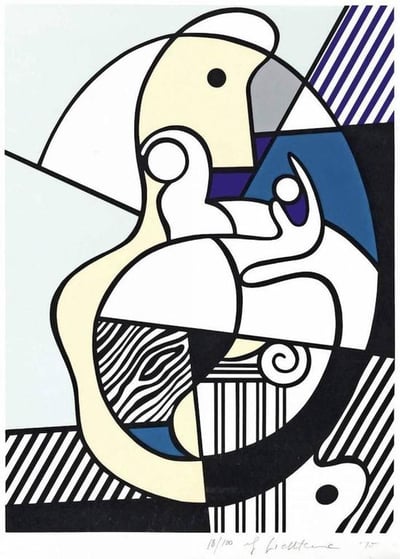
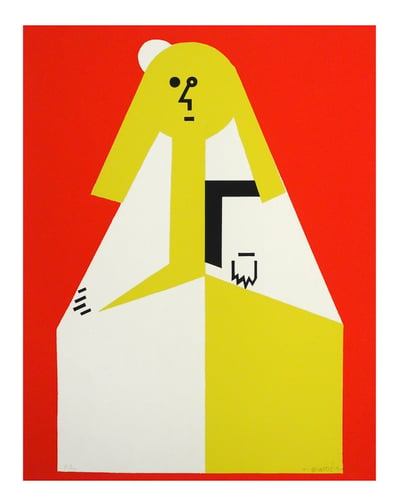
Pop art arrived twice. In London in the mid-1950s, the Independent Group — Richard Hamilton, Eduardo Paolozzi and others meeting at the Institute of Contemporary Arts — began treating American advertising, science fiction and glossy magazines as serious raw material. Hamilton's 1956 collage Just what is it that makes today's homes so different, so appealing? is often cited as the movement's opening statement, assembled entirely from magazine clippings. A few years later, and largely independently, a New York generation — Andy Warhol, Roy Lichtenstein, James Rosenquist, Claes Oldenburg, Tom Wesselmann — turned soup cans, comic panels and billboards into paintings on a heroic scale.
"Pop Art is: Popular, Transient, Expendable, Low cost, Mass produced, Young, Witty, Sexy, Gimmicky, Glamorous, Big Business."
Richard Hamilton, letter to Alison and Peter Smithson, 1957
That checklist was written before most of the famous work existed, but it describes the movement's method precisely: take imagery already circulating in the culture, isolate it, enlarge it, and let it stand.
The techniques of mass culture
Pop artists borrowed not just commercial imagery but commercial technique. Rosenquist had painted actual billboards above Times Square before applying that fragmented, close-up style to canvas. Lichtenstein simulated the Ben-Day dots of cheap comic printing by hand and stencil, deliberately imitating mechanical reproduction. Warhol went furthest: from 1962 he adopted photo-silkscreen, transferring a photographic image to a mesh screen and squeegeeing ink through it onto canvas or paper. The process allowed repetition — rows of Marilyns, stacks of soup cans — while introducing accidental variation. Misregistered colours, uneven ink coverage and smudges were left in, so that no two "identical" images are quite alike.
For collectors, this matters practically. In Pop art, the boundary between painting and print is deliberately blurred: a silkscreened canvas and a silkscreened sheet of paper can come from the same screens. Understanding which is which — a unique work, a canvas from a series, or a numbered print from a published edition — is the first step in reading any Pop object, and it is exactly the ambiguity the artists intended. The machine aesthetic was the point, not a shortcut.
Editions and the question of the original
Pop art embraced the multiple as a matter of principle, so editioned prints are not a lesser byproduct of the movement — they are central to it. Warhol's 1967 Marilyn Monroe portfolio, published through Factory Additions, and Lichtenstein's print projects with Gemini G.E.L. are canonical works in their own right. That said, the market distinguishes sharply between artist-authorized editions and everything else. Look for the signature, the numbering, publisher and printer information, and — most importantly — a listing in the relevant catalogue raisonné: Feldman and Schellmann for Warhol's prints, Mary Lee Corlett for Lichtenstein's. An image that cannot be matched to a raisonné entry deserves scepticism, however familiar it looks.
Be aware of well-known grey areas. The so-called "Sunday B. Morning" Marilyn and Flowers screenprints, for example, are later prints made from Warhol-related imagery and are traded openly as such — legitimate to own, but not Warhol editions, and priced accordingly. Exhibition posters, even period ones, are another category again.
Authentication in practice
Since the Andy Warhol Art Authentication Board dissolved in 2012, no body issues new opinions on disputed Warhols. In practice, authenticity now rests on documented provenance, raisonné inclusion and the physical evidence of the object itself. This is true across the movement: a clean, unbroken ownership history from a recognized gallery or publisher is worth far more than a stamp or certificate of uncertain origin. When buying, ask where the work has been since it left the studio or publisher, and expect a coherent answer.
Condition and care
Pop's materials are its main conservation risk. Screenprint inks — especially the fluorescent and Day-Glo colours the movement loved — can be fugitive, fading noticeably under prolonged light exposure. A faded Marilyn is worth substantially less than a fresh one, and the difference is often visible only next to a well-preserved example. Frame works on paper behind UV-filtering glazing, hang them away from direct sunlight, and never allow margins to be trimmed to fit a frame: full sheets with intact edges, numbering and signatures command clear premiums. Kept properly, these are robust objects — printed, after all, with industrial techniques built to survive the world they came from.
Artworks Related to Pop art
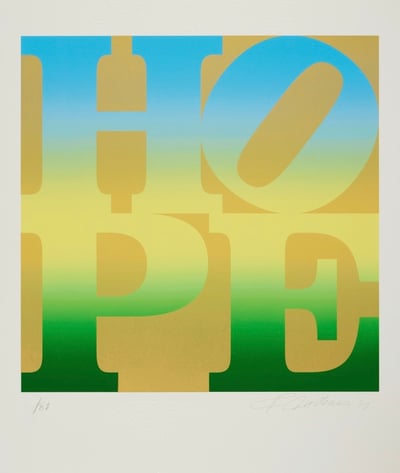
Robert Indiana
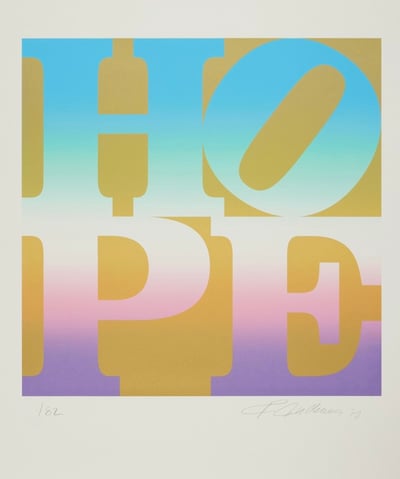
Four Seasons of Hope: Summer (Gold), 2012
Limited Edition Print
Screen-print
USD 7,800
Robert Indiana
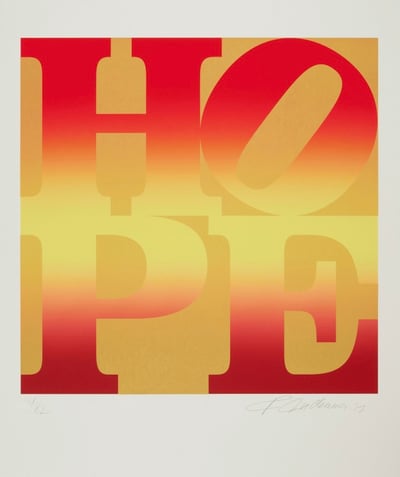
Four Seasons of Hope: Spring (Gold), 2012
Limited Edition Print
Screen-print
USD 7,800
Robert Indiana
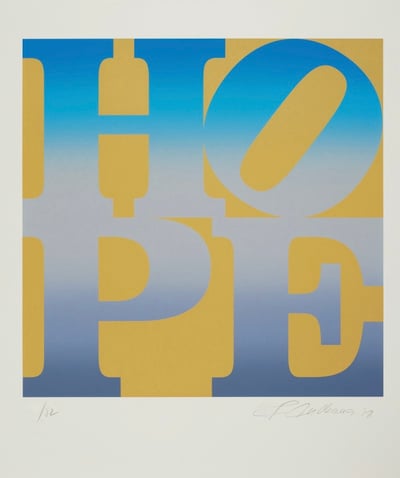
Four Seasons of Hope: Autumn (Gold), 2012
Limited Edition Print
Screen-print
USD 7,800
Robert Indiana
Four Seasons of Hope: Winter (Gold), 2012
Limited Edition Print
Screen-print
USD 7,800
Claes Oldenburg
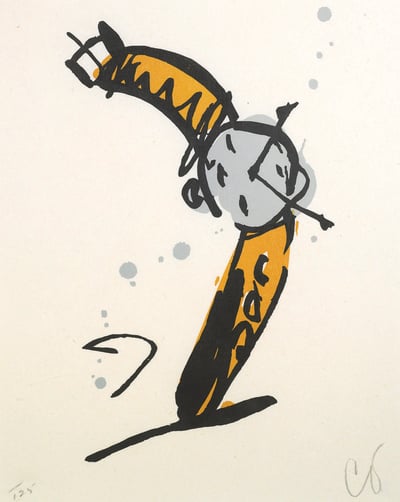
Wrist Watch Rising, from Art Pro-Choice II, 1991
Limited Edition Print
Lithograph
Inquire For Price

Takashi Murakami
Kensei Skulls, 2010
Limited Edition Print
Offset Print
USD 2,400
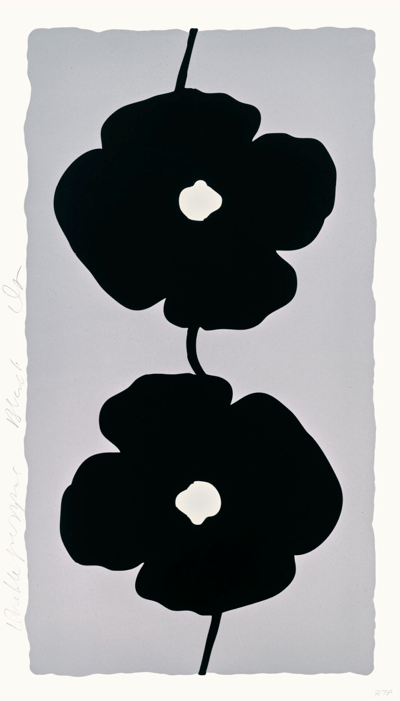
Donald Sultan
Double Poppies Black, 2025
Limited Edition Print
Mixed Media
USD 6,000
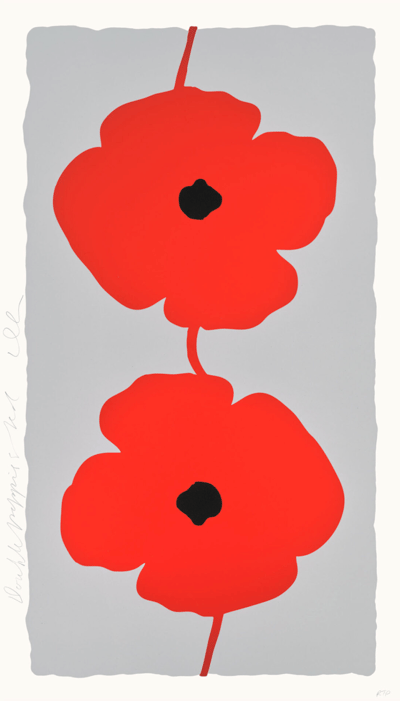
Donald Sultan
Double Poppies Red, 2025
Limited Edition Print
Mixed Media
USD 6,000

Mr. Brainwash
Everyday Life, 2025
Limited Edition Print
Mixed Media
EUR 23,500

Julian Opie
Komang, beach vendor, 2002
Limited Edition Print
Mixed Media
EUR 21,200

Keith Haring
The Valley (2), 1989
Limited Edition Print
Etching
EUR 3,600

Keith Haring
The Valley (1), 1989
Limited Edition Print
Etching
EUR 3,600

Robert Indiana
The American Four, 1970
Limited Edition Print
Screen-print
EUR 7,200

Andy Warhol
Saint Apollonia, 1984
Limited Edition Print
Screen-print
EUR 23,500

Andy Warhol
After The Party (FS II.183) (proof), 1979
Limited Edition Print
Screen-print
EUR 50,000 - 60,000

Andy Warhol
Paloma Picasso, 1975
Limited Edition Print
Serigraph
EUR 28,100
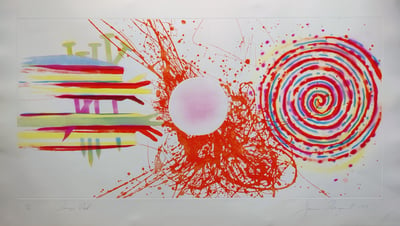
James Rosenquist
Rouge Pad, 1978
Limited Edition Print
Etching and Aquatint
Inquire For Price

Damien Hirst
Butterfly from The Souls, 2011
Limited Edition Print
Mixed Media
Inquire For Price

David Hockney
The Older Rapunzel, 1969
Limited Edition Print
Etching and Aquatint
Inquire For Price

Claes Oldenburg
Eraser, 1970
Limited Edition Print
Lithograph
Inquire For Price

Walasse Ting
Natasha, 1997
Drawing / Watercolor
Mixed Media
Inquire For Price

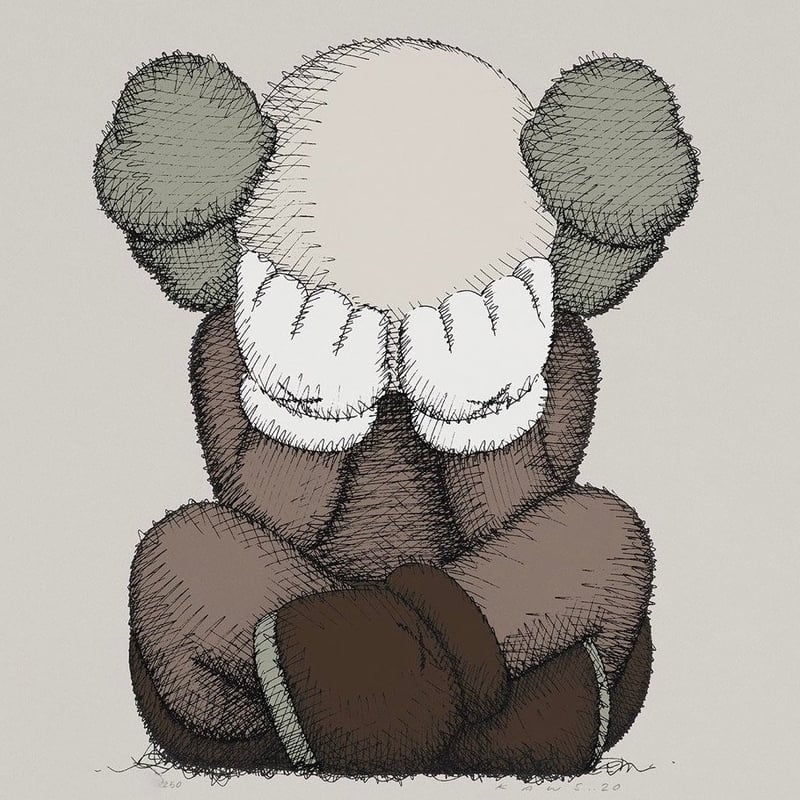
KAWS
Companion vs Astroboy, 2002
Limited Edition Print
Screen-print
Inquire For Price

Javacheff Christo
Puerta de Alcalá, envuelta /proyecto para Madrid, 1981
Limited Edition Print
Lithograph
EUR 9,600

Jim Dine
Self portrait in a flat cap, 1974
Limited Edition Print
Etching
EUR 950

Manolo Valdés
Mujer con periodico - Warhol, 2012
Limited Edition Print
Collage
EUR 4,700

David Hockney
Untitled (Tennis Centre), 1976
Photography
C-Print
GBP 9,000 - 11,000

Roy Lichtenstein
Before The Mirror, 1975
Limited Edition Print
Mixed Media
GBP 20,000 - 25,000
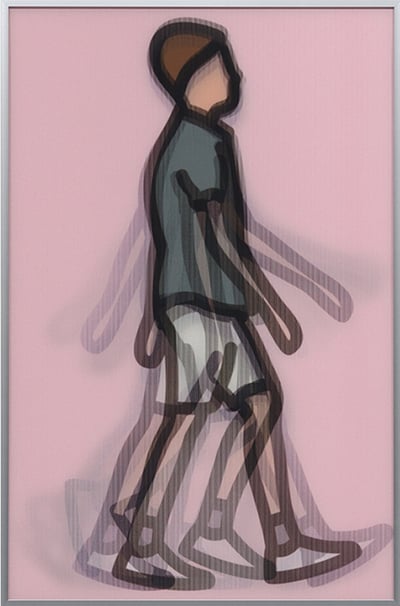
Julian Opie
Alexander, 2026
Limited Edition Print
Installation
GBP 16,000 - 19,500
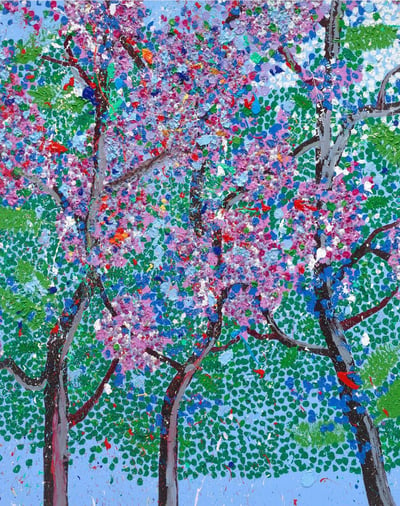
Damien Hirst
Gratitude (H20-7), 2026
Limited Edition Print
Giclée printing
GBP 6,500 - 8,000
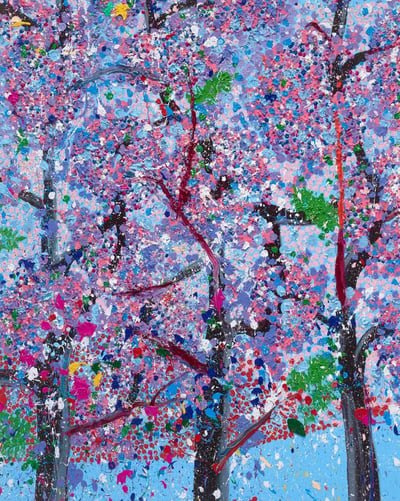
Damien Hirst
Inspiration (H20-8), 2026
Limited Edition Print
Giclée printing
GBP 6,500 - 8,000
Related Terms

Contemporary art refers to avant-garde or innovative art created in the recent past or present day. The exact starting point of contemporary art varies depending on the institution, often tied to the founding year of museums or galleries that showcase the style. Contemporary art is characterized by its focus on current ideas, diverse media, and the exploration of new concepts and techniques.
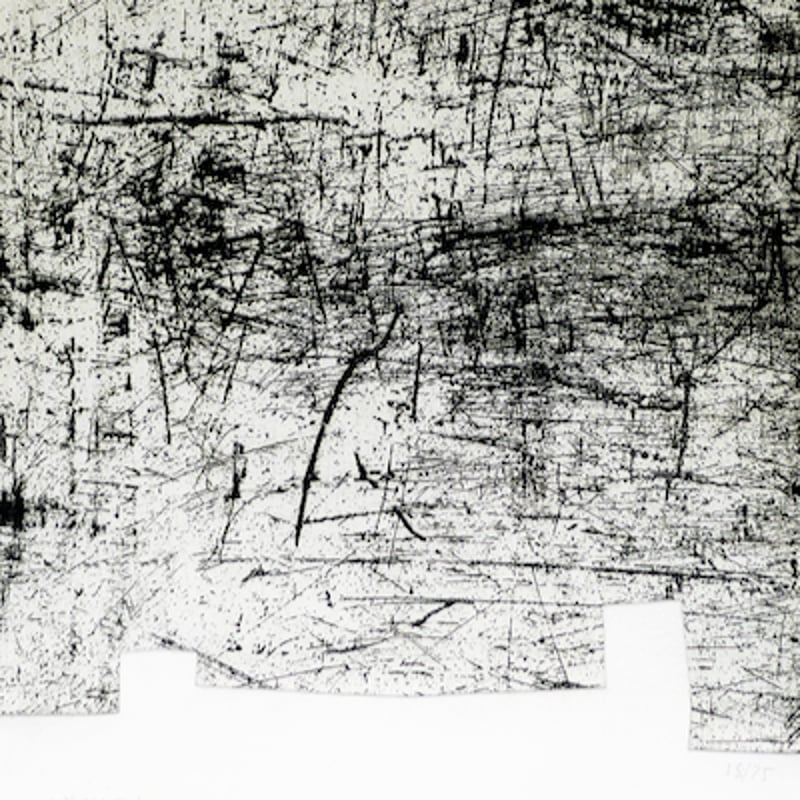
Abstract art uses form, shape, line, and color to create a visual experience without attempting to represent external reality. The composition exists independently of the world's visual references, focusing on expressing ideas and emotions through non-representational means.

A found object is a term used to describe a man-made or natural object, or a fragment of one, that an artist discovers or purchases and keeps for inspiration or as a work of art. The artist may also modify the object or incorporate it into a collage or assemblage, transforming it into a new piece of art.
Related Articles
Can't find your Answer?
Thank you! Your question has been sent — we'll get back to you shortly.
