
What is appropriation?
- Show All
- Established
- Discoveries
- Show All
Artworks Related to Appropriation
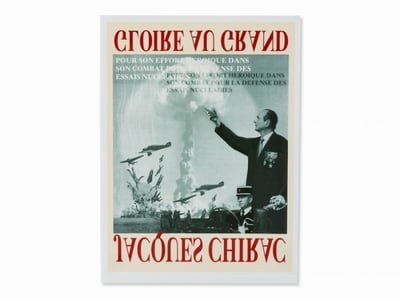
Thomas Ruff
Chiracs battle, 1998
Photography
Photograph
EUR 950
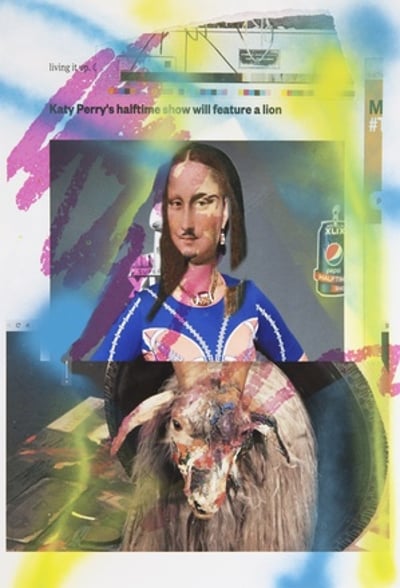
Rachel Harrison
Living it up, 2015
Limited Edition Print
Digital Print on paper
Currently Not Available

Laure Prouvost
This print wished you would...., 2015
Limited Edition Print
Etching
EUR 1,000

Laure Prouvost
It calms us both 3 , 2014
Limited Edition Print
Etching
EUR 1,200

Laure Prouvost
It calms us both 2 , 2014
Limited Edition Print
Etching
EUR 1,200

Laure Prouvost
It calms us both 1, 2014
Limited Edition Print
Etching
EUR 1,200
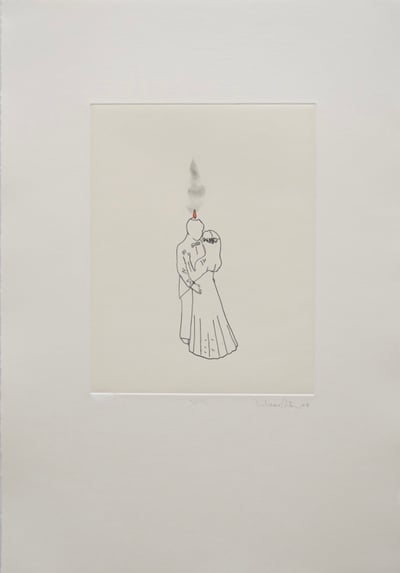
Liliana Porter
Vals , 2007
Limited Edition Print
Etching
EUR 1,400

Liliana Porter
Pato, 2007
Limited Edition Print
Etching
EUR 1,400

Liliana Porter
Concierto, 2007
Limited Edition Print
Etching
EUR 1,400
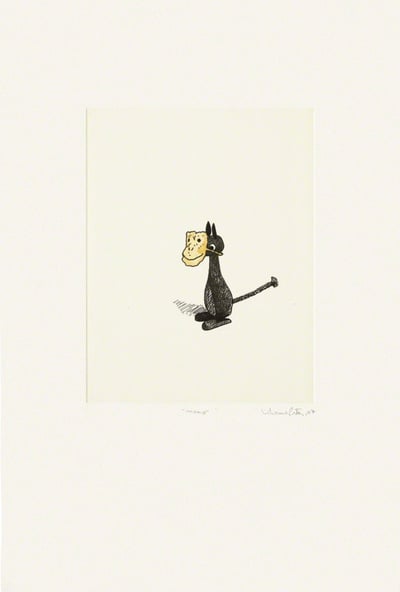
Liliana Porter
Mono, 2007
Limited Edition Print
Etching
EUR 1,400

Liliana Porter
Cantante, 2007
Limited Edition Print
Etching
EUR 1,400

Liliana Porter
Gorrito verde, 2007
Limited Edition Print
Etching
EUR 1,400

Liliana Porter
Máscara, 2007
Limited Edition Print
Etching
EUR 1,400
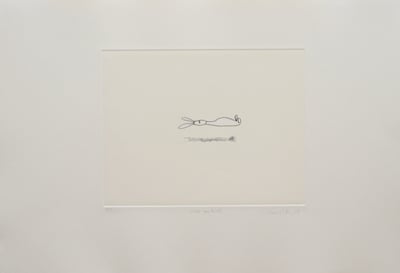
Liliana Porter
Conejo que levita, 2007
Limited Edition Print
Etching
EUR 1,400
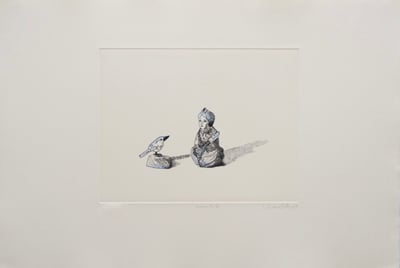
Liliana Porter
Concierto II, 2007
Limited Edition Print
Etching
EUR 1,400
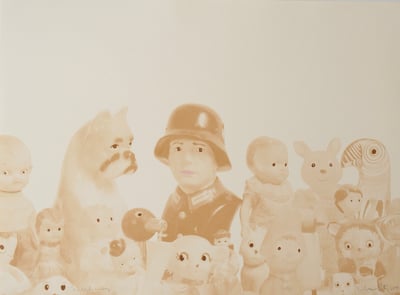
Liliana Porter
Sin título con nazi , 2005
Limited Edition Print
Lithograph
EUR 1,800
Related Articles



Site-Specific Art is a form of artwork created to exist in a particular location, with the artist considering the site as an integral part of the creative process. Robert Irwin was a key figure in promoting this art form in California. Site-Specific Art emerged as a reaction against modernist objects, which were often portable, commodified, and confined to museum spaces. In contrast, Site-Specific Art is inherently tied to its location, challenging the traditional notions of art as a transportable and marketable commodity.

India ink is a medium made from fine soot, known as lampblack, combined with water and a binder, usually shellac, to create a black, waterproof ink. It has been used in India since the 4th century BC. Artists use India ink for writing, drawing, and painting due to its deep black color and permanence.

A plate is a broad, primarily flat vessel used for serving food, but it can also serve ceremonial or decorative purposes. Plates are typically circular, though they can be any shape and made from various water-resistant materials. Most plates have raised edges, either by curving upward or featuring a wider lip. Vessels without a raised edge or with a more rounded profile are often considered bowls or dishes, while very large, plate-shaped vessels might also be classified as dishes.
Can't find your Answer?
Thank you! Your question has been sent — we'll get back to you shortly.
