Rufino Tamayo

Rufino Tamayo (Mexico, 1899–1991) blended modernism with Mexican heritage, creating bold, color-driven paintings and prints. Influenced by Zapotec culture, he avoided political narratives, focusing instead on universal themes and textured surfaces. His innovative use of color and form helped redefine 20th-century Mexican art beyond muralism.

© Rufino Tamayo. All rights reserved.

Rufino Tamayo – Figura en negro, 1980 – Etching

Rufino Tamayo

Figura en negro, 1980

Limited Edition Print

Etching

EUR 4,500

Rufino Tamayo – Personaje en la ventana, 1980 – Etching

Rufino Tamayo

Personaje en la ventana, 1980

Limited Edition Print

Etching

EUR 3,750

Rufino Tamayo – Cabeza con iniciales, 1975 – Mixed Media

Rufino Tamayo

Cabeza con iniciales, 1975

Limited Edition Print

Mixed Media

EUR 3,750

Rufino Tamayo – Hombre, 1979 – Lithograph

Rufino Tamayo

Hombre, 1979

Limited Edition Print

Lithograph

EUR 2,300

Rufino Tamayo – Hombre en rosa, 1984 – Etching

Rufino Tamayo

Hombre en rosa, 1984

Limited Edition Print

Etching

EUR 4,350

Rufino Tamayo – Femme au Collant Rose, 1969 – Lithograph

Rufino Tamayo

Femme au Collant Rose, 1969

Limited Edition Print

Lithograph

EUR 2,600

Rufino Tamayo – Personaje sentado, 1976 – Etching

Rufino Tamayo

Personaje sentado, 1976

Limited Edition Print

Etching

EUR 4,375

Rufino Tamayo – Untitled (Textile), 1960s – Tapestry

Rufino Tamayo

Untitled (Textile), 1960s

Tapestry

Tapestry

Inquire For Price

Rufino Tamayo – Monolito, 1981 – Mixed Media

Rufino Tamayo

Monolito, 1981

Sculpture / Object

Mixed Media

Inquire For Price

Rufino Tamayo – Dos Figuras, 1973 – Lithograph

Rufino Tamayo

Dos Figuras, 1973

Limited Edition Print

Lithograph

USD 5,980

Rufino Tamayo – Mujer con sandia, 1950 – Lithograph

Rufino Tamayo

Mujer con sandia, 1950

Limited Edition Print

Lithograph

EUR 5,000

Rufino Tamayo – Bodegón, 1980 – Etching

Rufino Tamayo

Bodegón, 1980

Limited Edition Print

Etching

EUR 5,200

Rufino Tamayo – Torre Blanca, P. 197, 1976 – Etching

Rufino Tamayo

Torre Blanca, P. 197, 1976

Limited Edition Print

Etching

USD 5,500

Rufino Tamayo – Dos Figuras, P. 205, 1976 – Etching

Rufino Tamayo

Dos Figuras, P. 205, 1976

Limited Edition Print

Etching

USD 6,600

Rufino Tamayo – Cabeza Sur Fonde Verte, P. 258, 1984 – Etching

Rufino Tamayo

Cabeza Sur Fonde Verte, P. 258, 1984

Limited Edition Print

Etching

USD 6,600

Rufino Tamayo – Figura Sobre Azur, 1976 – Etching

Rufino Tamayo

Figura Sobre Azur, 1976

Limited Edition Print

Etching

USD 5,200

Can you believe that, to say that ours is the only path when the fundamental thing in art is freedom! In art, there are millions of paths—as many paths as there are artists.

— Rufino Tamayo

Rufino Tamayo (b. 1899 Mexico, d. 1991 Mexico) was a painter and printmaker who forged a distinct path within 20th-century modern art. Blending elements of Mexican folk traditions with international modernism, his work resists overt political narratives in favor of universal themes such as humanity, cosmology, and existence. Tamayo is known for his rich color palettes, textured surfaces, and simplified, often monumental forms. Working across painting, mural, and graphic media, he developed innovative techniques, particularly in printmaking, where he helped popularize the mixografia process. Influenced by pre-Columbian art and European movements like Cubism, Tamayo created a visual language that feels both ancient and contemporary. His work situates him between cultural specificity and global abstraction, making him a key figure in redefining Mexican art beyond nationalist frameworks.

Stay Updated on Rufino Tamayo

Subscribe to receive updates on new artworks, exhibitions and news about Rufino Tamayo.

We respect your privacy and protect your information.
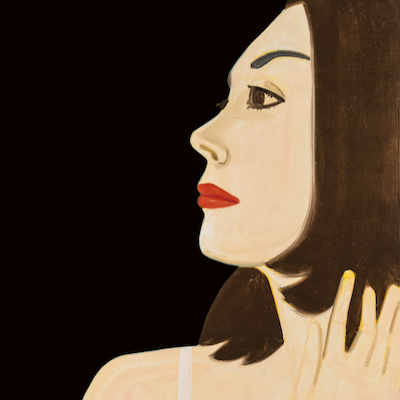
What is figurative art?Artwork by Alex Katz

What is figurative art?

Sometimes known as Figurativism, figurative art refers to sculptures and paintings that are clearly or specifically derived from real objects, making them representational. The term figurative art is often used in contrast to abstract art. However, since the emergence of abstract art, figurative art has come to describe any form of modern art that has strong…

Explore »

Est. 2005 — twenty years of collecting, online.