Details
Artist
Styles
Cabeza Sur Fonde Verte, P.258 exemplifies Rufino Tamayo's sophisticated engagement with portraiture within the etching medium, exploring the human head as a site of chromatic intensity and psychological complexity. Executed in 1984 in a limited edition of ninety-nine, the work demonstrates Tamayo's mastery of tonal modulation and his ability to render the specificity of individual identity. The composition celebrates the artist's mature vision synthesizing modernist abstraction with the warm emotionality characteristic of his distinctive aesthetic practice.
Cabeza Sur Fonde Verte, P. 258, 1984
form
Medium
Size
55.9 x 74.9 cm
- Inches
- Centimeters
Edition
Price
- USD
- EUR
- GBP
Details
Artist
Styles
Cabeza Sur Fonde Verte, P.258 exemplifies Rufino Tamayo's sophisticated engagement with portraiture within the etching medium, exploring the human head as a site of chromatic intensity and psychological complexity. Executed in 1984 in a limited edition of ninety-nine, the work demonstrates Tamayo's mastery of tonal modulation and his ability to render the specificity of individual identity. The composition celebrates the artist's mature vision synthesizing modernist abstraction with the warm emotionality characteristic of his distinctive aesthetic practice.
- Recently Added
- Price (low-high )
- Price (high-low )
- Year (low-high )
- Year (high-low )

Rufino Tamayo
Femme Au Collant Rose, 1969
Limited Edition Print
Lithograph
EUR 2,600

Rufino Tamayo
Personaje Sentado, 1976
Limited Edition Print
Etching
EUR 4,375

Rufino Tamayo
Untitled (Textile), 1960s
Tapestry
Tapestry
Inquire For Price

Rufino Tamayo
Monolito, 1981
Sculpture / Object
Mixed Media
Inquire For Price

Rufino Tamayo
Dos Figuras, 1973
Limited Edition Print
Lithograph
USD 5,980

Rufino Tamayo
Mujer Con Sandia, 1950
Limited Edition Print
Lithograph
EUR 5,000

Rufino Tamayo
Bodegón, 1980
Limited Edition Print
Etching
EUR 5,200

Rufino Tamayo
Torre Blanca, P. 197, 1976
Limited Edition Print
Etching
USD 5,500

Rufino Tamayo
Dos Figuras, P. 205, 1976
Limited Edition Print
Etching
USD 6,600

Rufino Tamayo
Cabeza Sur Fonde Verte, P. 258, 1984
Limited Edition Print
Etching
USD 6,600

Rufino Tamayo
Figura Sobre Azur, 1976
Limited Edition Print
Etching
USD 5,200
Related Artists


Related Articles

Popular, News, Collecting - December 18, 2025
20 Years of Composition Gallery - A Conversation with the Founder
Celebrating 20 years of digital art excellence: Discover how Composition Gallery built global trust in online collecting through curation and integrity. Read More

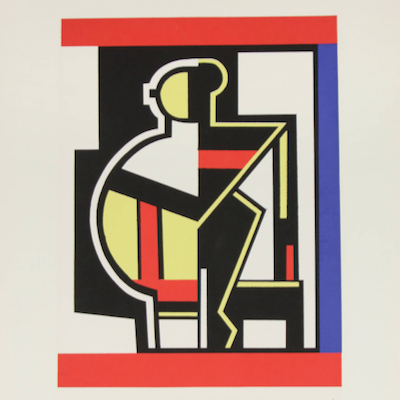
What is Cubism?
Cubism is an art movement that aimed to depict multiple perspectives of objects or figures within a single picture. Artists Georges Braque and Pablo Picasso pioneered this style around 1907. The name Cubism emerged from their use of geometric shapes and outlines that often resembled cubes, breaking objects down into abstracted forms.