
Details
Artist
Styles
Linoleo on Paper. Not Signed. Cubes in Color on Color (Purple/Red) by Sol LeWitt is a 2003 linocut on paper that reflects the artist’s iconic exploration of geometry and conceptual repetition. Featuring a stark red cube structure on a flat purple background, the piece exemplifies LeWitt’s minimalist approach and his interest in spatial perception. The isometric cube—an illusion of three dimensions on a flat surface—emphasizes structure and optical play. The contrast between the vibrant red lines and the solid purple backdrop intensifies the visual tension, highlighting LeWitt’s signature style rooted in conceptual art and systematic compositions.
Cubes in Color on Color (Purple/Red), 2003
form
Medium
Size
36.2 x 36.2 cm
- Inches
- Centimeters
Edition
Price
Details
Artist
Styles
Linoleo on Paper. Not Signed. Cubes in Color on Color (Purple/Red) by Sol LeWitt is a 2003 linocut on paper that reflects the artist’s iconic exploration of geometry and conceptual repetition. Featuring a stark red cube structure on a flat purple background, the piece exemplifies LeWitt’s minimalist approach and his interest in spatial perception. The isometric cube—an illusion of three dimensions on a flat surface—emphasizes structure and optical play. The contrast between the vibrant red lines and the solid purple backdrop intensifies the visual tension, highlighting LeWitt’s signature style rooted in conceptual art and systematic compositions.
- Recently Added
- Price (low-high )
- Price (high-low )
- Year (low-high )
- Year (high-low )
Sol LeWitt
Untitled (From The Edge Of Awareness), 1998
Limited Edition Print
Screen-print
USD 2,000

Sol LeWitt
Plate #1 (from Complex Forms), 1989
Limited Edition Print
Etching And Aquatint
Inquire For Price

Sol LeWitt
Plate #2 (from Complex Forms), 1989
Limited Edition Print
Etching And Aquatint
USD 3,600

Sol LeWitt
Plate #3 (from Complex Forms),, 1989
Limited Edition Print
Etching And Aquatint
USD 3,600

Sol LeWitt
Plate #4 (from Complex Forms), 1989
Limited Edition Print
Etching And Aquatint
USD 3,600

Sol LeWitt
Plate #5 (from Complex Forms), 1989
Limited Edition Print
Etching And Aquatint
USD 3,600

Sol LeWitt
Steps (Form Derived From A Cubic Rectangle), 1992
Limited Edition Print
Woodcut
EUR 5,900

Sol LeWitt
Ohne Titel (Blue Square), 1990
Limited Edition Print
Serigraph
Artwork On Hold
Sol LeWitt
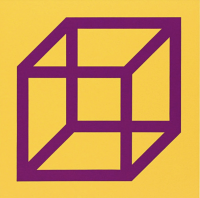
Cubes In Color On Color (Yellow/Purple), 2003
Limited Edition Print
Linocut
Currently Not Available

Sol LeWitt
Tondo 1 (3 Point Star), 2002
Limited Edition Print
Linocut
Currently Not Available

Sol LeWitt
Arcs From Four Corners, 1986
Limited Edition Print
Woodcut
Currently Not Available
Related Artists


Related Articles

Popular, Artists, Art Movements - May 05, 2022
9 Essential Artists of the The Minimalist School
Discover 9 essential artists of the Minimalist movement, including Donald Judd and Agnes Martin. Explore their transformative impact on modern art and design. Read More

What is Systems Art?
Systems Art refers to a group of artists who, during the late 1960s and early 1970s, used the frameworks of conceptualism and minimalism to create art that was responsive to its environment. Rejecting traditional art themes, they embraced aesthetic systems and experimented with diverse media. Systems Art often connected with contemporary political movements of the time, emphasizing the interrelationship between the artwork, its context, and the broader social and political environment.