Details
Artist
Styles
Screenprint in colours, on wove paper. Signed, numbered, dated and titled on the front Yayoi Kusama’s Pumpkin (G) (1992) is a color screenprint that transforms one of the artist’s most recognizable motifs into a rhythmic, immersive pattern. The pumpkin is rendered through dense networks of black polka dots set against vivid green, creating a pulsating surface that appears both organic and hallucinatory. Surrounding crack-like lines extend the visual texture beyond the form itself, merging object and background into a continuous field. Kusama has returned repeatedly to the pumpkin throughout her career, viewing it as a symbol of comfort, stability, and personal memory rooted in her childhood in rural Japan. The print reflects her enduring exploration of repetition, infinity, and psychological space through deceptively simple imagery.
Pumpkin (G), 1992
form
Medium
Size
28 x 37.5 cm
- Inches
- Centimeters
Edition
Price
- USD
- EUR
- GBP
Details
Artist
Styles
Screenprint in colours, on wove paper. Signed, numbered, dated and titled on the front Yayoi Kusama’s Pumpkin (G) (1992) is a color screenprint that transforms one of the artist’s most recognizable motifs into a rhythmic, immersive pattern. The pumpkin is rendered through dense networks of black polka dots set against vivid green, creating a pulsating surface that appears both organic and hallucinatory. Surrounding crack-like lines extend the visual texture beyond the form itself, merging object and background into a continuous field. Kusama has returned repeatedly to the pumpkin throughout her career, viewing it as a symbol of comfort, stability, and personal memory rooted in her childhood in rural Japan. The print reflects her enduring exploration of repetition, infinity, and psychological space through deceptively simple imagery.
- Recently Added
- Price (low-high )
- Price (high-low )
- Year (low-high )
- Year (high-low )

Yayoi Kusama
Pumpkin (S), 1992
Limited Edition Print
Screen-print
GBP 37,500

Yayoi Kusama
Pumpkin (G), 1992
Limited Edition Print
Screen-print
USD 45,750

Yayoi Kusama
Pumpkin (YY), 1996
Limited Edition Print
Screen-print
USD 50,000 - 60,000

Yayoi Kusama
Pumpkin Army, 1994
Limited Edition Print
Etching
GBP 45,000 - 50,000

Yayoi Kusama
Shangai Expo Silk Scarf Yellow, 2010
Tapestry
Mixed Media
EUR 7,000 - 9,000

Yayoi Kusama
Red And Yellow Pumpkins, 2015
Sculpture / Object
Mixed Media
EUR 1,850

Yayoi Kusama
Grapes (Kusama 29), 1983
Limited Edition Print
Screen-print
GBP 30,000 - 40,000

Yayoi Kusama
Vase (2) (Kusama 167), 1992
Limited Edition Print
Lithograph
GBP 17,000 - 21,000

Yayoi Kusama
Shoes (Kusama 30), 1984
Limited Edition Print
Screen-print
GBP 28,000 - 35,000

Yayoi Kusama
Pumpkin ST (Kusama 301), 2001
Limited Edition Print
Screen-print
GBP 40,000 - 50,000
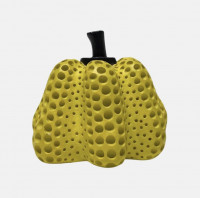
Yayoi Kusama
Yellow Pumpkin, 1998
Sculpture / Object
Resin
GBP 25,000 - 30,000
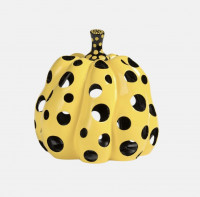
Yayoi Kusama
Pumpkin (NGV), 2025
Sculpture / Object
Mixed Media
GBP 12,000 - 15,000

Yayoi Kusama
Pumpkin 2000 (Green), 2000
Limited Edition Print
Screen-print
GBP 40,000 - 60,000

Yayoi Kusama
Chapeau (II), 2000
Limited Edition Print
Screen-print
GBP 28,000 - 40,000

Yayoi Kusama
Pumpkin 2000 (Yellow), 2000
Limited Edition Print
Screen-print
Currently Not Available

Yayoi Kusama
Pumpkin 2000 (Red), 2000
Limited Edition Print
Screen-print
Currently Not Available

Yayoi Kusama
Pumpkin, 1993
Limited Edition Print
Screen-print
Currently Not Available
Related Artists


Related Articles

Popular, Artists - November 01, 2024
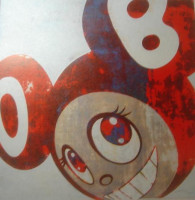
Yayoi Kusama's Pumpkin Prints: A Legacy of Infinite Patterns
Explore Yayoi Kusama’s timeless Pumpkin prints. Discover their artistic evolution, technical mastery, and cultural significance in contemporary art. Read More

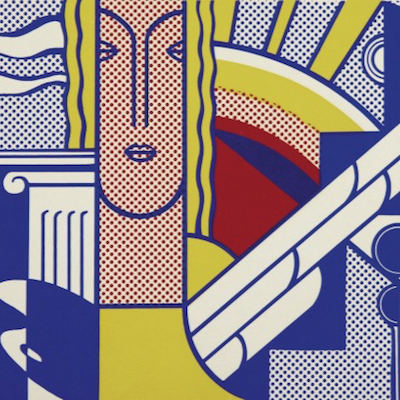
What is late modernism?
Late Modernism refers to the continuation and evolution of Modernist principles in art, architecture, and literature from the mid-20th century into the late 20th century. This movement maintains a focus on form, abstraction, and the rejection of traditional styles, but it often incorporates more complexity and ambiguity compared to early Modernism. Late Modernism explores themes such as alienation, identity, and the fragmentation of reality, reflecting the social and cultural shifts of the post-war period. It is seen in the works of architects like Louis Kahn and artists like Francis Bacon, who pushed the boundaries of Modernism while responding to the changing world around them.