Details
Artist
Styles
Signed, numbered, dated and titled on the front // Yayoi Kusama’s Pumpkin 2000 (Yellow) is a limited edition screen print from 2000, featuring one of the artist's iconic pumpkins. This work is dominated by Kusama's signature use of repetitive polka dots, with the yellow pumpkin filled with intricate black dot patterns, giving it a mesmerizing texture. The background is covered in an intricate web of similarly styled dots, creating a continuous visual dialogue between the pumpkin and its surroundings. Kusama’s pumpkins are celebrated for their playful, organic forms and their deeper themes of infinity, obsession, and the connection between the individual and the cosmos. Signed, numbered, and dated on the front, this piece encapsulates Kusama’s unique approach to both minimalism and maximalism.
Pumpkin 2000 (Yellow), 2000
form
Medium
Size
48 x 64 cm
- Inches
- Centimeters
Edition
Price
Details
Artist
Styles
Signed, numbered, dated and titled on the front // Yayoi Kusama’s Pumpkin 2000 (Yellow) is a limited edition screen print from 2000, featuring one of the artist's iconic pumpkins. This work is dominated by Kusama's signature use of repetitive polka dots, with the yellow pumpkin filled with intricate black dot patterns, giving it a mesmerizing texture. The background is covered in an intricate web of similarly styled dots, creating a continuous visual dialogue between the pumpkin and its surroundings. Kusama’s pumpkins are celebrated for their playful, organic forms and their deeper themes of infinity, obsession, and the connection between the individual and the cosmos. Signed, numbered, and dated on the front, this piece encapsulates Kusama’s unique approach to both minimalism and maximalism.
- Recently Added
- Price (low-high )
- Price (high-low )
- Year (low-high )
- Year (high-low )

Yayoi Kusama
Ashtray, 1990
Limited Edition Print
Silkscreen
GBP 22,000

Yayoi Kusama
My Heart That Blooms In The Darkness Of Night, 2020
Sculpture / Object
Mixed Media
Inquire For Price

Yayoi Kusama
Grapes (Kusama 29), 1983
Limited Edition Print
Screen-print
GBP 30,000 - 40,000

Yayoi Kusama
Sea (Kusama 136), 1989
Limited Edition Print
Screen-print
GBP 28,000 - 40,000

Yayoi Kusama
Flower Basket (Kusama 187), 1993
Limited Edition Print
Screen-print
GBP 25,000 - 30,000

Yayoi Kusama
Pumpkin (Kusama 25), 1983
Limited Edition Print
Screen-print
GBP 42,000 - 50,000

Yayoi Kusama
Pumpkin (White T) (Kusama 149), 1992
Limited Edition Print
Screen-print
GBP 45,000 - 55,000

Yayoi Kusama
Vase (2) (Kusama 167), 1992
Limited Edition Print
Lithograph
GBP 17,000 - 21,000

Yayoi Kusama
Pumpkin (White Y) (Kusama 150), 1992
Limited Edition Print
Screen-print
GBP 48,000 - 60,000

Yayoi Kusama
Infinity Net (Blue) (Kusama 26), 1963-83
Limited Edition Print
Screen-print
GBP 18,000 - 23,000

Yayoi Kusama
Shoes (Kusama 30), 1984
Limited Edition Print
Screen-print
GBP 28,000 - 35,000

Yayoi Kusama
Dancing Pumpkin (YOR) (Kusama 321), 2004
Limited Edition Print
Screen-print
GBP 39,000 - 50,000

Yayoi Kusama
Pumpkin ST (Kusama 301), 2001
Limited Edition Print
Screen-print
GBP 40,000 - 50,000

Yayoi Kusama
Mt. Fuji Is The Home Of My Heart (Kusama 401), 2014
Limited Edition Print
Woodcut
GBP 20,000 - 30,000
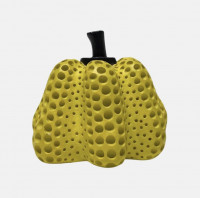
Yayoi Kusama
Yellow Pumpkin, 1998
Sculpture / Object
Resin
GBP 25,000 - 30,000

Yayoi Kusama
Flowers FW, 1993
Limited Edition Print
Screen-print
GBP 22,000 - 30,000
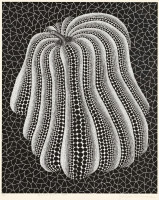
Yayoi Kusama
Thinking Pumpkin, 1993
Limited Edition Print
Screen-print
GBP 40,000 - 50,000
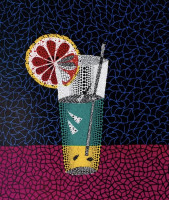
Yayoi Kusama
Lemon Squash, 1984
Limited Edition Print
Screen-print
GBP 30,000 - 40,000

Yayoi Kusama
Dawn, 1989
Limited Edition Print
Screen-print
GBP 30,000 - 40,000

Yayoi Kusama
Pumpkin 2000 (Green), 2000
Limited Edition Print
Screen-print
GBP 40,000 - 60,000

Yayoi Kusama
Chapeau (II), 2000
Limited Edition Print
Screen-print
GBP 30,000 - 40,000
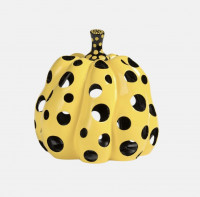
Yayoi Kusama
Pumpkin (NGV), 2025
Sculpture / Object
Mixed Media
Currently Not Available

Yayoi Kusama
Pumpkin 2000 (Yellow), 2000
Limited Edition Print
Screen-print
Currently Not Available

Yayoi Kusama
Pumpkin 2000 (Red), 2000
Limited Edition Print
Screen-print
Currently Not Available

Yayoi Kusama
Pumpkin, 1993
Limited Edition Print
Screen-print
Currently Not Available
Related Artists



Related Articles

Popular, Artists - February 17, 2025
Decoding Contemporary Iconography: Uncovering Hidden Symbols in Modern Art
Uncover hidden meanings in contemporary art. Explore the symbolism in works by Ai Weiwei, Banksy, Koons, Hirst, Haring, Kusama, and Magritte. Read More

What is Environmental Art?
Environmental art is a collective term that refers to a wide range of artistic practices and works that engage with historical and ecological themes. The term often encompasses ecological concerns, although it is not exclusively defined by them. Environmental art acknowledges and appreciates the early history of the environmental art movement, including works with activist themes and those celebrating the connection between nature and the artist through the use of natural materials.