Details
Artist
Styles
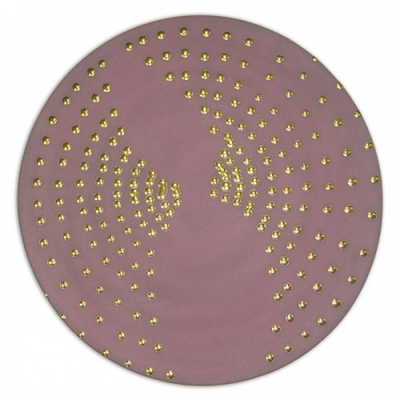
Embossed prints, on Eskulan paper, with accompanying text sheet. Signed, dated, and numbered. Co-published by Dorothea van der Koelen, Mainz and Edouard Weiss, Paris. Literature: Van der Koelen, Dorothea and Martin (eds.): Günther Uecker - Opus Liber, Directory of Bibliophile Books and Works, Mainz 2007, Cat. No. L 0203, ill. pp. 507-511. Graphein XI, Ufer des Toten Meeres by Günther Uecker is a contemplative embossed print from the artist’s Graphein series, created in 2002. Made on hand-crafted Eskulan paper, the work consists of a field of small, raised dots arranged in a subtly undulating vertical formation that suggests movement or topographical layering. The title, which translates to Shore of the Dead Sea, evokes both a physical landscape and a metaphysical concept—solitude, silence, and the interface between presence and emptiness. Uecker forgoes traditional mark-making, instead shaping the surface through pressure and relief, allowing light and shadow to compose the image. The tactile composition mimics erosion or sedimentation, hinting at natural forces and timeless change. This minimalist and poetic piece invites a meditative engagement, turning the act of viewing into a sensory exploration. Published in an edition of 120 with additional artist’s copies, it was co-produced by Dorothea van der Koelen in Mainz and Edouard Weiss in Paris, and stands as a quiet yet powerful reflection on nature, memory, and impermanence.
Graphein XI, Ufer des Toten Meeres, 2002
form
Medium
Size
70 x 50 cm
- Inches
- Centimeters
Edition
Price
- USD
- EUR
- GBP
Details
Artist
Styles
Embossed prints, on Eskulan paper, with accompanying text sheet. Signed, dated, and numbered. Co-published by Dorothea van der Koelen, Mainz and Edouard Weiss, Paris. Literature: Van der Koelen, Dorothea and Martin (eds.): Günther Uecker - Opus Liber, Directory of Bibliophile Books and Works, Mainz 2007, Cat. No. L 0203, ill. pp. 507-511. Graphein XI, Ufer des Toten Meeres by Günther Uecker is a contemplative embossed print from the artist’s Graphein series, created in 2002. Made on hand-crafted Eskulan paper, the work consists of a field of small, raised dots arranged in a subtly undulating vertical formation that suggests movement or topographical layering. The title, which translates to Shore of the Dead Sea, evokes both a physical landscape and a metaphysical concept—solitude, silence, and the interface between presence and emptiness. Uecker forgoes traditional mark-making, instead shaping the surface through pressure and relief, allowing light and shadow to compose the image. The tactile composition mimics erosion or sedimentation, hinting at natural forces and timeless change. This minimalist and poetic piece invites a meditative engagement, turning the act of viewing into a sensory exploration. Published in an edition of 120 with additional artist’s copies, it was co-produced by Dorothea van der Koelen in Mainz and Edouard Weiss in Paris, and stands as a quiet yet powerful reflection on nature, memory, and impermanence.
- Recently Added
- Price (low-high )
- Price (high-low )
- Year (low-high )
- Year (high-low )

Gunther Uecker
Baum. Kunstpranger, 1984
Sculpture / Object
Mixed Media
EUR 12,950

Gunther Uecker
Helles Nagelkreuz, 2017
Sculpture / Object
Bronze
EUR 49,500

Gunther Uecker
Jahresteller, 1975
Sculpture / Object
Glass
EUR 1,620
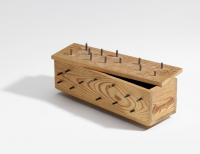
Gunther Uecker
Souvenir For Verheyen, 1989
Sculpture / Object
Mixed Media
GBP 15,000 - 20,000

Gunther Uecker
Graphein I, Gedächtnis Des Tons, 2002
Limited Edition Print
Embossing
EUR 12,000

Gunther Uecker
Graphein II, Shang Dynastie, 2002
Limited Edition Print
Embossing
EUR 12,000

Gunther Uecker
Graphein VII, Reise Kadmos, 2002
Limited Edition Print
Embossing
EUR 12,000

Gunther Uecker
Graphein XI, Ufer Des Toten Meeres, 2002
Limited Edition Print
Embossing
EUR 12,000

Gunther Uecker
Graphein XII, Kreise, Dreiecke, 2002
Limited Edition Print
Embossing
EUR 12,000

Gunther Uecker
Graphein VIII, Christen Ägypten, 2002
Limited Edition Print
Embossing
EUR 12,000

Gunther Uecker
Sarajewo 15, 2005
Limited Edition Print
Screen-print
EUR 1,280

Gunther Uecker
Sarajewo 6, 2005
Limited Edition Print
Screen-print
EUR 1,280

Gunther Uecker
Ouroboros 05, 2018
Limited Edition Print
Mixed Media
Inquire For Price

Gunther Uecker
Verletzungen-Verbindungen, 1998
Limited Edition Print
Screen-print
EUR 1,890

Gunther Uecker
Hiob Seite 24
Limited Edition Print
Silkscreen
EUR 1,800

Gunther Uecker
Hiob Seite 16
Limited Edition Print
Silkscreen
EUR 1,800

Gunther Uecker
Hiob Seite 25
Limited Edition Print
Silkscreen
EUR 1,800

Gunther Uecker
Ouroboros #12, 2018
Limited Edition Print
Sand
EUR 8,000

Gunther Uecker
Ouroboros #9, 2018
Limited Edition Print
Sand
EUR 8,000

Gunther Uecker
Ouroboros #7, 2018
Limited Edition Print
Sand
EUR 8,000

Gunther Uecker
Ouroboros #5, 2018
Limited Edition Print
Sand
EUR 8,000

Gunther Uecker
Ouroboros #3, 2018
Limited Edition Print
Sand
EUR 8,000

Gunther Uecker
Ouroboros (natural Sand), 2018
Limited Edition Print
Screen-print
EUR 22,000

Gunther Uecker
Ouroboros #11, 2018
Limited Edition Print
Sand
EUR 8,000

Gunther Uecker
Ouroboros #10, 2018
Limited Edition Print
Sand
EUR 8,000

Gunther Uecker
Medea VII, 1996
Limited Edition Print
Etching
Currently Not Available

Gunther Uecker
Hiob Seite 04
Limited Edition Print
Silkscreen
Currently Not Available

Gunther Uecker
Hiob Seite 36
Limited Edition Print
Silkscreen
Currently Not Available
Related Artists


Related Articles

Popular, Collecting - February 21, 2025
Sculpture 101: From Clay to Bronze – How Sculptures Are Made
Discover the art of sculpture! Explore traditional techniques like carving and bronze casting, plus modern innovations like 3D printing. A journey in creativity! Read More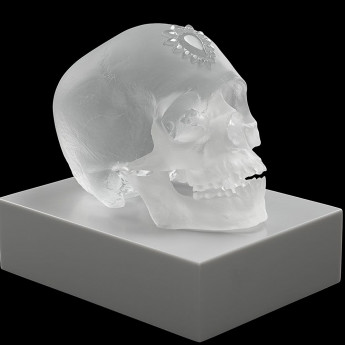
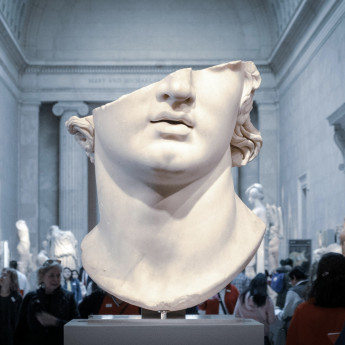
What is the Zero Movement?
ZERO was an art movement founded by Otto Piene and Heinz Mack, aiming to develop into a large international and cross-border movement. The name ZERO originated from a magazine founded by Heinz Mack in 1957, which became a platform for the group's ideas. The magazine was published for several years before ceasing in 1967. The ZERO movement sought to create a new beginning in art, emphasizing light, space, and movement, and became influential in post-war European art.