What is body art?
Body art involves creating art directly on or with the human body. Common forms include body piercings and tattoos, but it also encompasses practices like branding, scarification, scalping, body painting, full-body tattoos, body shaping, and sub-dermal implants. Body art can also refer to a subcategory of performance art where the artist's body is central to the artwork.
Ancient practice, radical movement
Marking, painting and shaping the human body is among the oldest artistic impulses we know — from Ötzi the Iceman's tattoos to ritual scarification and ceremonial body painting across cultures. But body art as a named movement belongs to the 1960s and 1970s, when a generation of artists rejected the object-based art market and turned to the one material no gallery could stock: their own flesh.
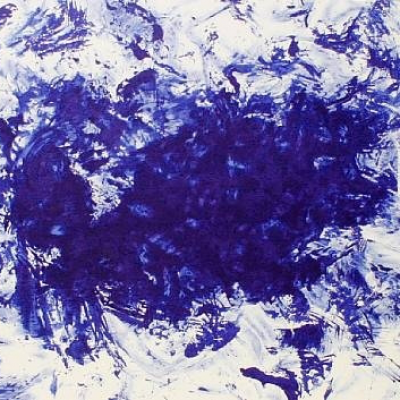
The shift had precedents. Yves Klein's Anthropométries of 1960 — in which nude models, coated in his patented blue pigment, pressed themselves against canvas — treated the body as a living brush. The Viennese Actionists staged visceral rituals involving blood and bodily endurance, while Japan's Gutai group had already used the body to attack, pierce and traverse materials in the 1950s.
The endurance generation
By the early 1970s the body itself had become the artwork. Chris Burden had himself shot in the arm (Shoot, 1971) and crucified on a Volkswagen (Trans-fixed, 1974). Vito Acconci bit his own body and cast the marks. Gina Pane cut herself with razor blades in carefully choreographed 'actions', and Marina Abramović tested the limits of consciousness and audience complicity in works such as Rhythm 0 (1974), in which visitors were invited to use 72 objects — including a loaded gun — on her passive body. Ana Mendieta pressed her silhouette into earth, blood and flame, fusing body art with land art and ritual.
These works asked hard questions: about pain, gender, control, the gaze, and what an artwork actually is when nothing physical remains. Later artists extended the logic — ORLAN turned cosmetic surgery into live performance broadcast to galleries, and contemporary practitioners work with tattooing, prosthetics and biotechnology.
For collectors, this history matters because it explains what survives. Body art was often deliberately ephemeral, which means the market that grew around it is a market of traces: photographs, films, relics, drawings and scores. Understanding the movement's anti-commercial origins is the first step to collecting it intelligently — the subject of the next tab.
What you actually acquire
Because the artwork was frequently a live, unrepeatable event, collecting body art almost always means collecting its residue. The main categories are: photographic documentation (often issued in signed, numbered editions), film and video transfers, relics or props from performances, preparatory drawings and scores, and — in the case of practices like Klein's Anthropométries — the marked support itself, which functions as a conventional unique work.
Photographic editions are the backbone of this market. Key questions to ask: Was the print authorized by the artist or estate? Is it a vintage print made near the date of the performance, or a later edition? Who held the camera — the artist, a designated collaborator, or an audience member? Prints sanctioned by the artist and accompanied by a signed certificate carry substantially more weight than unauthorized documentation, even of the same event.
"My paintings are the ashes of my art."
Yves Klein
Authenticity and what to watch out for
Provenance is everything here. Many performances were photographed by multiple people, and unauthorized prints circulate. Insist on paperwork: certificates, edition numbers, correspondence with the artist's studio or estate, and exhibition history. For video works, confirm which format and edition you are buying and whether the artist's studio will support future migration to new media — obsolete formats are a real conservation risk.
Relics — clothing, blades, pigment-stained objects — are the trickiest category. Their value rests entirely on documented chain of custody linking them to a specific performance. Without it, they are simply objects.
Care and long-term value
Treat photographic documentation as you would any fine-art photograph: frame with UV-filtering glazing, keep away from direct sunlight and humidity, and store certificates separately. Digital and video works should be backed up according to the artist's or estate's protocols.
On value: the major figures of the movement — Abramović, Burden, Acconci, Pane, Mendieta, Klein — are firmly canonical, held by major museums, and their authorized documentation has appreciated steadily. Editions are typically small, supply is finite, and institutional demand is strong. The reward for careful due diligence is owning a genuine trace of some of the most radical art of the twentieth century.
Artworks Related to Body Art
Related Terms

Pop Art is an art movement that began in Britain in 1955 and in the late 1950s in the U.S. It challenged traditional fine arts by incorporating imagery from popular culture, such as news, advertising, and comic books. Pop Art often isolates and recontextualizes materials, combining them with unrelated elements. The movement is more about the attitudes and ideas that inspired it than the specific art itself. Pop Art is seen as a reaction against the dominant ideas of Abstract Expressionism, bringing everyday consumer culture into the realm of fine art.

Contemporary art refers to avant-garde or innovative art created in the recent past or present day. The exact starting point of contemporary art varies depending on the institution, often tied to the founding year of museums or galleries that showcase the style. Contemporary art is characterized by its focus on current ideas, diverse media, and the exploration of new concepts and techniques.
Can't find your Answer?
Thank you! Your question has been sent — we'll get back to you shortly.