Junk art

What is junk art?

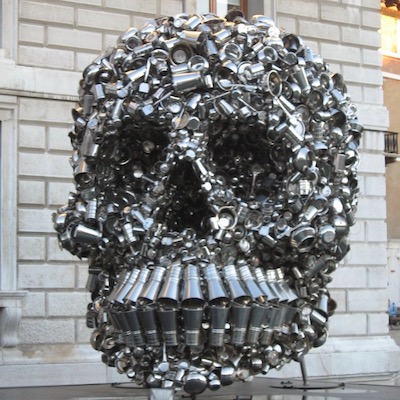
Junk art is a form of art that demonstrates how any material or object can be used to create a wide range of paintings, sculptures, installations, and assemblages. Many Junk Art pieces are made using ordinary materials found in everyday life. By applying artistic knowledge and skills, artists can transform these common objects into remarkable works of art.

Compression

Cesar Baldaccini

1 available work
Roto Zaza No. 1

Jean Tinguely

3 available works
Form Code (Blue)

Tony Cragg

5 available works

Dada roots and the Merz principle

Junk art's family tree begins in the aftermath of the First World War. Marcel Duchamp's readymades had already proposed that an ordinary object could become art through the artist's choice, but it was Kurt Schwitters who built an entire practice from urban debris. His Merz pictures — collages and assemblages of tram tickets, broken wheels, wire mesh and shop labels — insisted that discarded matter carried as much expressive potential as oil paint.

"I could not see the reason why used tram tickets, bits of driftwood, buttons and old junk from attics and rubbish heaps should not serve well as materials for paintings; they suited the purpose just as well as factory-made paints."

Kurt Schwitters

The term arrives in the postwar boom

The label itself is a product of the late 1950s and early 1960s, when the British critic Lawrence Alloway used it to describe work made from the cast-offs of consumer society. The timing mattered: postwar abundance produced unprecedented waste, and artists on both sides of the Atlantic seized on it. Robert Rauschenberg folded street finds — quilts, tyres, stuffed birds — into his Combines. John Chamberlain welded crushed automobile parts into muscular sculpture. In Paris, the Nouveaux Réalistes made junk a programme: César compressed whole cars into dense blocks, Arman accumulated identical discarded objects in vitrines, and Jean Tinguely built clattering machines from scrap metal, one of which famously destroyed itself in the garden of the Museum of Modern Art in 1960. MoMA's landmark 1961 exhibition The Art of Assemblage — organised as this activity peaked — gave the broader tendency institutional weight.

A living tradition

Junk art never hardened into a single movement with a manifesto; it is better understood as a recurring strategy. Louise Nevelson's monochrome walls of salvaged wood, the outsider monument of Simon Rodia's Watts Towers, and Arte Povera's embrace of humble materials all belong to the same lineage. Today it feeds directly into ecological and recycling-minded practices, most visibly in El Anatsui's shimmering hangings woven from thousands of aluminium bottle caps. For collectors, that continuity is part of the appeal: a work of junk art connects the everyday material world of its moment to a century-long argument about what art can be made from.

Meta – Matic N9

Jean Tinguely

Meta – Matic N9, 1960

Drawing / Watercolor

Pen and ink

EUR 500

Shooting paintings

Jean Tinguely

Shooting paintings, 1970

Drawing / Watercolor

Ink

EUR 4,000

Fontaine Joe Syffert from Eight by Eight

Jean Tinguely

Fontaine Joe Syffert from Eight by Eight, 1984

Limited Edition Print

Screen-print

USD 1,300

Friendship

Cesar Baldaccini

Friendship, C.1970

Drawing / Watercolor

Watercolor

EUR 4,950

Chaos I

Jean Tinguely

Chaos I, 1973

Limited Edition Print

Etching

Currently Not Available

Roto Zaza No. 1

Jean Tinguely

Roto Zaza No. 1, 1975

Limited Edition Print

Screen-print

Currently Not Available

Hingham

John Chamberlain

Hingham, 1979

Limited Edition Print

Lithograph

USD 5,500

Die erste Ära (The first era)

Tony Cragg

Die erste Ära (The first era), 1991

Limited Edition Print

Etching

Currently Not Available

Receiver II

Tony Cragg

Receiver II, 2002

Limited Edition Print

Lithograph

EUR 1,700

Receiver I

Tony Cragg

Receiver I, 2002

Limited Edition Print

Lithograph

EUR 1,700

Kent

John Chamberlain

Kent, 1979

Limited Edition Print

Lithograph

USD 5,500

Landscape

Tony Cragg

Landscape, 1983

Limited Edition Print

Offset Print

Currently Not Available

Form Code (III)

Tony Cragg

Form Code (III), 2006

Tapestry

Tapestry

EUR 4,800

Form Code (Blue)

Tony Cragg

Form Code (Blue), 2006

Tapestry

Tapestry

EUR 10,000

From Code (Red)

Tony Cragg

From Code (Red), 2006

Tapestry

Tapestry

EUR 7,500

Coldchester

John Chamberlain

Coldchester, 1979

Limited Edition Print

Lithograph

USD 5,500

Pop art

Pop Art is an art movement that began in Britain in 1955 and in the late 1950s in the U.S. It challenged traditional fine arts by incorporating imagery from popular culture, such as news, advertising, and comic books. Pop Art often isolates and recontextualizes materials, combining them with unrelated elements. The movement is more about the attitudes and ideas that inspired it than the specific art itself. Pop Art is seen as a reaction against the dominant ideas of Abstract Expressionism, bringing everyday consumer culture into the realm of fine art.

Contemporary Art

Contemporary art refers to avant-garde or innovative art created in the recent past or present day. The exact starting point of contemporary art varies depending on the institution, often tied to the founding year of museums or galleries that showcase the style. Contemporary art is characterized by its focus on current ideas, diverse media, and the exploration of new concepts and techniques.

Abstract art

Abstract art uses form, shape, line, and color to create a visual experience without attempting to represent external reality. The composition exists independently of the world's visual references, focusing on expressing ideas and emotions through non-representational means.

Can't find your Answer?

Est. 2005 — twenty years of collecting, online.