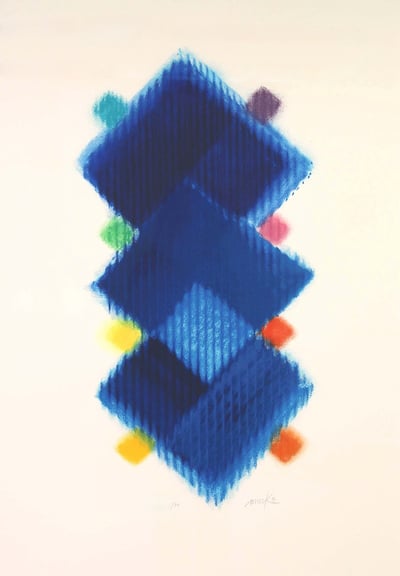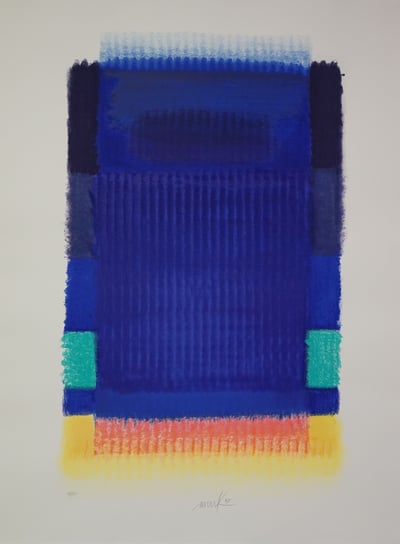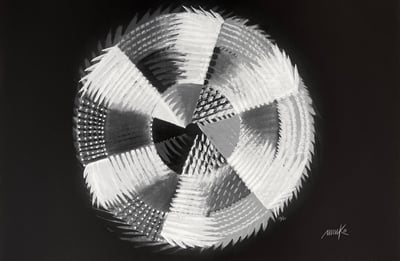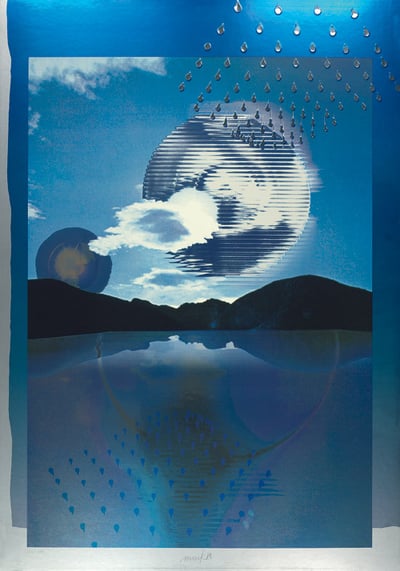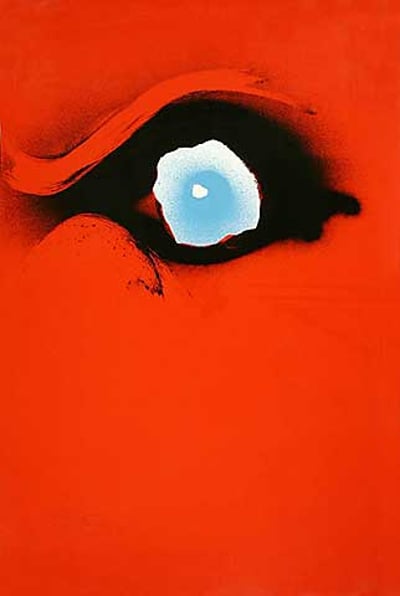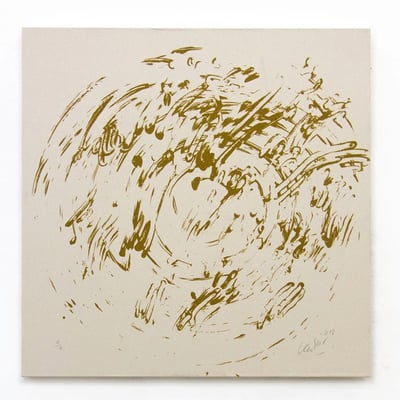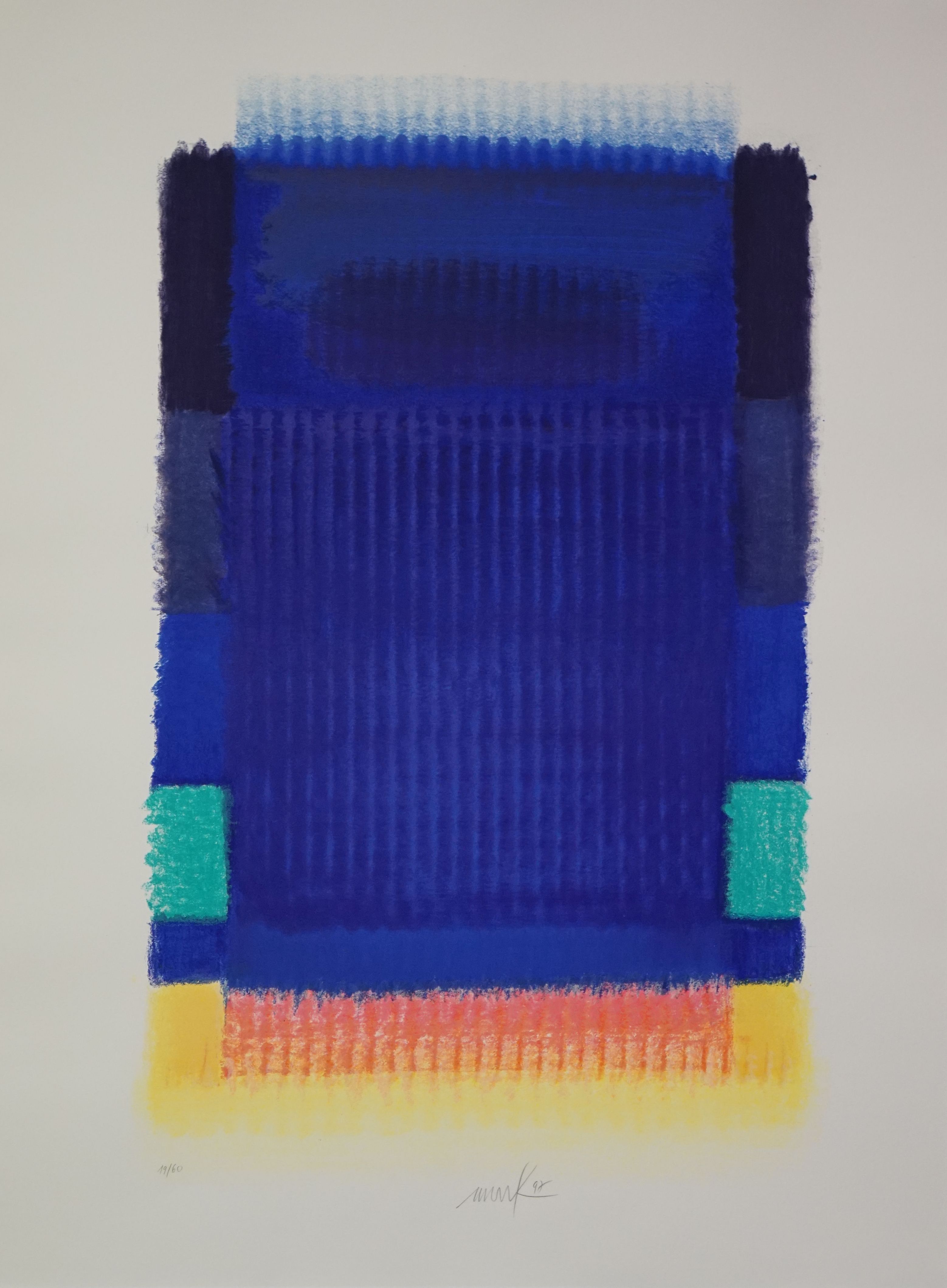
Heinz Mack's Blaues Feld mit Rosa (1997) is a vibrant silkscreen print that showcases the artist's fascination with color and light dynamics. Measuring 80 x 60 cm, this limited edition print, created with 26 distinct colors, is a brilliant example of Mack’s contributions to the Zero Movement. The composition presents a central blue field, bordered and enhanced with gradients of pink, turquoise, and warm yellow hues at the edges, creating a sense of depth and subtle movement. The use of silkscreen allows for a textural interplay and intensity in the colors, making the artwork appear luminous and transformative. The soft, layered effect of the hues invites viewers to engage with the visual rhythm and energy that Mack achieves through his precise manipulation of chromatic contrasts. This piece is not only a striking visual study but also an important representation of Mack's dedication to exploring the interactions of color and light, central themes in his avant-garde practice.
Heinz Mack (Germany, 1931) is a visual artist renowned for his contributions to op art, light art, and kinetic art. As a co-founder of the ZERO movement in 1957, he explored the interplay of light and movement in his works. Mack's innovative sculptures and installations have been exhibited globally, influencing contemporary art.
SilkscreenSilkscreen is a printmaking method that uses a screen made of silk or other mesh fabric. The screen is treated with a substance that blocks ink in certain areas, allowing ink to pass through only in the desired sections. Each color in the print requires a separate screen.
Heinz Mack's Blaues Feld mit Rosa (1997) is a vibrant silkscreen print that showcases the artist's fascination with color and light dynamics. Measuring 80 x 60 cm, this limited edition print, created with 26 distinct colors, is a brilliant example of Mack’s contributions to the Zero Movement. The composition presents a central blue field, bordered and enhanced with gradients of pink, turquoise, and warm yellow hues at the edges, creating a sense of depth and subtle movement. The use of silkscreen allows for a textural interplay and intensity in the colors, making the artwork appear luminous and transformative. The soft, layered effect of the hues invites viewers to engage with the visual rhythm and energy that Mack achieves through his precise manipulation of chromatic contrasts. This piece is not only a striking visual study but also an important representation of Mack's dedication to exploring the interactions of color and light, central themes in his avant-garde practice.
Heinz Mack (Germany, 1931) is a visual artist renowned for his contributions to op art, light art, and kinetic art. As a co-founder of the ZERO movement in 1957, he explored the interplay of light and movement in his works. Mack's innovative sculptures and installations have been exhibited globally, influencing contemporary art.
When I get to the studio, I completely forget how old I am.
- Heinz Mack
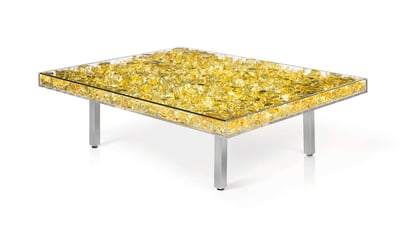
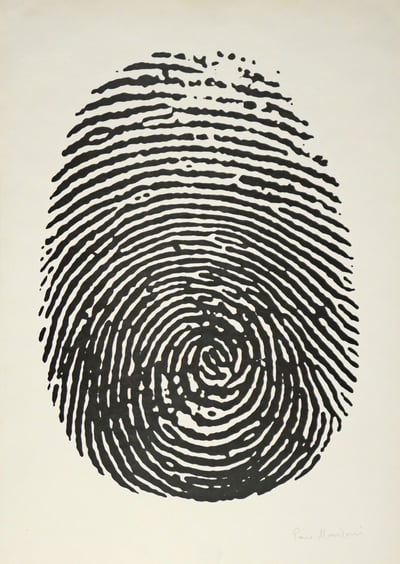
Heinz Mack, a German artist, is perhaps best known for being responsible for the creation of a movement, along with Otto Piene: Zero. Founded in 1957, this movement finds its basis in the design and aesthetic qualities that form ground zero. Several other artists have united in the name of Zero, including Yves Klein, Fontana, Manzoni, Castellani, Tinguely and Schoonhoven, which culminated in December 2008 with the foundation of the Zero Foundation, which researches and promotes the main ideas surrounding Zero. Through this movement, Mack was able to pursue one of the central themes which embodies his work: light. He created a number of sculptures, many of which revolve around the idea of light, including light-reflecting cubes and oscillating light-reliefs. His creative output has also included several other forms of art, including paintings, drawings, pastels, graphics, India ink, bibliophilic work and photography. (Artist website)
A found object is a term used to describe a man-made or natural object, or a fragment of one, that an artist discovers or purchases and keeps for inspiration or as a work of art. The artist may also modify the object or incorporate it into a collage or assemblage, transforming it into a new piece of art.