Details
Artist
Styles
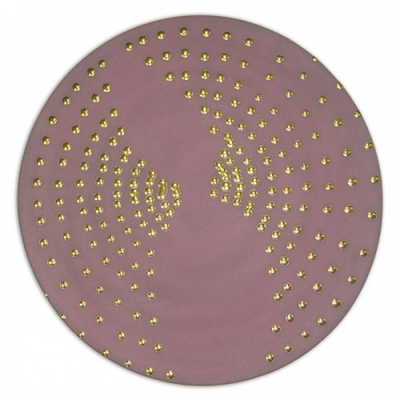
Embossed prints, on Eskulan paper, with accompanying text sheet. Signed, dated, and numbered. Co-published by Dorothea van der Koelen, Mainz and Edouard Weiss, Paris. Literature: Van der Koelen, Dorothea and Martin (eds.): Günther Uecker - Opus Liber, Directory of Bibliophile Books and Works, Mainz 2007, Cat. No. L 0203, ill. pp. 507-511. Graphein II, Shang Dynastie (2002) by Günther Uecker is an embossed print from his profound Graphein series, created on handmade Eskulan paper. The work presents a densely textured field of small, raised dots distributed in an undulating wave-like pattern, invoking tactile readings and meditative perception. The title refers to the Shang Dynasty, one of China’s earliest historical civilizations, evoking themes of ancient knowledge, script, and spiritual resonance. Uecker's minimalist, inkless approach emphasizes light and surface, encouraging viewers to engage with the piece through touch, shadow, and intuition. The visual rhythm of the dots resembles coded language or archaeological terrain, merging abstraction with historical depth. Published in an edition of 120 with additional artist’s copies, and co-produced by Dorothea van der Koelen in Mainz and Edouard Weiss in Paris, this print reflects Uecker’s ongoing exploration of memory, time, and the physicality of inscription.
Graphein II, Shang Dynastie, 2002
form
Medium
Size
70 x 50 cm
- Inches
- Centimeters
Edition
Price
- USD
- EUR
- GBP
Details
Artist
Styles
Embossed prints, on Eskulan paper, with accompanying text sheet. Signed, dated, and numbered. Co-published by Dorothea van der Koelen, Mainz and Edouard Weiss, Paris. Literature: Van der Koelen, Dorothea and Martin (eds.): Günther Uecker - Opus Liber, Directory of Bibliophile Books and Works, Mainz 2007, Cat. No. L 0203, ill. pp. 507-511. Graphein II, Shang Dynastie (2002) by Günther Uecker is an embossed print from his profound Graphein series, created on handmade Eskulan paper. The work presents a densely textured field of small, raised dots distributed in an undulating wave-like pattern, invoking tactile readings and meditative perception. The title refers to the Shang Dynasty, one of China’s earliest historical civilizations, evoking themes of ancient knowledge, script, and spiritual resonance. Uecker's minimalist, inkless approach emphasizes light and surface, encouraging viewers to engage with the piece through touch, shadow, and intuition. The visual rhythm of the dots resembles coded language or archaeological terrain, merging abstraction with historical depth. Published in an edition of 120 with additional artist’s copies, and co-produced by Dorothea van der Koelen in Mainz and Edouard Weiss in Paris, this print reflects Uecker’s ongoing exploration of memory, time, and the physicality of inscription.
- Recently Added
- Price (low-high )
- Price (high-low )
- Year (low-high )
- Year (high-low )

Gunther Uecker
Baum. Kunstpranger, 1984
Sculpture / Object
Mixed Media
EUR 12,950

Gunther Uecker
Helles Nagelkreuz, 2017
Sculpture / Object
Bronze
EUR 49,500

Gunther Uecker
Jahresteller, 1975
Sculpture / Object
Glass
EUR 1,620
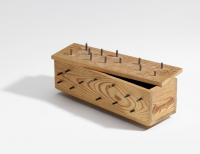
Gunther Uecker
Souvenir For Verheyen, 1989
Sculpture / Object
Mixed Media
GBP 15,000 - 20,000

Gunther Uecker
Graphein I, Gedächtnis Des Tons, 2002
Limited Edition Print
Embossing
EUR 12,000

Gunther Uecker
Graphein II, Shang Dynastie, 2002
Limited Edition Print
Embossing
EUR 12,000

Gunther Uecker
Graphein VII, Reise Kadmos, 2002
Limited Edition Print
Embossing
EUR 12,000

Gunther Uecker
Graphein XI, Ufer Des Toten Meeres, 2002
Limited Edition Print
Embossing
EUR 12,000

Gunther Uecker
Graphein XII, Kreise, Dreiecke, 2002
Limited Edition Print
Embossing
EUR 12,000

Gunther Uecker
Graphein VIII, Christen Ägypten, 2002
Limited Edition Print
Embossing
EUR 12,000

Gunther Uecker
Sarajewo 15, 2005
Limited Edition Print
Screen-print
EUR 1,280

Gunther Uecker
Sarajewo 6, 2005
Limited Edition Print
Screen-print
EUR 1,280

Gunther Uecker
Ouroboros 05, 2018
Limited Edition Print
Mixed Media
Inquire For Price

Gunther Uecker
Verletzungen-Verbindungen, 1998
Limited Edition Print
Screen-print
EUR 1,890

Gunther Uecker
Hiob Seite 24
Limited Edition Print
Silkscreen
EUR 1,800

Gunther Uecker
Hiob Seite 16
Limited Edition Print
Silkscreen
EUR 1,800

Gunther Uecker
Hiob Seite 25
Limited Edition Print
Silkscreen
EUR 1,800

Gunther Uecker
Ouroboros #12, 2018
Limited Edition Print
Sand
EUR 8,000

Gunther Uecker
Ouroboros #9, 2018
Limited Edition Print
Sand
EUR 8,000

Gunther Uecker
Ouroboros #7, 2018
Limited Edition Print
Sand
EUR 8,000

Gunther Uecker
Ouroboros #5, 2018
Limited Edition Print
Sand
EUR 8,000

Gunther Uecker
Ouroboros #3, 2018
Limited Edition Print
Sand
EUR 8,000

Gunther Uecker
Ouroboros (natural Sand), 2018
Limited Edition Print
Screen-print
EUR 22,000

Gunther Uecker
Ouroboros #11, 2018
Limited Edition Print
Sand
EUR 8,000

Gunther Uecker
Ouroboros #10, 2018
Limited Edition Print
Sand
EUR 8,000

Gunther Uecker
Medea VII, 1996
Limited Edition Print
Etching
Currently Not Available

Gunther Uecker
Hiob Seite 04
Limited Edition Print
Silkscreen
Currently Not Available

Gunther Uecker
Hiob Seite 36
Limited Edition Print
Silkscreen
Currently Not Available
Related Artists


Related Articles
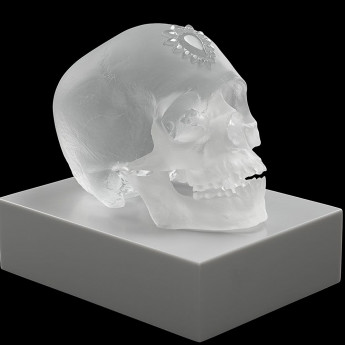
Popular, Art Movements - September 05, 2025
The Rise of Glass Art: Transparency, Reflection, and Contemporary Design
Explore how Ai Weiwei, Uecker & Calleja transform glass into bold, conceptual art—merging fragility, reflection, and political expression. Read More
What is the Zero Movement?
ZERO was an art movement founded by Otto Piene and Heinz Mack, aiming to develop into a large international and cross-border movement. The name ZERO originated from a magazine founded by Heinz Mack in 1957, which became a platform for the group's ideas. The magazine was published for several years before ceasing in 1967. The ZERO movement sought to create a new beginning in art, emphasizing light, space, and movement, and became influential in post-war European art.