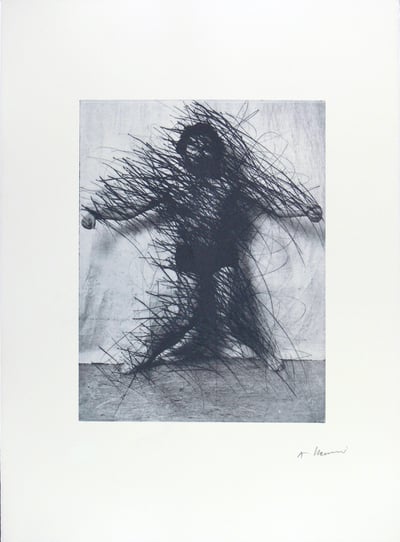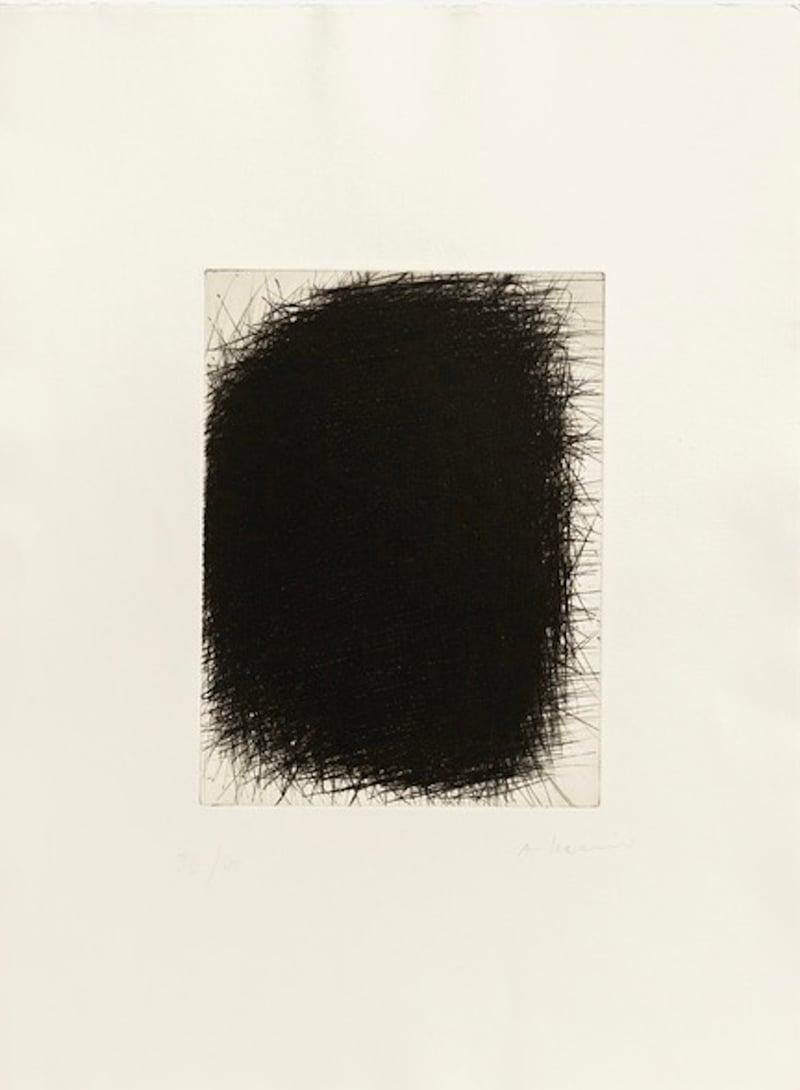
Drypoint on Aluminium plate, printed by Hand on Zerkall handmade Paper 340g
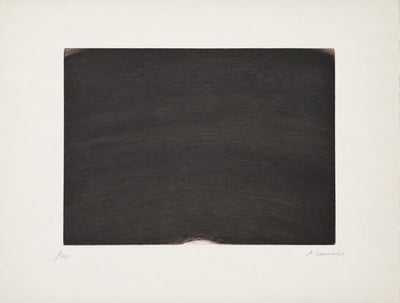
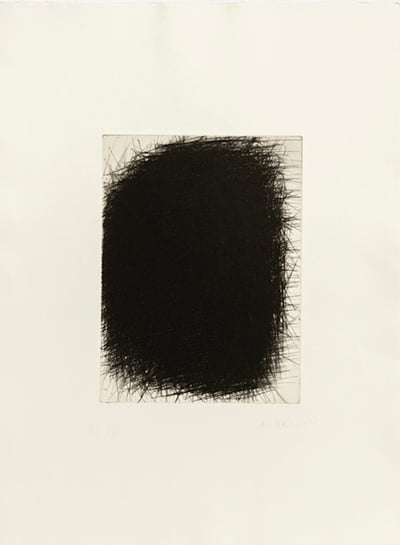
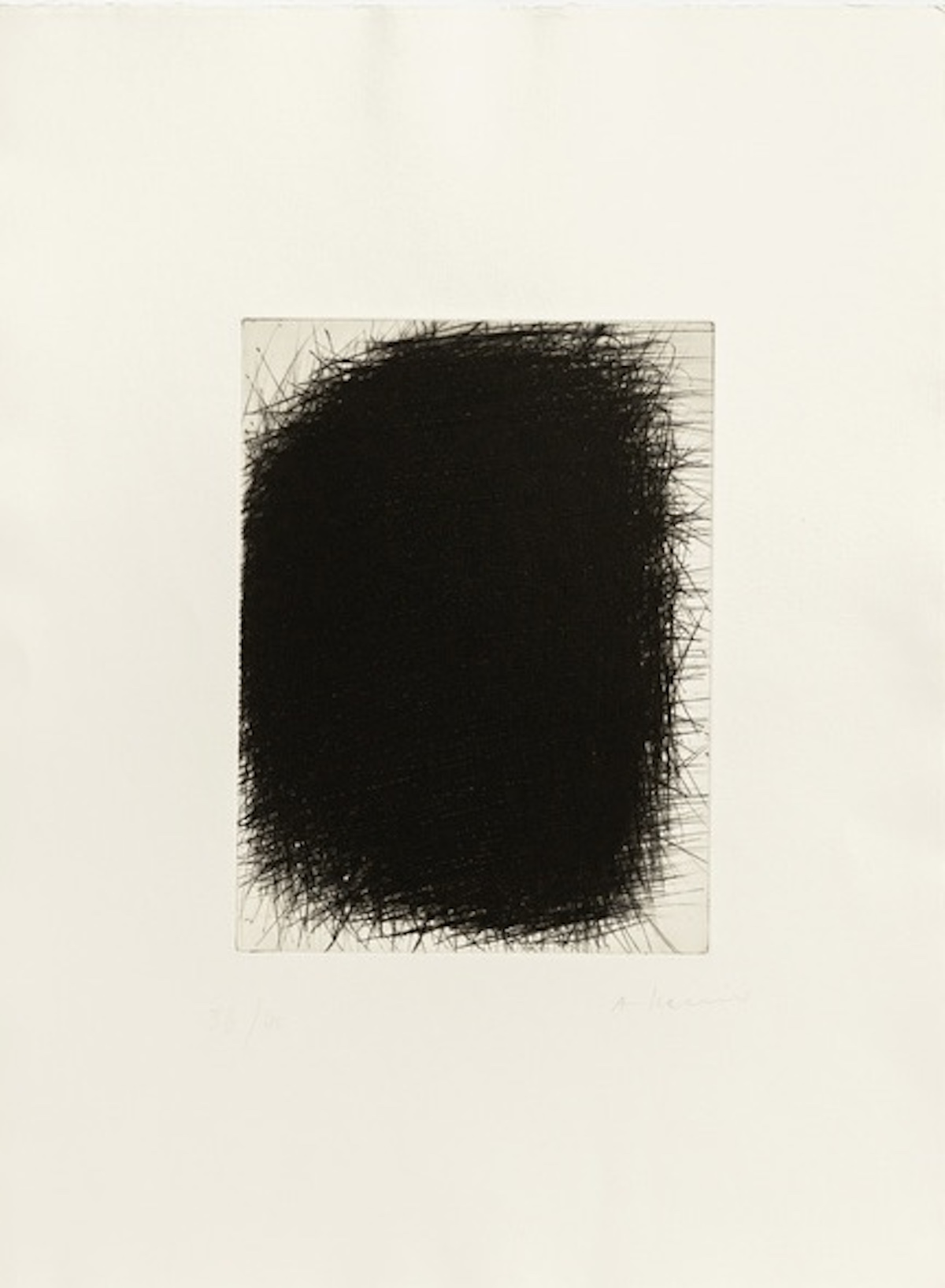
This drypoint etching on an aluminum plate, printed by hand on Zerkall handmade paper (340g), measures 68 x 50 cm and is part of a limited edition of 40. The composition features a dense black mass of overlapping, chaotic lines, creating a textured and almost impenetrable block of darkness. The marks radiate slightly at the edges, suggesting energy and movement, yet the form remains a powerful monolithic presence. Rainer’s intense layering of lines explores the tension between control and spontaneity, abstraction and structure.
En Face (schwarz) reflects Rainer's fascination with the expressive potential of drypoint etching. The work transforms minimalistic form into a meditative exploration of depth, density, and the void. This piece is a striking example of Rainer's ability to use repetition and intensity to push the boundaries of abstraction and emotional resonance.
Arnulf Rainer (Austria, 1929) is a pioneering artist known for his abstract informal art. He co-founded the Hundsgruppe in 1950 and developed his signature 'overpaintings,' where he layered paint over existing images, exploring themes of creation and destruction. Rainer's work often delves into the subconscious, reflecting his interest in dreams and the mystical.
DrypointDrypoint is an intaglio printmaking technique where an image is incised onto a plate using a sharp, pointed tool, typically a needle made of metal or diamond. Traditionally, copper plates were used, but today zinc, plexiglass, or acetate are also common. Drypoint is easier for drawing artists to master compared to engraving, as the needle technique resembles drawing with a pencil rather than the more complex burin used in engraving.
Drypoint on Aluminium plate, printed by Hand on Zerkall handmade Paper 340g
This drypoint etching on an aluminum plate, printed by hand on Zerkall handmade paper (340g), measures 68 x 50 cm and is part of a limited edition of 40. The composition features a dense black mass of overlapping, chaotic lines, creating a textured and almost impenetrable block of darkness. The marks radiate slightly at the edges, suggesting energy and movement, yet the form remains a powerful monolithic presence. Rainer’s intense layering of lines explores the tension between control and spontaneity, abstraction and structure.
En Face (schwarz) reflects Rainer's fascination with the expressive potential of drypoint etching. The work transforms minimalistic form into a meditative exploration of depth, density, and the void. This piece is a striking example of Rainer's ability to use repetition and intensity to push the boundaries of abstraction and emotional resonance.
Arnulf Rainer (Austria, 1929) is a pioneering artist known for his abstract informal art. He co-founded the Hundsgruppe in 1950 and developed his signature 'overpaintings,' where he layered paint over existing images, exploring themes of creation and destruction. Rainer's work often delves into the subconscious, reflecting his interest in dreams and the mystical.
Only an 'almost,' a 'nearly,' is possible.
- Arnulf Rainer
Renowned for his abstractappropriation art, Arnulf Rainer is a painter and founder of the Hundgruppe (dog group) alongside fellow artists Brauer and Mikl. Rainer has recevied acclaim for his technique of ‘overpainting’ which involves him taking a pre-existing work, and painting over it, usually with gestural strokes and a heavy impasto; Wine Crucifix is one of his most notable ‘overpaintings’ - originally painted in 1957 by the artist, he decided to rework it in 1978 noting that the ‘quality and truth of the picture only grew as it became darker and darker’. Rainer was heavily inspired by the depths of the human mind and explored his own subconscious through painting with the technique of Automatism, popular among Surrealist painters – he also experimented with painting with his feet and fingers as well as exploring the effect of hallucinogenic drugs on his creativity.
Body art involves creating art directly on or with the human body. Common forms include body piercings and tattoos, but it also encompasses practices like branding, scarification, scalping, body painting, full-body tattoos, body shaping, and sub-dermal implants. Body art can also refer to a subcategory of performance art where the artist's body is central to the artwork.