
Pierre Alechinsky (Belgium, 1927) is a prominent painter and printmaker associated with the CoBrA movement, known for his vibrant, expressive works blending abstraction and figurative elements. Inspired by calligraphy and traditional printmaking techniques, Alechinsky's dynamic compositions often explore humor, spontaneity, and the subconscious. His work is celebrated worldwide in major museum collections.
Reserve pour l'hiver, 1988
Form
Medium
Size
- Inches
- Centimeters
Edition
Price
- Authenticity Guaranteed
- Insured Shipping
- Online Since 2005
Pierre Alechinsky (Belgium, 1927) is a prominent painter and printmaker associated with the CoBrA movement, known for his vibrant, expressive works blending abstraction and figurative elements. Inspired by calligraphy and traditional printmaking techniques, Alechinsky's dynamic compositions often explore humor, spontaneity, and the subconscious. His work is celebrated worldwide in major museum collections.
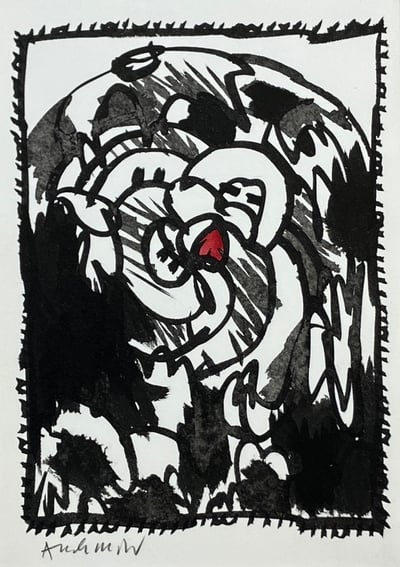
Pierre Alechinsky
Tête Bêche, 1987
Drawing / Watercolor
Ink
EUR 7,200

Pierre Alechinsky
Vol Augural, 1990
Limited Edition Print
Etching
EUR 22,000
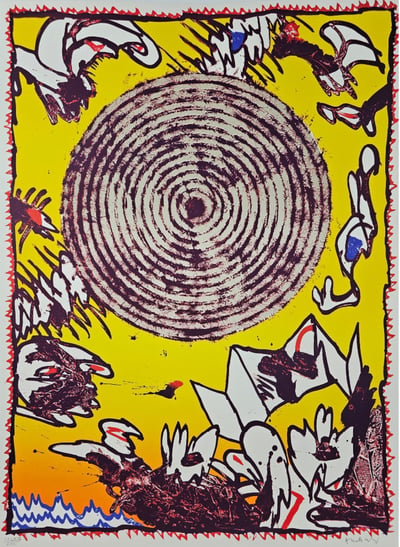
Pierre Alechinsky
Seoul, 1988
Limited Edition Print
Lithograph
Currently Not Available
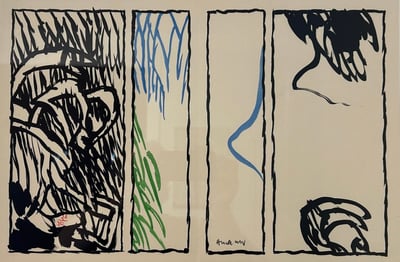
Pierre Alechinsky
Vacillations (with Watercolor), 1979
Limited Edition Print
Lithograph
Currently Not Available
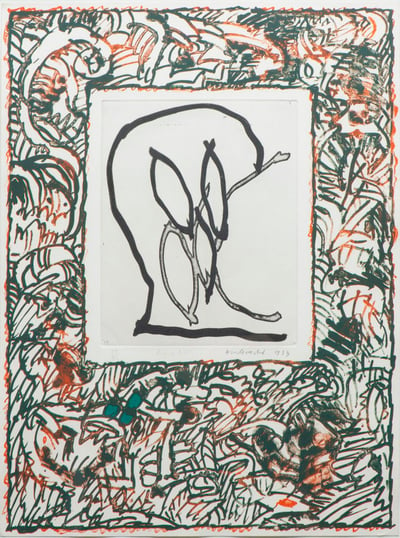
Pierre Alechinsky
Ligne BVV, 1983
Limited Edition Print
Lithograph
Currently Not Available
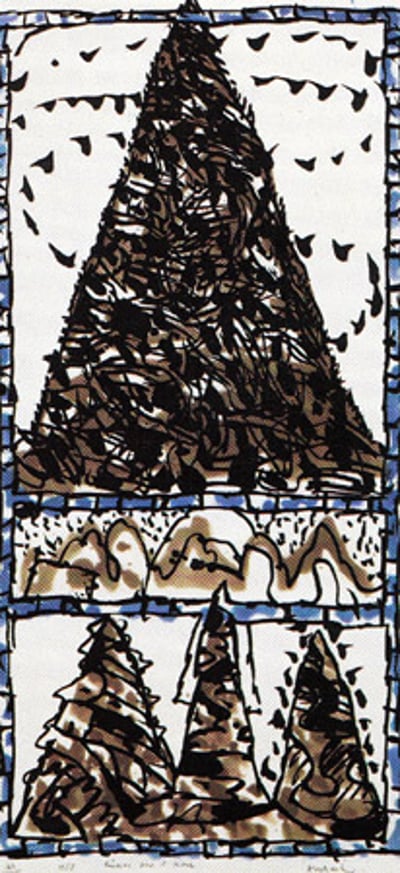
Pierre Alechinsky
Reserve pour l'hiver, 1988
Limited Edition Print
Etching
Currently Not Available
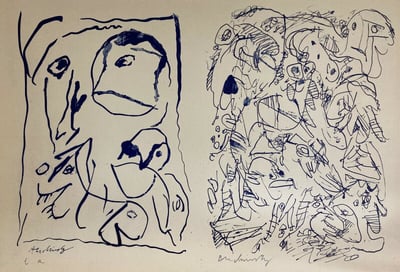
Pierre Alechinsky
Sans titre, Unknown
Limited Edition Print
Lithograph
Currently Not Available
Related Artists
Related Articles
Artists - February 4, 2025
Pierre Alechinsky: Bridging East and West in Modern Art
Discover how Pierre Alechinsky fused European expressionism with Japanese calligraphy, pioneering a unique cross-cultural artistic language.Read More
What is the CoBrA movement?
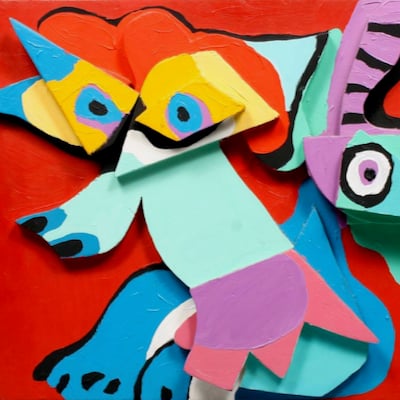
CoBrA stands for Copenhagen, Brussels, and Amsterdam; the group was formed with a desire to break away from the existing art movements of the time. Their critique of Western society led them to experiment and evolve into a significant international movement. CoBrA was founded on November 8, 1948, at the Notre Dame Café in Paris, where its manifesto was signed by Karel Appel, Joseph Noiret, Corneille, Christian Dotremont, Constant, and Asger Jorn. The group was united by a shared commitment to freedom in both form and color, and their work emphasized experimentation and spontaneity.

Pierre Alechinsky
Reserve pour l'hiver, 1988
120 x 60 cm


