Details
Artist
Styles
12 Multiples Terragraphs (with sand) on canvas mounted on wood in a limited edition of 36 hand signed & numbered // Ouroboros #3 by Günther Uecker is a terragraph print with sand, created in 2018 as part of a limited edition of 36. The piece is mounted on canvas and wood, showcasing Uecker's signature tactile and earthy aesthetic. This abstract work features a swirling, circular motion in a golden-brown hue, evocative of the ancient symbol of the Ouroboros—a snake consuming its own tail, representing infinity and cyclic renewal. The textured application of sand adds a raw, organic quality, encouraging viewers to consider themes of continuity, nature, and transformation. Uecker’s use of physical materials and repetitive forms imbues the piece with both a meditative and powerful presence.
Ouroboros #3, 2018
form
Medium
Size
95 x 95 cm
- Inches
- Centimeters
Edition
Price
- USD
- EUR
- GBP
Details
Artist
Styles
12 Multiples Terragraphs (with sand) on canvas mounted on wood in a limited edition of 36 hand signed & numbered // Ouroboros #3 by Günther Uecker is a terragraph print with sand, created in 2018 as part of a limited edition of 36. The piece is mounted on canvas and wood, showcasing Uecker's signature tactile and earthy aesthetic. This abstract work features a swirling, circular motion in a golden-brown hue, evocative of the ancient symbol of the Ouroboros—a snake consuming its own tail, representing infinity and cyclic renewal. The textured application of sand adds a raw, organic quality, encouraging viewers to consider themes of continuity, nature, and transformation. Uecker’s use of physical materials and repetitive forms imbues the piece with both a meditative and powerful presence.
- Recently Added
- Price (low-high )
- Price (high-low )
- Year (low-high )
- Year (high-low )

Gunther Uecker
Baum. Kunstpranger, 1984
Sculpture / Object
Mixed Media
EUR 12,950

Gunther Uecker
Helles Nagelkreuz, 2017
Sculpture / Object
Bronze
EUR 49,500

Gunther Uecker
Jahresteller, 1975
Sculpture / Object
Glass
EUR 1,620
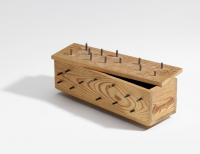
Gunther Uecker
Souvenir For Verheyen, 1989
Sculpture / Object
Mixed Media
GBP 15,000 - 20,000

Gunther Uecker
Graphein I, Gedächtnis Des Tons, 2002
Limited Edition Print
Embossing
EUR 12,000

Gunther Uecker
Graphein II, Shang Dynastie, 2002
Limited Edition Print
Embossing
EUR 12,000

Gunther Uecker
Graphein VII, Reise Kadmos, 2002
Limited Edition Print
Embossing
EUR 12,000

Gunther Uecker
Graphein XI, Ufer Des Toten Meeres, 2002
Limited Edition Print
Embossing
EUR 12,000

Gunther Uecker
Graphein XII, Kreise, Dreiecke, 2002
Limited Edition Print
Embossing
EUR 12,000

Gunther Uecker
Graphein VIII, Christen Ägypten, 2002
Limited Edition Print
Embossing
EUR 12,000

Gunther Uecker
Sarajewo 15, 2005
Limited Edition Print
Screen-print
EUR 1,280

Gunther Uecker
Sarajewo 6, 2005
Limited Edition Print
Screen-print
EUR 1,280

Gunther Uecker
Ouroboros 05, 2018
Limited Edition Print
Mixed Media
Inquire For Price

Gunther Uecker
Verletzungen-Verbindungen, 1998
Limited Edition Print
Screen-print
EUR 1,890

Gunther Uecker
Hiob Seite 24
Limited Edition Print
Silkscreen
EUR 1,800

Gunther Uecker
Hiob Seite 16
Limited Edition Print
Silkscreen
EUR 1,800

Gunther Uecker
Hiob Seite 25
Limited Edition Print
Silkscreen
EUR 1,800

Gunther Uecker
Ouroboros #12, 2018
Limited Edition Print
Sand
EUR 8,000

Gunther Uecker
Ouroboros #9, 2018
Limited Edition Print
Sand
EUR 8,000

Gunther Uecker
Ouroboros #7, 2018
Limited Edition Print
Sand
EUR 8,000

Gunther Uecker
Ouroboros #5, 2018
Limited Edition Print
Sand
EUR 8,000

Gunther Uecker
Ouroboros #3, 2018
Limited Edition Print
Sand
EUR 8,000

Gunther Uecker
Ouroboros (natural Sand), 2018
Limited Edition Print
Screen-print
EUR 22,000

Gunther Uecker
Ouroboros #11, 2018
Limited Edition Print
Sand
EUR 8,000

Gunther Uecker
Ouroboros #10, 2018
Limited Edition Print
Sand
EUR 8,000

Gunther Uecker
Medea VII, 1996
Limited Edition Print
Etching
Currently Not Available

Gunther Uecker
Hiob Seite 04
Limited Edition Print
Silkscreen
Currently Not Available

Gunther Uecker
Hiob Seite 36
Limited Edition Print
Silkscreen
Currently Not Available
Related Artists


Related Articles
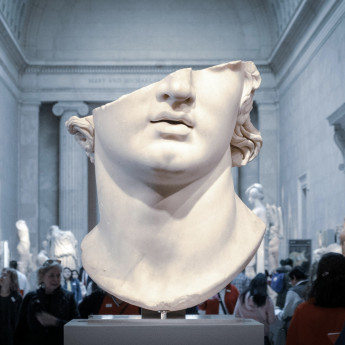
Popular, Collecting - July 23, 2025
Sculpture Care and Display: From Plinths to Pedestals in Your Home
Learn how to display and care for sculpture at home—from lighting tips to material care—so your art can truly shine in any space. Read More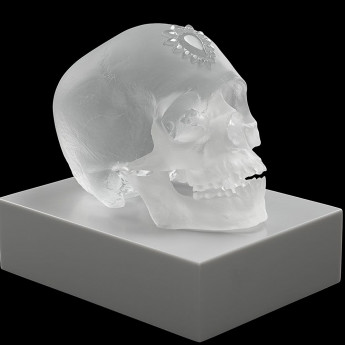

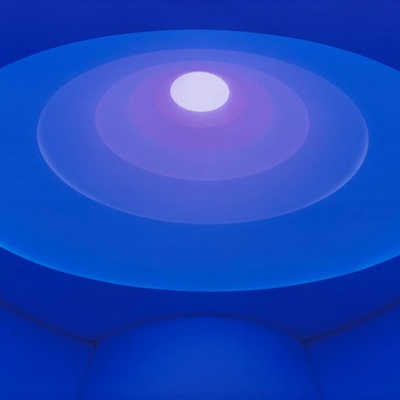
What is ‘light and space’?
The Light and Space Movement refers to loosely affiliated art movements connected to minimalism, geometric abstraction, and op art that originated in Southern California in the 1960s. Greatly influenced by artist John McLaughlin, these artists focused on sensory phenomena such as light, perception, and space as central elements of their work. They also incorporated cutting-edge technologies from the aerospace and engineering industries to develop light-filled and sensuous objects, creating immersive experiences that emphasize the viewer's perception.