Details
Artist
Styles
Aquatint on paper - Published by Giorgio Upiglio, Milano // Folla by Enrico Baj, created in 1985, is an aquatint print that captures a chaotic and expressive crowd of distorted faces. The composition uses exaggerated features and a vivid palette dominated by reds and whites to emphasize the emotional intensity of the scene. Each face displays varied expressions ranging from shock to contemplation, embodying a sense of disarray and individuality within the collective. Baj's signature style combines abstraction and surrealism, creating a dynamic and almost unsettling atmosphere. Published by Giorgio Upiglio in Milan, this work exemplifies Baj's exploration of human behavior and society.
Details
Artist
Styles
Aquatint on paper - Published by Giorgio Upiglio, Milano // Folla by Enrico Baj, created in 1985, is an aquatint print that captures a chaotic and expressive crowd of distorted faces. The composition uses exaggerated features and a vivid palette dominated by reds and whites to emphasize the emotional intensity of the scene. Each face displays varied expressions ranging from shock to contemplation, embodying a sense of disarray and individuality within the collective. Baj's signature style combines abstraction and surrealism, creating a dynamic and almost unsettling atmosphere. Published by Giorgio Upiglio in Milan, this work exemplifies Baj's exploration of human behavior and society.
- Recently Added
- Price (low-high )
- Price (high-low )
- Year (low-high )
- Year (high-low )

Enrico Baj
Catherine Henriette De Balzac D’Etrague Marquise De Verneuil, 1978
Sculpture / Object
Mixed Media
EUR 9,500

Enrico Baj
Horatius Nelson Duke Of Bronte, 1972
Limited Edition Print
Mixed Media
EUR 8,350

Enrico Baj
Sull’acqua (book), 2003
Sculpture / Object
Mixed Media
EUR 7,300

Enrico Baj
The Golden Roll-Dragster, 1986
Sculpture / Object
Mixed Media
EUR 5,200

Enrico Baj
Untitled (Wooden Figure), 1980
Limited Edition Print
Mixed Media
EUR 2,100

Enrico Baj
Mic-Mac, Danseus Mecanique, 2001
Limited Edition Print
Collage
EUR 1,650

Enrico Baj
Maternità, 1974
Sculpture / Object
Mixed Media
EUR 4,850

Enrico Baj
Busto, 1969
Sculpture / Object
Acrylic Sculpture
EUR 3,900

Enrico Baj
Testa D’uomo, 1969
Sculpture / Object
Acrylic Sculpture
EUR 3,900

Enrico Baj
Figura In Ginocchio, 1969
Sculpture / Object
Acrylic Sculpture
EUR 3,900

Enrico Baj
Personaggio Allo Specchio, 1971
Limited Edition Print
Mixed Media
EUR 9,500

Enrico Baj
Cravatte, 1967
Limited Edition Print
Mixed Media
EUR 3,450

Enrico Baj
Folla, 1985
Limited Edition Print
Aquatint
EUR 2,500

Enrico Baj
Incontri Ravvicinati, 1986
Limited Edition Print
Etching
EUR 4,250

Enrico Baj
Ermengarda, 1975
Limited Edition Print
Mixed Media
EUR 3,350

Enrico Baj
Manifesto Per La Mostra Enrico Baj, Palazzo Dei Diamanti, Ferrara, 1977
Limited Edition Print
Silkscreen
EUR 1,500

Enrico Baj
Diavolone, 1973
Limited Edition Print
Mixed Media
EUR 950

Enrico Baj
Personaggio, 1968
Limited Edition Print
Silkscreen
EUR 1,150

Enrico Baj
Generale Con La Sua Favorita, 1978
Limited Edition Print
Etching
EUR 1,250

Enrico Baj
Personnage De Guerre, 1971
Limited Edition Print
Etching
EUR 1,250
Related Artists


Related Articles
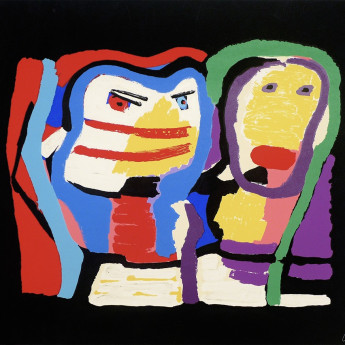
Art Movements - November 21, 2022
Botch, Blotch and Splotch: The Exuberant Maelstrom of the Cobra Art Movement.
Explore the CoBrA movement’s bold creativity, blending raw expression and experimentation. Discover its impact on post-war art and avant-garde traditions. Read More

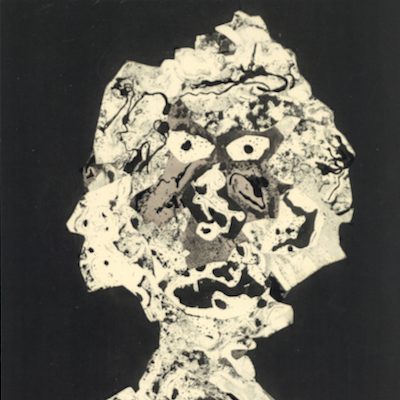
What is Art Brut?
Art Brut, a French term meaning Raw Art, was coined by Jean Dubuffet to describe art created outside the conventional fine arts tradition. Dubuffet used the term to refer to works made by self-taught artists, including the mentally ill, prisoners, and others on the margins of society. He also called it Outsider Art. This art is characterized by its raw, unrefined nature, often created without concern for traditional presentation or imitation.