Details
Artist
Styles
Nails, wood and acrylic paint. // Clou by Bernard Aubertin is a striking mixed-media artwork that combines nails, wood, and acrylic paint to create a textured, monochromatic red surface. Created in 1969, this piece exemplifies Aubertin's fascination with repetition and materiality, utilizing rows of nails embedded in a wooden panel and coated with vivid red acrylic. The nails create a rhythmic, tactile pattern that engages the viewer's sense of both sight and touch. The intense red color is characteristic of Aubertin’s work, echoing his association with the ZERO movement, which sought to reduce art to pure elemental forms and materials. Measuring 90 cm in height and 50 cm in width, this work is a bold exploration of form, texture, and the transformative power of color.
Clou, 1969
form
Medium
Size
90 x 50 cm
- Inches
- Centimeters
Edition
Range
- USD
- EUR
- GBP
Details
Artist
Styles
Nails, wood and acrylic paint. // Clou by Bernard Aubertin is a striking mixed-media artwork that combines nails, wood, and acrylic paint to create a textured, monochromatic red surface. Created in 1969, this piece exemplifies Aubertin's fascination with repetition and materiality, utilizing rows of nails embedded in a wooden panel and coated with vivid red acrylic. The nails create a rhythmic, tactile pattern that engages the viewer's sense of both sight and touch. The intense red color is characteristic of Aubertin’s work, echoing his association with the ZERO movement, which sought to reduce art to pure elemental forms and materials. Measuring 90 cm in height and 50 cm in width, this work is a bold exploration of form, texture, and the transformative power of color.
- Recently Added
- Price (low-high )
- Price (high-low )
- Year (low-high )
- Year (high-low )

Bernard Aubertin
Clou - With Pattern , 1966
Painting
Mixed Media
EUR 20,000 - 30,000

Bernard Aubertin
Abidjan
Painting
Mixed Media
EUR 5,400

Bernard Aubertin
Clou (rouge), 1968
Painting
Mixed Media
EUR 20,000 - 30,000

Bernard Aubertin
Clou, 1969
Painting
Mixed Media
EUR 20,000 - 30,000
Related Artists


Related Articles

Popular, Artists - October 23, 2024
Robert Indiana's 'LOVE': An Iconic Symbol of Pop Art
Celebrate Robert Indiana’s LOVE, a Pop Art icon. Explore its bold typography, cultural symbolism, and enduring message of unity and peace. Read More

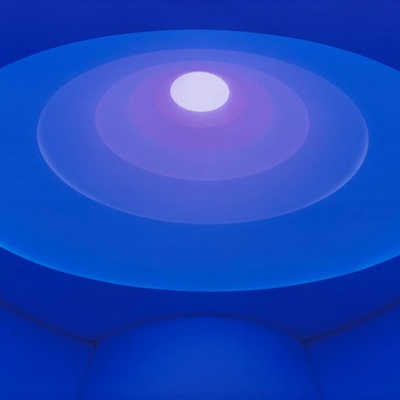
What is ‘light and space’?
The Light and Space Movement refers to loosely affiliated art movements connected to minimalism, geometric abstraction, and op art that originated in Southern California in the 1960s. Greatly influenced by artist John McLaughlin, these artists focused on sensory phenomena such as light, perception, and space as central elements of their work. They also incorporated cutting-edge technologies from the aerospace and engineering industries to develop light-filled and sensuous objects, creating immersive experiences that emphasize the viewer's perception.