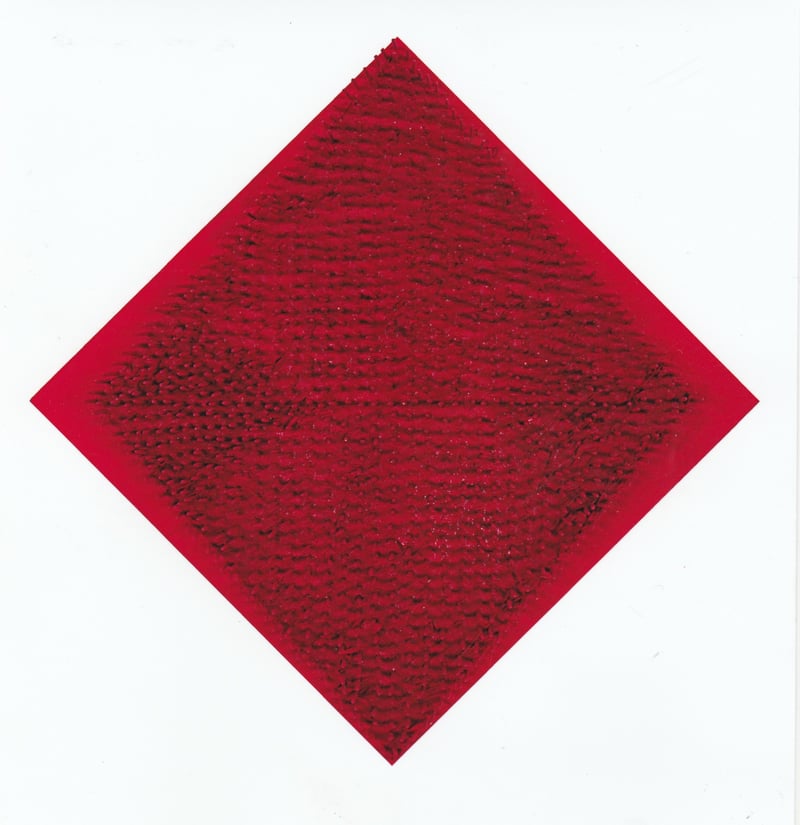
Nails and acrylic on wood
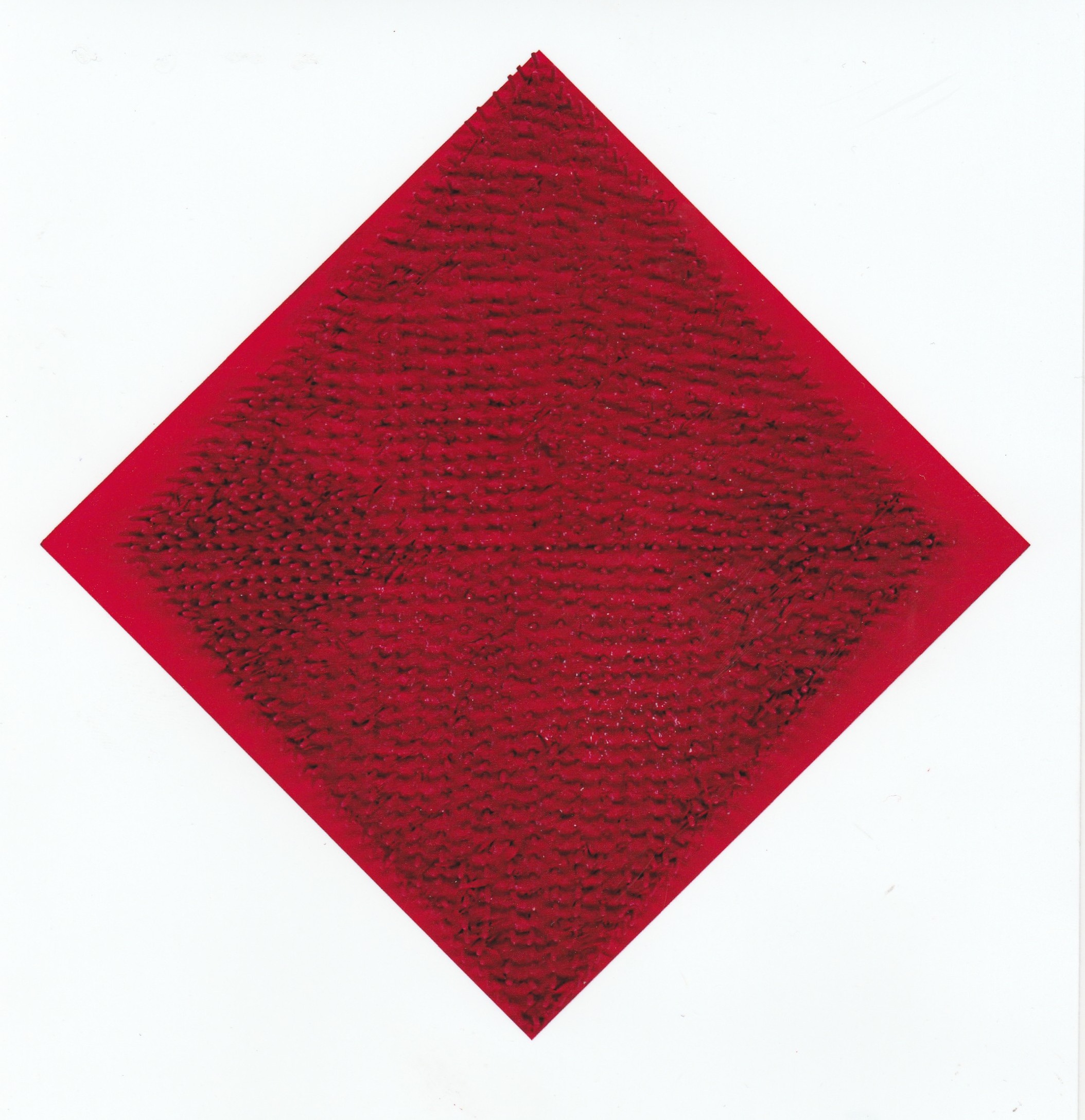
Clou - with Pattern by Bernard Aubertin, created in 1966, is a mixed-media work that features nails and red acrylic on wood. Presented in a diamond orientation, this piece exemplifies Aubertin’s commitment to exploring texture, form, and the color red. The nails are meticulously arranged to create a structured, tactile surface, which interacts with the vibrant red paint to generate a subtle play of light and shadow. The repetitive arrangement of nails builds a hypnotic pattern that captures the viewer’s attention, inviting close examination of the details. Aubertin, known for his monochromatic red works, uses the nails not only as a structural component but as a medium of expression, symbolizing energy and rhythm. This artwork captures the artist’s fascination with materiality and minimalism, turning a simple red surface into a field of intense visual and physical engagement.
Artwork Copyright © Bernard AubertinBernard Aubertin (France, 1934–2015) was a key figure in the Zero movement, renowned for his monochromatic red paintings and burnt wood works. His art explored themes of repetition, destruction, and renewal, using fire and uniformity as central elements. Aubertin’s innovative approach challenged traditional painting, leaving a lasting impact on contemporary conceptual art.
Artwork Copyright © Bernard AubertinClou - with pattern , 1966
Form
Medium
Size
- Inches
- Centimeters
Edition
Price
- Authenticity Guaranteed
- Insured Shipping
- Online Since 2005
●Inventory 8299
●Signed
●Comes with gallery invoice and certificate
●Any questions?
Nails and acrylic on wood
Clou - with Pattern by Bernard Aubertin, created in 1966, is a mixed-media work that features nails and red acrylic on wood. Presented in a diamond orientation, this piece exemplifies Aubertin’s commitment to exploring texture, form, and the color red. The nails are meticulously arranged to create a structured, tactile surface, which interacts with the vibrant red paint to generate a subtle play of light and shadow. The repetitive arrangement of nails builds a hypnotic pattern that captures the viewer’s attention, inviting close examination of the details. Aubertin, known for his monochromatic red works, uses the nails not only as a structural component but as a medium of expression, symbolizing energy and rhythm. This artwork captures the artist’s fascination with materiality and minimalism, turning a simple red surface into a field of intense visual and physical engagement.
Artwork Copyright © Bernard AubertinBernard Aubertin (France, 1934–2015) was a key figure in the Zero movement, renowned for his monochromatic red paintings and burnt wood works. His art explored themes of repetition, destruction, and renewal, using fire and uniformity as central elements. Aubertin’s innovative approach challenged traditional painting, leaving a lasting impact on contemporary conceptual art.
Artwork Copyright © Bernard Aubertin- Recently Added
- Price (Low-High)
- Price (High-Low)
- Year (Low-High)
- Year (High-Low)
Bernard Aubertin
Clou - with pattern , 1966
Painting
Mixed Media
EUR 20,000 – 30,000
Bernard Aubertin
Abidjan, 2014
Painting
Mixed Media
EUR 5,400
Bernard Aubertin
Clou (rouge), 1968
Painting
Mixed Media
EUR 20,000 – 30,000
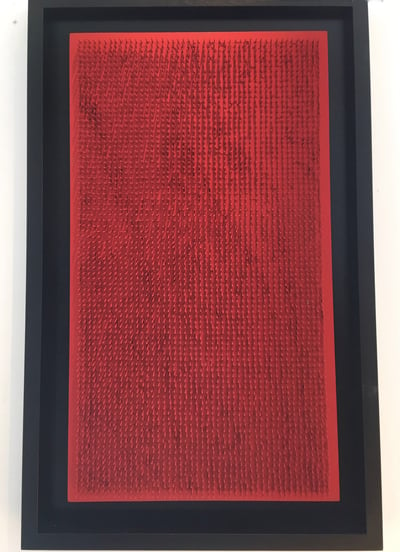
Bernard Aubertin
Clou, 1969
Painting
Mixed Media
EUR 20,000 – 30,000
Related Artists
Related Articles

Popular, Artists, Collecting - September 1, 2026
KAWS Companion Editions: Vinyl, Four Foot and Dissected
A collector’s guide to KAWS Companion editions, from the 1999 Bounty Hunter vinyl figure to Four Foot, Dissected, Sorayama and Star Wars releases.Read More

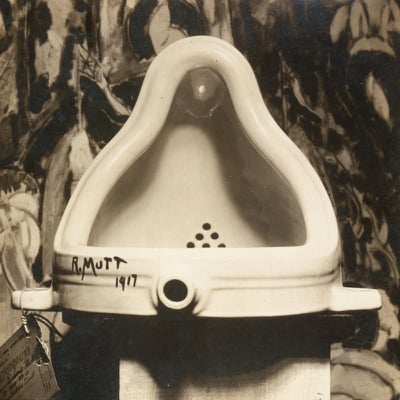
Artwork by Marcel Duchamp
What is Found Object?
A found object is a term used to describe a man-made or natural object, or a fragment of one, that an artist discovers or purchases and keeps for inspiration or as a work of art. The artist may also modify the object or incorporate it into a collage or assemblage, transforming it into a new piece of art.
Bernard Aubertin
Clou - with pattern , 1966
65 x 65 x 5 cm


