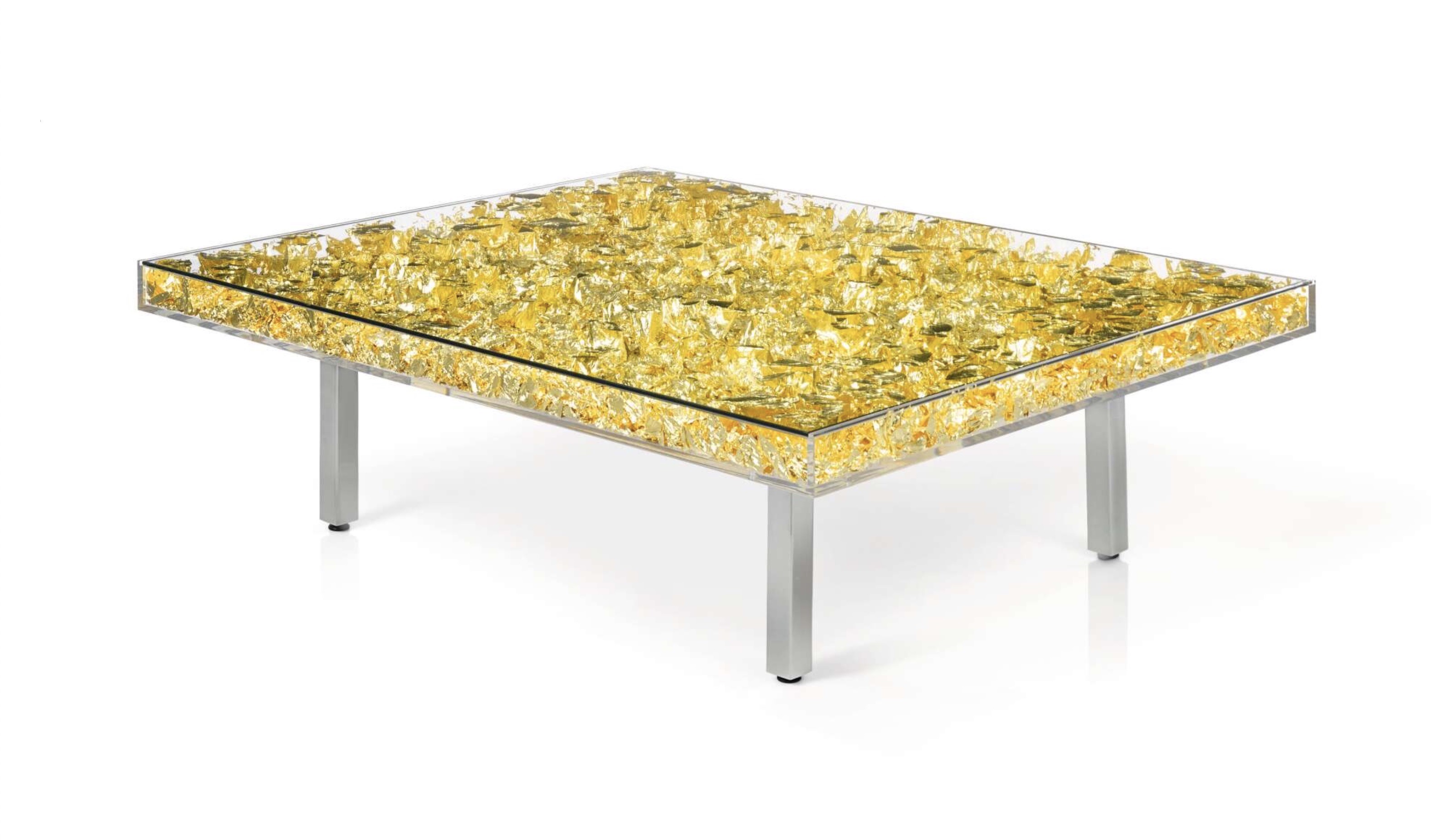
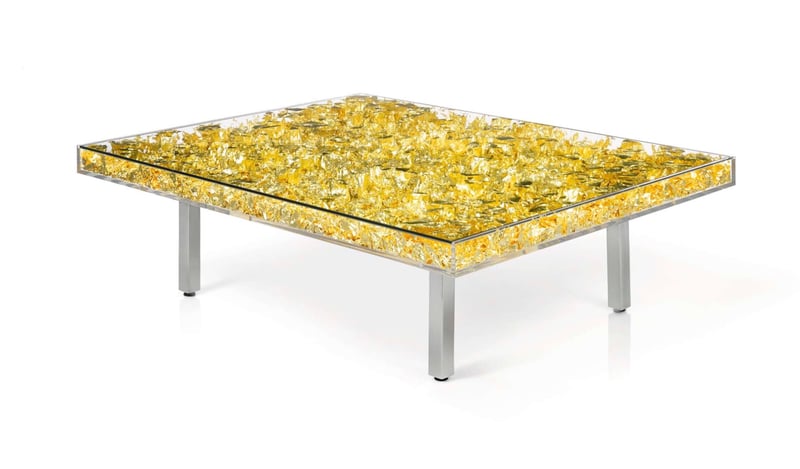
3,000 sheets of 22-karat gold leaf, glass, plexiglass, wood, and steel - This work is from an edition begun in 1963 under the supervision of Rotraut Klein-Moquay based on a model by Yves Klein - Signed R. Moquay and numbered on a label affixed to the underside
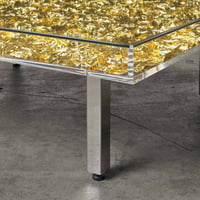
Yves Klein's Table d’Or (1961/1963) is a luxurious, limited-edition object that merges art and furniture design with a striking, minimalist aesthetic. This low table is crafted from 3,000 sheets of 22-karat gold leaf encased in glass, plexiglass, wood, and supported by sleek steel legs. The golden interior creates an effect of radiant light and opulence, as the gold leaf reflects and refracts light, bringing a sense of warmth and elegance to the piece. Conceived by Klein and produced posthumously under the supervision of his widow, Rotraut Klein-Moquay, Table d’Or is both a functional object and a piece of fine art that challenges traditional boundaries. Klein, known for his exploration of immateriality and color, particularly his famous International Klein Blue, brings a similar fascination with pure color and material presence to this creation. Each piece in the edition is signed by R. Moquay and numbered, underscoring its authenticity and connection to Klein's iconic legacy.
Artwork Copyright © Yves KleinYves Klein (France, 1928–1962) was a groundbreaking artist and key figure in postwar European art. Known for his signature 'International Klein Blue' (IKB), his monochrome paintings and performance art explored spirituality and immateriality. Klein’s innovative practices, including 'Anthropometry' body paintings and conceptual works, influenced movements like Minimalism and Conceptual Art.
Artwork Copyright © Yves KleinTable d’Or, 1961/1963
Form
Medium
Size
- Inches
- Centimeters
Price
- USD
- EUR
- GBP
- CHF
- Authenticity Guaranteed
- Insured Shipping
- Online Since 2005
●Inventory 8046
●Estate signed
●Comes with gallery invoice and certificate
●Sell Us a Similar Artwork. Learn more.
3,000 sheets of 22-karat gold leaf, glass, plexiglass, wood, and steel - This work is from an edition begun in 1963 under the supervision of Rotraut Klein-Moquay based on a model by Yves Klein - Signed R. Moquay and numbered on a label affixed to the underside
Yves Klein's Table d’Or (1961/1963) is a luxurious, limited-edition object that merges art and furniture design with a striking, minimalist aesthetic. This low table is crafted from 3,000 sheets of 22-karat gold leaf encased in glass, plexiglass, wood, and supported by sleek steel legs. The golden interior creates an effect of radiant light and opulence, as the gold leaf reflects and refracts light, bringing a sense of warmth and elegance to the piece. Conceived by Klein and produced posthumously under the supervision of his widow, Rotraut Klein-Moquay, Table d’Or is both a functional object and a piece of fine art that challenges traditional boundaries. Klein, known for his exploration of immateriality and color, particularly his famous International Klein Blue, brings a similar fascination with pure color and material presence to this creation. Each piece in the edition is signed by R. Moquay and numbered, underscoring its authenticity and connection to Klein's iconic legacy.
Artwork Copyright © Yves KleinYves Klein (France, 1928–1962) was a groundbreaking artist and key figure in postwar European art. Known for his signature 'International Klein Blue' (IKB), his monochrome paintings and performance art explored spirituality and immateriality. Klein’s innovative practices, including 'Anthropometry' body paintings and conceptual works, influenced movements like Minimalism and Conceptual Art.
Artwork Copyright © Yves Klein- Recently Added
- Price (Low-High)
- Price (High-Low)
- Year (Low-High)
- Year (High-Low)
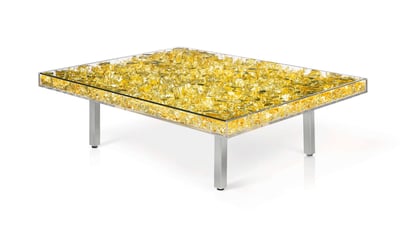
Yves Klein
Table d’Or, 1961/1963
Sculpture / Object
Mixed Media
EUR 24,800
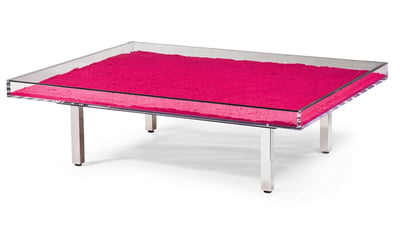
Yves Klein
Table Rose, 1961/1963
Sculpture / Object
Mixed Media
EUR 22,500
Related Artists
Related Articles
Popular, Artists, Art Movements, Collecting - August 23, 2026
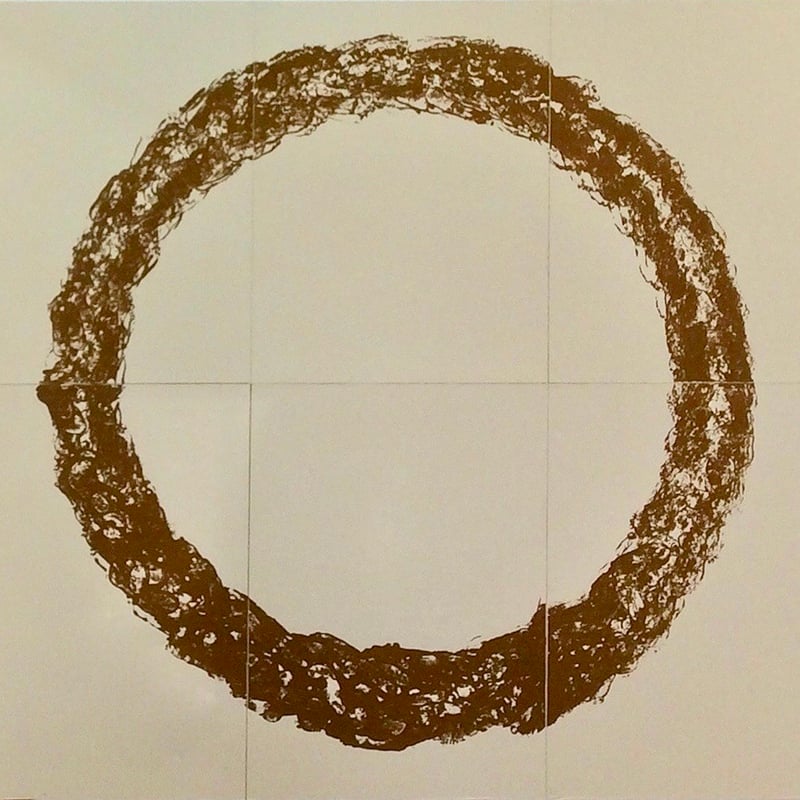
The ZERO Movement: Collecting Günther Uecker and the Art of a New Beginning
Explore the ZERO Movement and learn how to collect Günther Uecker editions, from embossed prints and sand works to multiples, provenance and condition.Read More

Artwork by John Baldessari
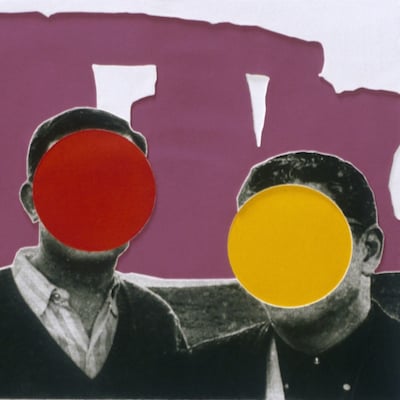
What is conceptual art?
Sometimes referred to as Conceptualism, this is an art form where the idea(s) or concept(s) behind the work take precedence over material concerns and traditional aesthetics. Many conceptual artworks can be created by anyone simply by following written instructions. The concept or idea is the most essential aspect of the artwork.