Details
Artist
Styles
Screen-print in colors on Colourplan paper, with full margins; - Signed, titled, dated and numbered in pencil in the margins; // Yayoi Kusama’s Pumpkin 2000 (Red) is a vibrant screen print that exemplifies the artist’s iconic exploration of repetitive patterns and organic forms. The central motif, a pumpkin rendered in rich red tones with Kusama’s signature polka-dot pattern, is set against a contrasting black background textured with web-like lines. The intricate dot work and curving lines give the pumpkin a sense of volume and rhythm, symbolizing growth, vitality, and Kusama’s personal connection to nature. Measuring 48 x 64 cm, this limited-edition print highlights Kusama’s ability to blend simplicity and complexity into a striking visual statement that is both playful and meditative.
Details
Artist
Styles
Screen-print in colors on Colourplan paper, with full margins; - Signed, titled, dated and numbered in pencil in the margins; // Yayoi Kusama’s Pumpkin 2000 (Red) is a vibrant screen print that exemplifies the artist’s iconic exploration of repetitive patterns and organic forms. The central motif, a pumpkin rendered in rich red tones with Kusama’s signature polka-dot pattern, is set against a contrasting black background textured with web-like lines. The intricate dot work and curving lines give the pumpkin a sense of volume and rhythm, symbolizing growth, vitality, and Kusama’s personal connection to nature. Measuring 48 x 64 cm, this limited-edition print highlights Kusama’s ability to blend simplicity and complexity into a striking visual statement that is both playful and meditative.
- Recently Added
- Price (low-high )
- Price (high-low )
- Year (low-high )
- Year (high-low )

Yayoi Kusama
Ashtray, 1990
Limited Edition Print
Silkscreen
GBP 22,000

Yayoi Kusama
My Heart That Blooms In The Darkness Of Night, 2020
Sculpture / Object
Mixed Media
Inquire For Price

Yayoi Kusama
Grapes (Kusama 29), 1983
Limited Edition Print
Screen-print
GBP 30,000 - 40,000

Yayoi Kusama
Sea (Kusama 136), 1989
Limited Edition Print
Screen-print
GBP 28,000 - 40,000

Yayoi Kusama
Flower Basket (Kusama 187), 1993
Limited Edition Print
Screen-print
GBP 25,000 - 30,000

Yayoi Kusama
Pumpkin (Kusama 25), 1983
Limited Edition Print
Screen-print
GBP 42,000 - 50,000

Yayoi Kusama
Pumpkin (White T) (Kusama 149), 1992
Limited Edition Print
Screen-print
GBP 45,000 - 55,000

Yayoi Kusama
Vase (2) (Kusama 167), 1992
Limited Edition Print
Lithograph
GBP 17,000 - 21,000

Yayoi Kusama
Pumpkin (White Y) (Kusama 150), 1992
Limited Edition Print
Screen-print
GBP 48,000 - 60,000

Yayoi Kusama
Infinity Net (Blue) (Kusama 26), 1963-83
Limited Edition Print
Screen-print
GBP 18,000 - 23,000

Yayoi Kusama
Shoes (Kusama 30), 1984
Limited Edition Print
Screen-print
GBP 28,000 - 35,000

Yayoi Kusama
Dancing Pumpkin (YOR) (Kusama 321), 2004
Limited Edition Print
Screen-print
GBP 39,000 - 50,000

Yayoi Kusama
Pumpkin ST (Kusama 301), 2001
Limited Edition Print
Screen-print
GBP 40,000 - 50,000

Yayoi Kusama
Mt. Fuji Is The Home Of My Heart (Kusama 401), 2014
Limited Edition Print
Woodcut
GBP 20,000 - 30,000
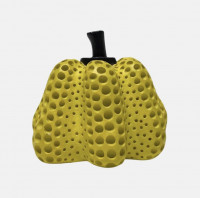
Yayoi Kusama
Yellow Pumpkin, 1998
Sculpture / Object
Resin
GBP 25,000 - 30,000
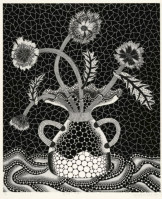
Yayoi Kusama
Flowers FW, 1993
Limited Edition Print
Screen-print
GBP 22,000 - 30,000
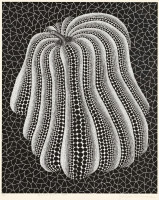
Yayoi Kusama
Thinking Pumpkin, 1993
Limited Edition Print
Screen-print
GBP 40,000 - 50,000
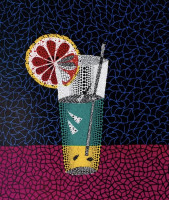
Yayoi Kusama
Lemon Squash, 1984
Limited Edition Print
Screen-print
GBP 30,000 - 40,000

Yayoi Kusama
Dawn, 1989
Limited Edition Print
Screen-print
GBP 30,000 - 40,000

Yayoi Kusama
Pumpkin 2000 (Green), 2000
Limited Edition Print
Screen-print
GBP 40,000 - 60,000

Yayoi Kusama
Chapeau (II), 2000
Limited Edition Print
Screen-print
GBP 30,000 - 40,000
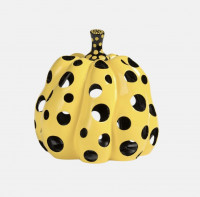
Yayoi Kusama
Pumpkin (NGV), 2025
Sculpture / Object
Mixed Media
Currently Not Available

Yayoi Kusama
Pumpkin 2000 (Yellow), 2000
Limited Edition Print
Screen-print
Currently Not Available

Yayoi Kusama
Pumpkin 2000 (Red), 2000
Limited Edition Print
Screen-print
Currently Not Available

Yayoi Kusama
Pumpkin, 1993
Limited Edition Print
Screen-print
Currently Not Available
Related Artists


Related Articles

Popular, Artists - October 05, 2022
10 Women in 20th Century Art
Explore the contributions of 10 influential women in 20th-century art, from Louise Bourgeois to Cindy Sherman. Discover their groundbreaking creativity and legacy. Read More
What is Performance Art?
Performance Art is a genre of fine art that is traditionally interdisciplinary, involving various art forms. It can be scripted or unscripted, random or carefully orchestrated, spontaneous, or meticulously planned, with or without audience participation. Performance Art can be presented live or through media, with the artist either present or absent. It typically involves four basic elements: space, the performer’s body or presence through a medium, time, and the relationship between performer and audience. The artwork consists of actions performed by an individual or group in a specific time and space.