
Details
Artist
Styles
Offset lithograph in colors on paper - Published by Lincoln Center/List Art Poster and Print Program, New York and was commissioned to announce the fourth New York Film Festival at Lincoln Center on 12-22 September 1966. - Literature: Corlett III.21 - Not signed // Roy Lichtenstein's Lincoln Center (Poster) (1966) is an iconic offset lithograph designed for the fourth New York Film Festival at Lincoln Center. The artwork incorporates Lichtenstein’s signature Pop Art style, featuring bold lines, vibrant primary colors, and comic strip-inspired imagery. The composition includes geometric shapes, stylized waves, and abstract forms resembling spotlights and film reels, emphasizing the film festival theme. The bold text Lincoln Center stands prominently in a blue banner across the center, making the event’s purpose immediately clear. This poster, published by Lincoln Center’s List Art Poster and Print Program, exemplifies Lichtenstein’s ability to blend commercial art with fine art, capturing the dynamic energy and visual appeal of 1960s Pop Art culture.
Lincoln Center (Poster), 1966
form
Medium
Size
113.7 x 74.9 cm
- Inches
- Centimeters
Edition
Price
Details
Artist
Styles
Offset lithograph in colors on paper - Published by Lincoln Center/List Art Poster and Print Program, New York and was commissioned to announce the fourth New York Film Festival at Lincoln Center on 12-22 September 1966. - Literature: Corlett III.21 - Not signed // Roy Lichtenstein's Lincoln Center (Poster) (1966) is an iconic offset lithograph designed for the fourth New York Film Festival at Lincoln Center. The artwork incorporates Lichtenstein’s signature Pop Art style, featuring bold lines, vibrant primary colors, and comic strip-inspired imagery. The composition includes geometric shapes, stylized waves, and abstract forms resembling spotlights and film reels, emphasizing the film festival theme. The bold text Lincoln Center stands prominently in a blue banner across the center, making the event’s purpose immediately clear. This poster, published by Lincoln Center’s List Art Poster and Print Program, exemplifies Lichtenstein’s ability to blend commercial art with fine art, capturing the dynamic energy and visual appeal of 1960s Pop Art culture.
- Recently Added
- Price (low-high )
- Price (high-low )
- Year (low-high )
- Year (high-low )
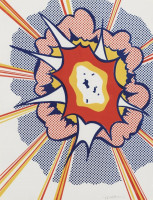
Roy Lichtenstein
Explosion, 1967
Limited Edition Print
Lithograph
Inquire For Price

Roy Lichtenstein
Interior With Chair From The Leo Castelli 90th Birthday Portfolio, 1997
Limited Edition Print
Screen-print
USD 30,000 - 40,000

Roy Lichtenstein
Inaugural Print From The Inaugural Impressions Portfolio, 1977
Limited Edition Print
Screen-print
USD 25,000 - 35,000

Roy Lichtenstein
Mirror, 1990
Limited Edition Print
Screen-print
Inquire For Price

Roy Lichtenstein
Nude On Beach, From The Surrealist Series, 1978
Limited Edition Print
Lithograph
USD 20,000 - 30,000
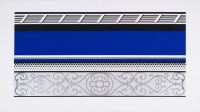
Roy Lichtenstein
Entablature V (Corlett 142), 1976
Limited Edition Print
Collage
USD 12,570
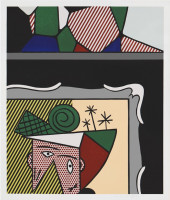
Roy Lichtenstein
Two Paintings, From The Paintings Series, 1984
Limited Edition Print
Mixed Media
USD 50,000 - 60,000
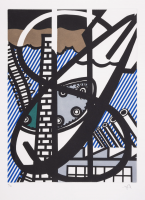
Roy Lichtenstein
Illustration For 'Une Fenêtre Ouverte Sur Chicago' (Corlett 271), 1992
Limited Edition Print
Etching And Aquatint
USD 13,250
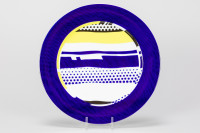
Roy Lichtenstein
Rosenthal Plate 2, 2000
Sculpture / Object
Plate
Inquire For Price
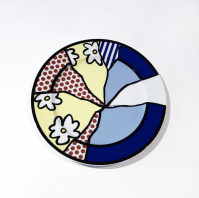
Roy Lichtenstein
Untitled Plate (Waterlily), 1990
Ceramics
Plate
USD 2,500
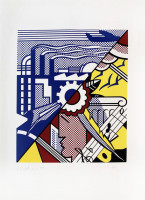
Roy Lichtenstein
Industry And The Arts (II), 1969
Limited Edition Print
Screen-print
GBP 30,000 - 40,000

Roy Lichtenstein
Illustration For 'De Denver Au Montana, Depart 27 Mai 1972' (I), 1992
Limited Edition Print
Etching And Aquatint
USD 12,500

Roy Lichtenstein
Composition II, 1996
Limited Edition Print
Screen-print
USD 80,000 - 90,000

Roy Lichtenstein
Untitled I, 1980
Limited Edition Print
Etching And Aquatint
USD 20,650

Roy Lichtenstein
Private Listing
Sculpture / Object
Mixed Media
Request Info
Roy Lichtenstein
Private Listing
Limited Edition Print
Screen-print
Request Info

Roy Lichtenstein
Reflections On Minerva, 1990
Limited Edition Print
Mixed Media
USD 80,000 - 100,000

Roy Lichtenstein
Foot And Hand, 1964
Limited Edition Print
Offset Print
Artwork On Hold

Roy Lichtenstein
Composition III, 1996
Limited Edition Print
Screen-print
Inquire For Price

Roy Lichtenstein
Pistol (from Banner, Multiples Calendar, 1968
Limited Edition Print
Screen-print
USD 4,600

Roy Lichtenstein
Haystack #6, 1969
Limited Edition Print
Lithograph
USD 19,500

Roy Lichtenstein
Fish And Sky, 1967
Limited Edition Print
Mixed Media
USD 19,950
Roy Lichtenstein
Private Listing
Limited Edition Print
Screen-print
Request Info

Roy Lichtenstein
De Denver Au Montana, Départ 27 Mai 1972 (II), 1991
Limited Edition Print
Etching And Aquatint
USD 12,500

Roy Lichtenstein
Spray Can, 1964
Limited Edition Print
Lithograph
USD 2,200

Roy Lichtenstein
Entablature IX (146), 1976
Limited Edition Print
Collage
EUR 20,000 - 25,000

Roy Lichtenstein
Entablature IV (141), 1976
Limited Edition Print
Collage
EUR 20,000 - 25,000

Roy Lichtenstein
Entablature III (140), 1976
Limited Edition Print
Collage
EUR 20,000 - 25,000

Roy Lichtenstein
Entablature II (139), 1976
Limited Edition Print
Collage
EUR 20,000 - 25,000

Roy Lichtenstein
Entablature I (138), 1976
Limited Edition Print
Collage
EUR 20,000 - 25,000

Roy Lichtenstein
Haystack #1, 1969
Limited Edition Print
Lithograph
USD 19,300

Roy Lichtenstein
Modern Head Enamel Pin, 1968
Sculpture / Object
Metal
USD 4,950

Roy Lichtenstein
Yellow Still Life, 1974
Limited Edition Print
Mixed Media
USD 39,500
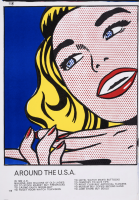
Roy Lichtenstein
Girl, 1964
Limited Edition Print
Lithograph
USD 3,000

Roy Lichtenstein
Litho/Litho, 1970
Limited Edition Print
Lithograph
USD 17,200

Roy Lichtenstein
Dinnerware: One Setting, 1966
Sculpture / Object
Ceramic
USD 4,300

Roy Lichtenstein
Liberté, From Mémoire De La Liberté, 1991
Limited Edition Print
Serigraph
EUR 19,750

Roy Lichtenstein
Passage Du Nord-ouest, 1992
Limited Edition Print
Etching And Aquatint
USD 10,400

Roy Lichtenstein
Paris Review, 1967
Limited Edition Print
Silkscreen
USD 22,850

Roy Lichtenstein
Rosenthal Plate 1, 2000
Sculpture / Object
Plate
EUR 700
Roy Lichtenstein
Private Listing
Limited Edition Print
Mixed Media
Request Info
Roy Lichtenstein
Private Listing
Limited Edition Print
Screen-print
Request Info

Roy Lichtenstein
Moonscape, 1965
Limited Edition Print
Screen-print
Currently Not Available

Roy Lichtenstein
Crying Girl, 1963
Limited Edition Print
Offset Print
Currently Not Available

Roy Lichtenstein
Shipboard Girl, 1965
Limited Edition Print
Offset Print
Currently Not Available

Roy Lichtenstein
Sweet Dreams, Baby!, 1965
Limited Edition Print
Screen-print
Currently Not Available

Roy Lichtenstein
CRAK!, 1963-1965
Limited Edition Print
Lithograph
Currently Not Available

Roy Lichtenstein
Water Lily, 1993
Limited Edition Print
Screen-print
Currently Not Available
Related Artists


Related Articles

Artists - October 23, 2024
Roy Lichtenstein's 'Sweet Dreams, Baby!': An Icon of Pop Art
Dive into Roy Lichtenstein’s Sweet Dreams, Baby! (1965). Discover its comic-inspired bold visuals, irony, and impact on Pop Art’s cultural dialogue. Read More

What is pop-art?
Pop Art is an art movement that began in Britain in 1955 and in the late 1950s in the U.S. It challenged traditional fine arts by incorporating imagery from popular culture, such as news, advertising, and comic books. Pop Art often isolates and recontextualizes materials, combining them with unrelated elements. The movement is more about the attitudes and ideas that inspired it than the specific art itself. Pop Art is seen as a reaction against the dominant ideas of Abstract Expressionism, bringing everyday consumer culture into the realm of fine art.