


Painted resin.
'Oiseau amoureux' by Niki de Saint Phalle is a resin sculpture from 1972 depicting a boldly frontal, wing-spread bird figure rendered in a vivid palette of cobalt blue, orange, green, and pink. The figure stands wide-legged and symmetrical, its expanded wings each carrying a large painted flower motif — one on each side — while the torso is decorated with circular target-like forms in green, blue, and yellow. A single stylised eye sits atop the dark, domed head. De Saint Phalle developed her signature language of monumental, brightly painted figurative forms through the 1960s and into the 1970s, a period when she was deepening her practice beyond the 'Nanas' into animal and fantastical archetypes. The work shares the same exuberant surface decoration and volumetric confidence that defined her collaborative and independent output of this era.
Oiseau amoreux, 1972
Form
Medium
Size
- Inches
- Centimeters
Edition
Price
- Authenticity Guaranteed
- Insured Shipping
- Online Since 2005
Painted resin.
'Oiseau amoureux' by Niki de Saint Phalle is a resin sculpture from 1972 depicting a boldly frontal, wing-spread bird figure rendered in a vivid palette of cobalt blue, orange, green, and pink. The figure stands wide-legged and symmetrical, its expanded wings each carrying a large painted flower motif — one on each side — while the torso is decorated with circular target-like forms in green, blue, and yellow. A single stylised eye sits atop the dark, domed head. De Saint Phalle developed her signature language of monumental, brightly painted figurative forms through the 1960s and into the 1970s, a period when she was deepening her practice beyond the 'Nanas' into animal and fantastical archetypes. The work shares the same exuberant surface decoration and volumetric confidence that defined her collaborative and independent output of this era.

Niki De Saint Phalle
L'ange protecteur, 1997
Limited Edition Print
Collage
EUR 6,600

Niki De Saint Phalle
Oiseau amoreux, 1972
Sculpture / Object
Resin
Inquire For Price

Niki De Saint Phalle
Jungle I, c.1993
Limited Edition Print
Lithograph
EUR 3,600

Niki De Saint Phalle
Le Monstre, 1995
Limited Edition Print
Lithograph
EUR 3,000

Niki De Saint Phalle
Daddy, 1973
Limited Edition Print
Screen-print
USD 2,350

Niki De Saint Phalle
Kundalini, 1995
Sculpture / Object
Resin
Currently Not Available
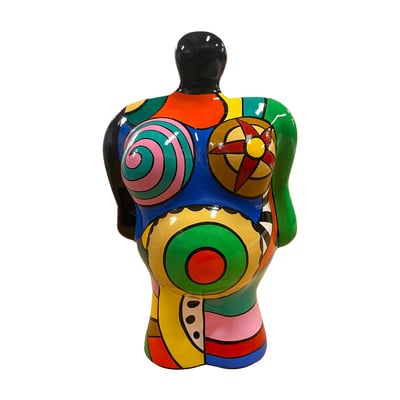
Niki De Saint Phalle
California Nana Vase, 2000
Sculpture / Object
Resin
Currently Not Available
Related Artists


Related Articles
Popular, Collecting - February 21, 2025
Sculpture 101: From Clay to Bronze – How Sculptures Are Made
Discover the art of sculpture! Explore traditional techniques like carving and bronze casting, plus modern innovations like 3D printing. A journey in creativity!Read More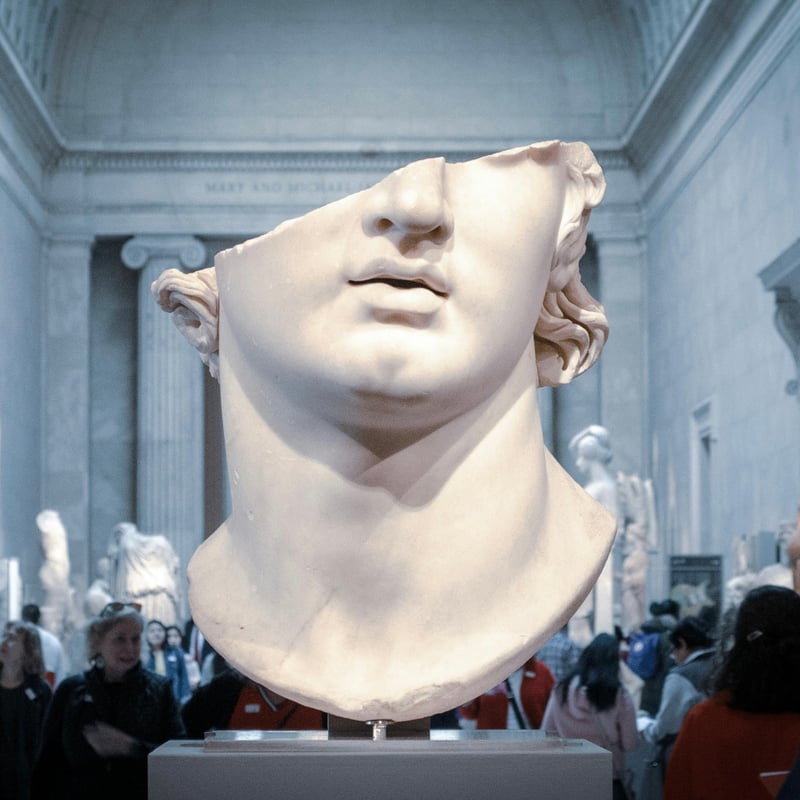


What is pop-art?
Pop Art is an art movement that began in Britain in 1955 and in the late 1950s in the U.S. It challenged traditional fine arts by incorporating imagery from popular culture, such as news, advertising, and comic books. Pop Art often isolates and recontextualizes materials, combining them with unrelated elements. The movement is more about the attitudes and ideas that inspired it than the specific art itself. Pop Art is seen as a reaction against the dominant ideas of Abstract Expressionism, bringing everyday consumer culture into the realm of fine art.



