Art, Inflation and Diversification: Can Fine Art Help Preserve Wealth?

By Emilia Novak
When inflation reduces the purchasing power of cash, it is natural to look beyond cash itself.
Property, precious metals and other tangible assets often receive renewed attention during periods of economic uncertainty. Fine art belongs in that conversation too — but with an important qualification: art is not a guaranteed hedge against inflation, and it should not be treated as one.
Its case is more interesting than that.
Carefully selected art can be a scarce physical asset, an internationally traded store of value and a way to diversify wealth outside conventional financial markets. Unlike most investments, it also provides something throughout the period of ownership: the pleasure of living with it.
For collectors, the question is therefore not simply whether art "beats inflation." A better question is: what kind of art has the characteristics that can help it preserve value over the long term?
Art as a diversifying real asset
Inflation means that the same amount of money buys less over time. An investor holding €100,000 in cash may still see €100,000 on a bank statement years later while its purchasing power has declined.
This is one reason scarce physical assets can become attractive.
The supply of important works by established artists is inherently limited. An original Picasso etching or Warhol screenprint belongs to a defined body of work that cannot simply be expanded because demand increases. Posthumous and estate-authorised editions do exist for some artists, including Picasso, Miró and Chagall, but these are separately documented and can occupy very different positions in the market.
Scarcity matters — but scarcity on its own is not enough. An object can be extremely rare and still have very little value if nobody wants it.
What matters is the combination of scarcity, quality and sustained demand.
Research on art as a direct inflation hedge is mixed, and art prices do not automatically rise when consumer prices rise. Art is therefore better understood as a diversifying real asset than as an insurance policy against inflation.
Its market is influenced by factors that differ from those driving shares, bonds or currencies: an artist's historical importance, museum presence, provenance, rarity, condition, scholarship and international collector demand.
That relative independence is where much of art's attraction lies.

Established artists are different from fashionable artists
Not all art carries the same financial characteristics.
A work by an artist who has become fashionable during the past two years is a fundamentally different proposition from a work by an artist whose market has existed internationally for several generations.
Artists such as Pablo Picasso, Andy Warhol, Roy Lichtenstein, Joan Miró, Marc Chagall and David Hockney have particularly mature markets. Their work is held in major museum collections, extensively documented, traded internationally and regularly offered through established galleries and auction houses.
This does not mean their prices are fixed. No artist has a fixed value.
A Picasso can be worth a few thousand euros or many millions depending on the work. Period, technique, image, rarity, edition, condition, provenance and importance all matter.
What these artists do have is something very valuable: an established market against which a work can be judged.
There are comparable sales. There are catalogue raisonnés. There are specialist dealers and auction departments. There are collectors in many countries. There are decades of transaction history.
That creates price discovery.
A €10,000 work by a recently fashionable artist and a €10,000 work by an internationally established artist may have the same price today, but the markets behind those prices can be entirely different.
We have seen this repeatedly during more than twenty years of dealing in editions. The works that tend to inspire the greatest confidence are not simply those carrying famous signatures. They are recognisable, well-documented works by artists with broad and persistent international demand.
The question we consider more useful than "Is this artist famous?" is:
"Is this a good work by this artist, at a sensible price?"
Why prints and editions are particularly interesting
For many collectors, prints and editions offer one of the most accessible ways into this part of the art market.
An important painting by Picasso, Warhol or Hockney may cost hundreds of thousands or millions. An original lithograph, etching or screenprint by the same artist can sometimes be acquired for a fraction of that amount.
It is still an authentic work by the artist — not a reproduction — but one created in an edition.
This allows a collector to build a meaningful collection across several established artists without concentrating an enormous amount of capital in one object.
It can also make the market easier to compare. When several impressions from the same edition have appeared publicly over time, collectors can examine previous transactions and understand where a particular impression sits within the market.
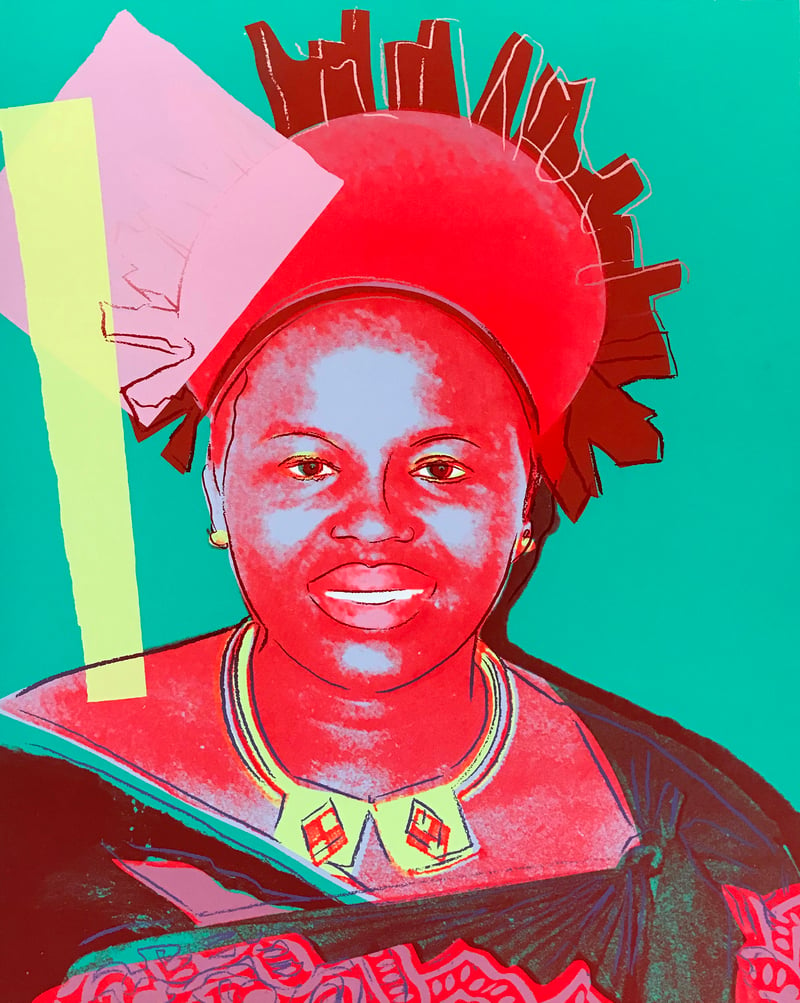
Warhol's Marilyn portfolio is a useful example. Created in 1967, it consists of ten screenprints, each produced in an edition of 250, with additional artist's proofs. Individual impressions and complete sets have circulated through the international secondary market for decades and are documented in the standard Warhol print catalogue raisonné.
The Marilyn example also shows why documentation matters. Separate Sunday B. Morning versions were later published without Warhol's authorisation and are identified by their publishing stamps and other characteristics. Major auction houses distinguish these works from the authorised 1967 Factory Additions portfolio, and the two should not be valued or described as though they were the same edition.
That distinction is precisely why a catalogue reference, the correct edition information and an understanding of the work's publishing history can be so important.
The same principle applies across the graphic work of Picasso, Miró, Chagall, Lichtenstein, Hockney and many other major artists.

Edition size matters — but demand matters more
Collectors often focus on edition size.
An edition of 30 is scarcer than an edition of 300, but that does not automatically make it more valuable.
An edition of 250 by an artist with thousands of active collectors can have a much stronger market than an edition of 10 by an artist for whom there are very few potential buyers.
Scarcity must always be considered alongside demand.
For editions, we generally look at several things together:
the importance of the artist;
the quality and desirability of the image;
edition size;
signature and numbering;
catalogue raisonné references;
publisher or printer;
condition;
provenance;
comparable secondary-market activity;
and, importantly, the price being asked.
A great name does not compensate for a poor work bought at an excessive price.
What to watch before buying
Art has disadvantages as an asset, and a serious collector should understand them.
The first is liquidity. A listed share can normally be sold almost immediately. An artwork may take weeks or months to sell, and the price available today may be different from the price a seller hopes to receive.
The second is transaction cost.
Imagine buying a work for €20,000 and later selling it for €22,000. On paper there is a €2,000 gain. Once dealer or auction commissions, shipping, insurance and other costs are included, there may be no gain at all.
For this reason, art generally makes much more sense with a long holding period than as a short-term trade.
The third consideration is documentation.
For established artists, provenance, authenticity, catalogue raisonné references, signatures and edition information directly affect marketability. Documentation is not merely paperwork accompanying the asset; in many cases it is part of what gives a future buyer confidence in the asset.
Finally, there is condition.
This is particularly important for works on paper. Light, moisture, poor framing and unsuitable materials can cause fading, foxing, staining, mat burn and other damage. Two impressions of the same edition can consequently have very different values.
A collector thinking about long-term preservation should therefore care as much about what they are buying as whose name is signed on the work.

Art is portable and internationally understood
Art also differs from assets such as real estate because it is not permanently attached to one location.
A significant work can move with its owner, pass to another generation or be sold into another international market. A Picasso remains recognisable to collectors whether it is in London, New York, Paris, Hong Kong or Brussels.
For internationally mobile collectors, that can be attractive.
Cross-border ownership is not frictionless, however. Import VAT, customs rules, cultural-property legislation, resale royalties and export restrictions can apply depending on the artwork and jurisdictions involved. These should always be considered before moving or selling a work internationally.
The value you receive while you own it
There is one important difference between art and nearly every financial investment.
You live with it.
Gold held in a vault provides little daily pleasure. A bond exists primarily as a financial claim. A painting or print can become part of a home for twenty years.
This is one reason we do not believe investment should ever be the only reason to buy art.
If a collector chooses well, financial appreciation is only one possible return. There is also the experience of owning, seeing and living with an object that has artistic and cultural significance.
That matters particularly because art markets do not move in straight lines. Prices can stagnate or fall. An artist can become less fashionable. A buyer can simply pay too much.
Owning something you genuinely value makes that uncertainty rather easier to accept.

Eight principles for collecting with long-term value in mind
For someone who wants to combine collecting with an element of wealth preservation, we would keep the approach relatively simple:
Buy quality rather than quantity. Five strong works are generally more compelling than twenty mediocre ones.
Understand the artist's market. Look beyond gallery asking prices and consider documented secondary-market activity.
Give established markets appropriate weight. Artists such as Picasso, Warhol, Miró, Chagall, Lichtenstein and Hockney have decades of international demand behind them, although individual works vary greatly in quality and value.
Take documentation seriously. Provenance, catalogue references, signature and edition information can materially affect future marketability.
Buy condition. Particularly with works on paper, preservation matters.
Pay attention to price. Even an excellent artwork can be a poor acquisition if bought well above its market.
Think in years, not months. Art is illiquid and transaction costs make frequent trading unattractive.
Buy something you would still be happy to own if its price did nothing for ten years.
The strongest case for art is therefore not that it guarantees protection from inflation. It does not.
The case is that carefully chosen works can combine qualities that are difficult to find in one asset: scarcity, cultural importance, international demand, portability, potential long-term value and the pleasure of ownership.
For the right collector, that can make established fine art a worthwhile part of a diversified pool of assets.
Explore available works by Picasso, Warhol, Miró and others in the Composition Gallery collection, or contact us for advice on a particular work or edition.
Related Articles

Popular, Collecting - September 26, 2023
How Will Art Develop in the Future?
Explore the future of art with insights on technology, eco-conscious practices, global influences, and evolving creative trends. Discover what’s next by 2030.Read More

Related Artworks You Might Like

Joan Miró
L'Astre Bleu, 1972
Limited Edition Print
Lithograph
USD 8,100
Andy Warhol
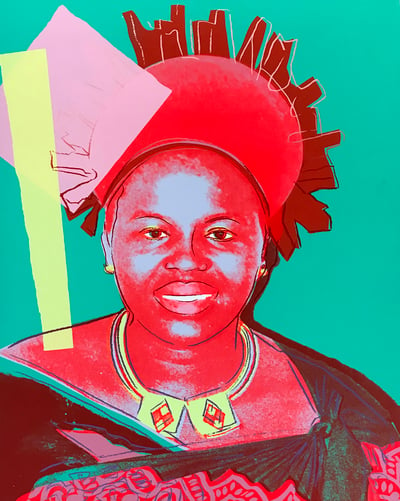
Reigning Queens: Queen Ntombi Twala of Swaziland (A395.076), 1985
Limited Edition Print
Screen-print
Inquire For Price

Marc Chagall
Chloe is Carried Off by the Methymneans, 1962
Limited Edition Print
Lithograph
Inquire For Price
