
The print marked up by the artist and signed;
Nana by Niki de Saint Phalle, created in 1971, is a vibrant lithograph showcasing her iconic Nana figures, which celebrate femininity, joy, and strength. The figure is rendered in bold, curving forms filled with bright colors, primarily orange, yellow, and green, and decorated with intricate patterns and symbols, such as hearts and floral motifs. The playful and exaggerated shapes, coupled with the lively color palette, bring an animated quality to the figure, symbolizing freedom, body positivity, and empowerment. Signed by the artist, this limited edition print captures the essence of de Saint Phalle’s feminist spirit and her joyful, unconventional approach to art.
Artwork Copyright © Niki De Saint PhalleNiki de Saint Phalle (France, 1930–2002) was a groundbreaking artist known for her vibrant, whimsical sculptures and feminist themes. A key figure in the Nouveau Réalisme movement, she is celebrated for her Nanas series—bold, colorful depictions of joyful, empowered women—and monumental public artworks like The Tarot Garden.
Artwork Copyright © Niki De Saint PhalleNana, 1971
Form
Medium
Size
- Inches
- Centimeters
Edition
Price
Available works →
- Authenticity Guaranteed
- Insured Shipping
- Online Since 2005
●
●Inventory 8458
●Signed
●Comes with gallery invoice and certificate
●Sell Us a Similar Artwork. Learn more.
The print marked up by the artist and signed;
Nana by Niki de Saint Phalle, created in 1971, is a vibrant lithograph showcasing her iconic Nana figures, which celebrate femininity, joy, and strength. The figure is rendered in bold, curving forms filled with bright colors, primarily orange, yellow, and green, and decorated with intricate patterns and symbols, such as hearts and floral motifs. The playful and exaggerated shapes, coupled with the lively color palette, bring an animated quality to the figure, symbolizing freedom, body positivity, and empowerment. Signed by the artist, this limited edition print captures the essence of de Saint Phalle’s feminist spirit and her joyful, unconventional approach to art.
Artwork Copyright © Niki De Saint PhalleNiki de Saint Phalle (France, 1930–2002) was a groundbreaking artist known for her vibrant, whimsical sculptures and feminist themes. A key figure in the Nouveau Réalisme movement, she is celebrated for her Nanas series—bold, colorful depictions of joyful, empowered women—and monumental public artworks like The Tarot Garden.
Artwork Copyright © Niki De Saint PhalleAvailability
Size
Form
Medium
SORT BY
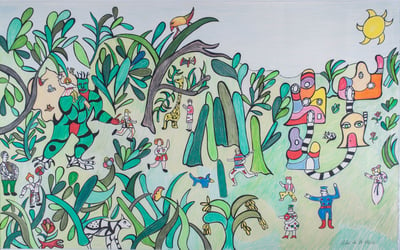
Niki De Saint Phalle
Jungle I, c.1993
Limited Edition Print
Lithograph
EUR 3,600
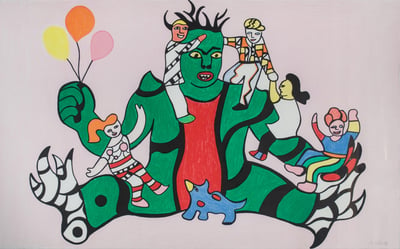
Niki De Saint Phalle
Le Monstre, 1995
Limited Edition Print
Lithograph
EUR 3,000
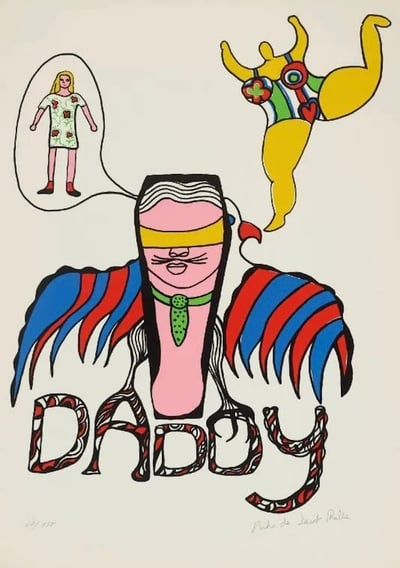
Niki De Saint Phalle
Daddy, 1973
Limited Edition Print
Screen-print
USD 2,350
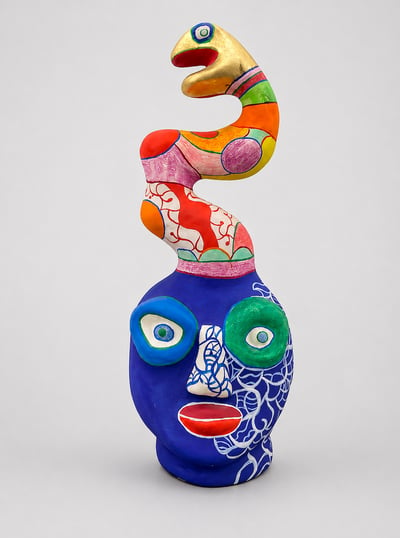
Niki De Saint Phalle
Kundalini, 1995
Sculpture / Object
Resin
Currently Not Available
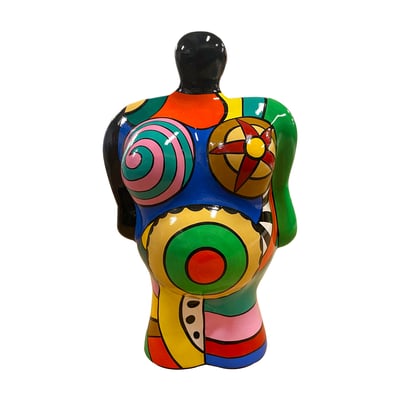
Niki De Saint Phalle
California Nana Vase, 2000
Sculpture / Object
Resin
Currently Not Available
Related Artists

Related Articles
Popular, Collecting - February 21, 2025
Sculpture 101: From Clay to Bronze – How Sculptures Are Made
Discover the art of sculpture! Explore traditional techniques like carving and bronze casting, plus modern innovations like 3D printing. A journey in creativity!Read More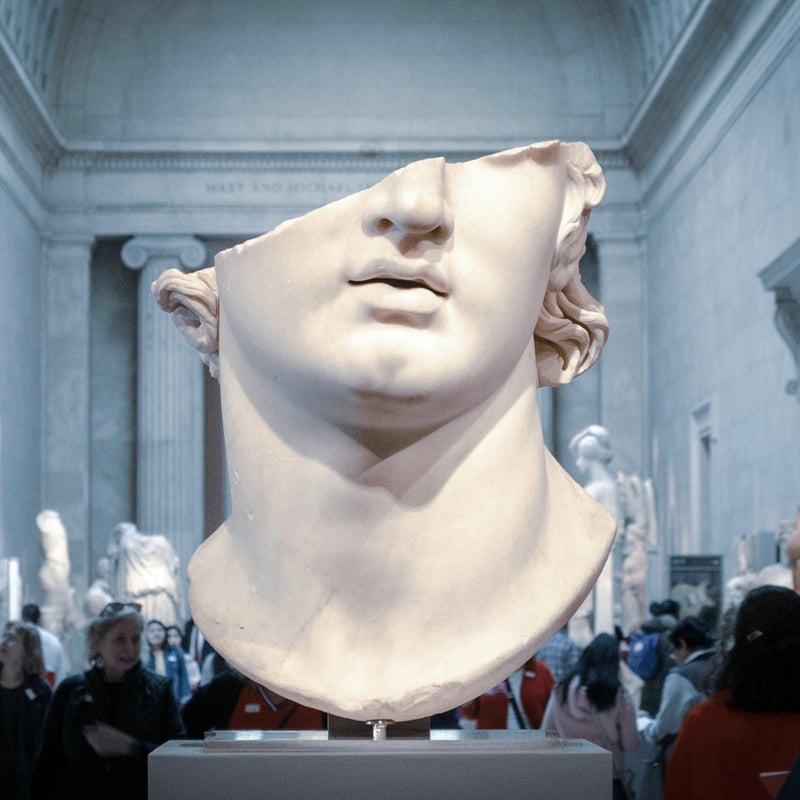


Artwork by Tracey Emin
What is feminist art?
Feminist art refers to the art that emerged from the feminist art movement during the 1960s and 1970s. It developed with the intention of critiquing 20th-century gender ideals and challenging the traditional canon of art history. Feminist art seeks to create a dialogue between the artwork and the viewer through a feminist lens, often addressing issues of gender, identity, and social justic


