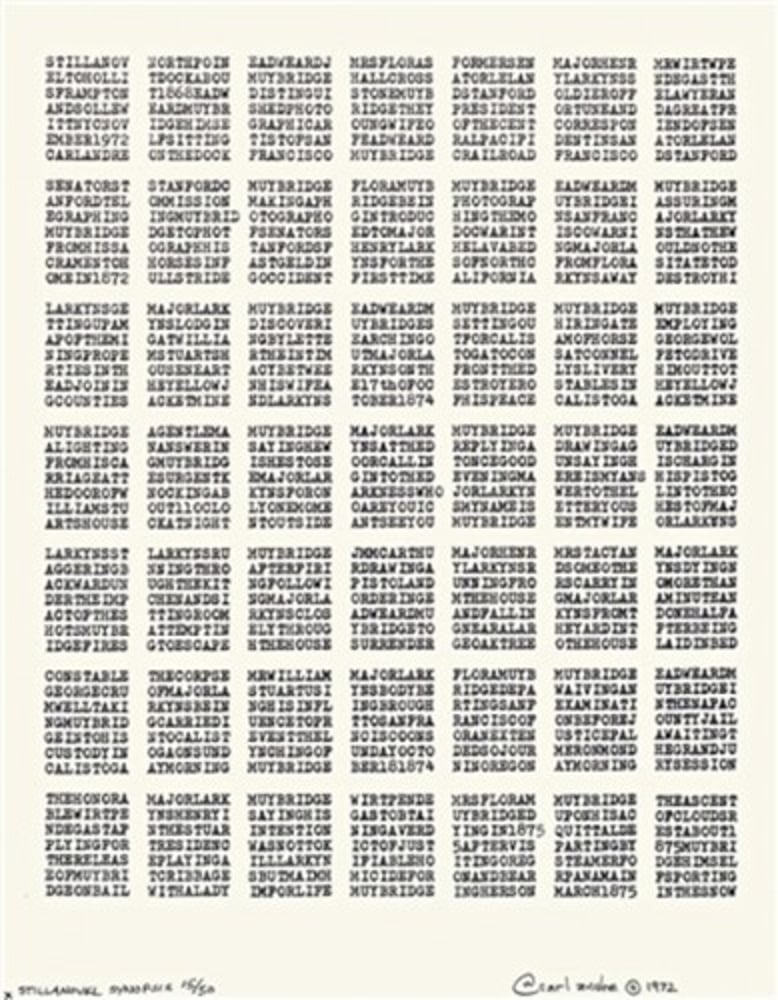
Signed; Titled, signed and dated: @carl andre © 1972
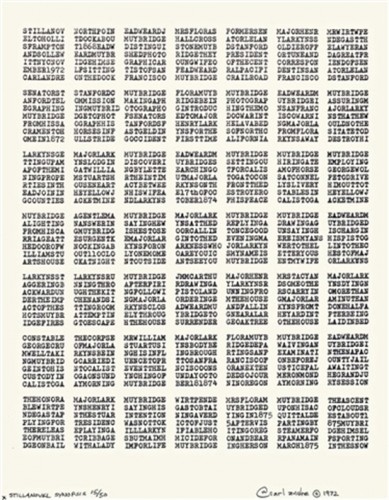
Still Novel Synopsis by Carl Andre, created in 1972, is a conceptual print that explores the relationship between language, repetition, and structure. This inkjet print consists of a grid filled with words, each set in a uniform font and arranged in a precise order. The words, often appearing in repetitive patterns, evoke a sense of rhythm and symmetry, inviting viewers to engage with the text as both visual art and poetry. The deliberate organization of words without traditional sentence structure or narrative flow challenges conventional reading, encouraging the viewer to interpret the composition based on pattern, sound, and texture rather than literal meaning. Signed, titled, and dated by Andre, this piece is a part of a limited edition of 50, exemplifying the artist’s minimalist approach and his interest in language as an abstract, structural element.
Artwork Copyright © Carl AndreCarl Andre (USA, 1935–2024) was a pivotal figure in Minimalist art, celebrated for his floor-based sculptures and use of industrial materials. His modular works, often composed of metal, wood, or bricks, emphasized spatial relationships and viewer interaction. Andre's innovative approach redefined sculpture by focusing on simplicity, materiality, and the physical experience of space.
Artwork Copyright © Carl AndreStill Novel Synopsis, 1972
Form
Medium
Size
- Inches
- Centimeters
Edition
Price
Available works →
- Authenticity Guaranteed
- Insured Shipping
- Online Since 2005
●
●Inventory 4089
●Signed
●Comes with gallery invoice and certificate
●Sell Us a Similar Artwork. Learn more.
Signed; Titled, signed and dated: @carl andre © 1972
Still Novel Synopsis by Carl Andre, created in 1972, is a conceptual print that explores the relationship between language, repetition, and structure. This inkjet print consists of a grid filled with words, each set in a uniform font and arranged in a precise order. The words, often appearing in repetitive patterns, evoke a sense of rhythm and symmetry, inviting viewers to engage with the text as both visual art and poetry. The deliberate organization of words without traditional sentence structure or narrative flow challenges conventional reading, encouraging the viewer to interpret the composition based on pattern, sound, and texture rather than literal meaning. Signed, titled, and dated by Andre, this piece is a part of a limited edition of 50, exemplifying the artist’s minimalist approach and his interest in language as an abstract, structural element.
Artwork Copyright © Carl AndreCarl Andre (USA, 1935–2024) was a pivotal figure in Minimalist art, celebrated for his floor-based sculptures and use of industrial materials. His modular works, often composed of metal, wood, or bricks, emphasized spatial relationships and viewer interaction. Andre's innovative approach redefined sculpture by focusing on simplicity, materiality, and the physical experience of space.
Artwork Copyright © Carl Andre- Recently Added
- Price (Low-High)
- Price (High-Low)
- Year (Low-High)
- Year (High-Low)
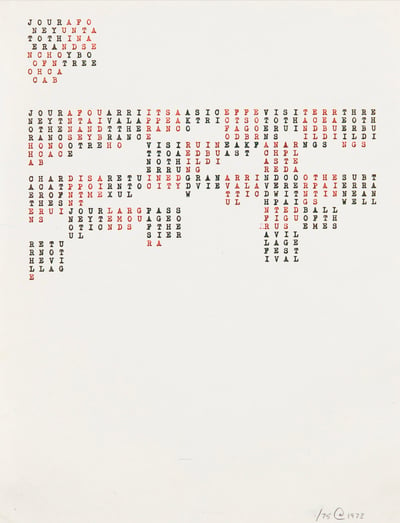
Carl Andre
Untitled (Text Grid), 1973
Limited Edition Print
Screen-print
USD 6,500
Carl Andre
Still Novel Synopsis, 1972
Limited Edition Print
Inkjet print
Currently Not Available
Related Artists

Related Articles

Popular, Art Movements - May 1, 2022
Understanding Conceptual Art and how to appraise it
Explore the essence of Conceptual Art, its origins, and its focus on ideas over objects. Learn how to appreciate and appraise this transformative art movement.Read More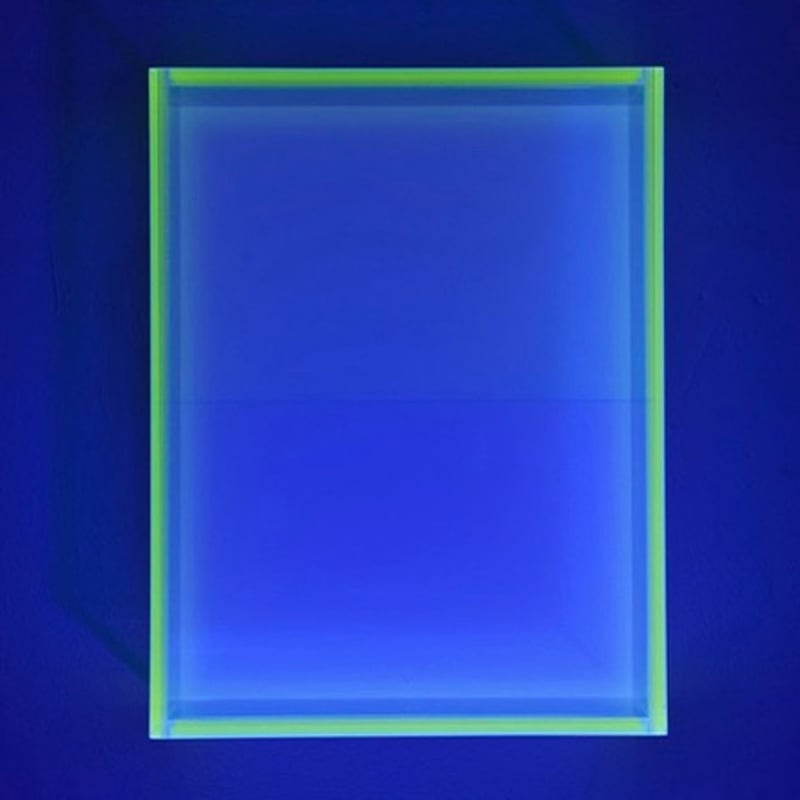

Artwork by Man Ray
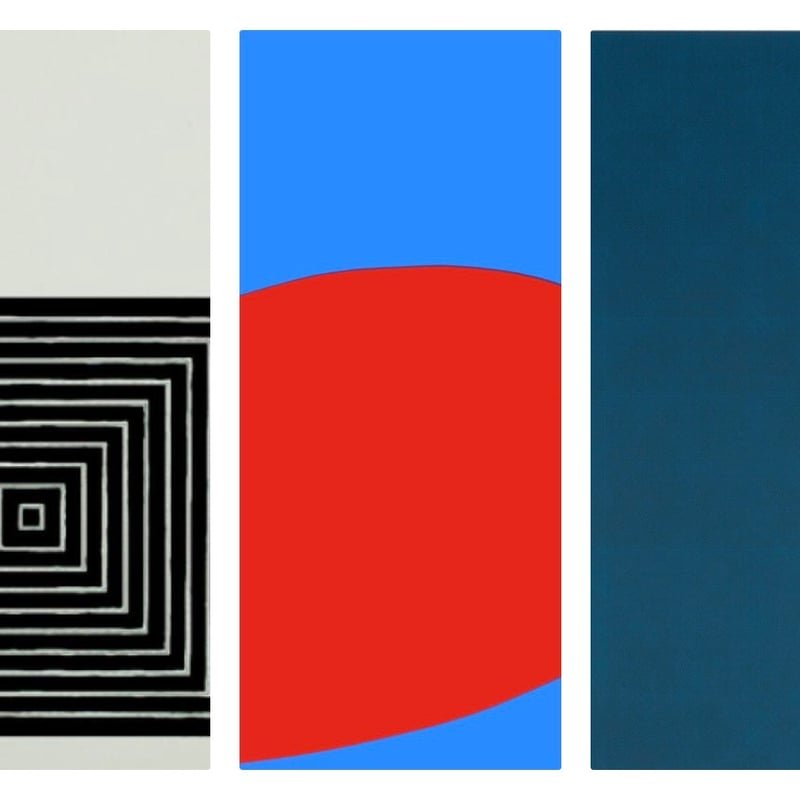
What is avant-garde?
Avant-garde refers to innovative and experimental ideas in the arts that challenge established norms and conventions. Originating from the French term for advance guard, it describes both the movement and the artists who push the boundaries of creativity, often exploring new techniques, forms, and concepts. The avant-garde has been a driving force in various art movements throughout history, such as Dadaism, Surrealism, and Abstract Expressionism, continually reshaping the landscape of art and culture.

Carl Andre
Still Novel Synopsis, 1972
23.4 x 19 cm


