
Details
Artist
Styles
Signed and numbered on recto // Sans Titre 2 by Victor Vasarely is a vibrant lithograph that exemplifies the artist's mastery in optical art. This composition features a dynamic grid pattern with interlocking diamond shapes in a spectrum of colors, primarily blues, oranges, and whites. The shapes create an illusion of movement and depth, appearing to warp and pulse as the eye moves across the piece. Vasarely's use of color gradients and geometric precision gives the artwork a hypnotic effect, drawing viewers into a mesmerizing visual experience. The composition plays with perception, bending the plane into a concave, almost three-dimensional form, typical of Vasarely's work in optical illusions. Measuring 68 cm by 48 cm, this piece challenges the viewer's spatial perception, making it a striking example of Op Art.
Details
Artist
Styles
Signed and numbered on recto // Sans Titre 2 by Victor Vasarely is a vibrant lithograph that exemplifies the artist's mastery in optical art. This composition features a dynamic grid pattern with interlocking diamond shapes in a spectrum of colors, primarily blues, oranges, and whites. The shapes create an illusion of movement and depth, appearing to warp and pulse as the eye moves across the piece. Vasarely's use of color gradients and geometric precision gives the artwork a hypnotic effect, drawing viewers into a mesmerizing visual experience. The composition plays with perception, bending the plane into a concave, almost three-dimensional form, typical of Vasarely's work in optical illusions. Measuring 68 cm by 48 cm, this piece challenges the viewer's spatial perception, making it a striking example of Op Art.
- Recently Added
- Price (low-high )
- Price (high-low )
- Year (low-high )
- Year (high-low )

Victor Vasarely
Skier, 1983
Limited Edition Print
Screen-print
EUR 1,690

Victor Vasarely
Attika 3, 1990
Limited Edition Print
Screen-print
USD 1,250

Victor Vasarely
Terz Liten, 1978
Limited Edition Print
Screen-print
EUR 650

Victor Vasarely
HOLLD (Moire Tower), 1990
Sculpture / Object
Mixed Media
EUR 5,500

Victor Vasarely
Purple Long, 1977
Limited Edition Print
Silkscreen
USD 1,700

Victor Vasarely
Kaldor, 1980
Limited Edition Print
Silkscreen
USD 1,900

Victor Vasarely
Hang, 1979
Limited Edition Print
Silkscreen
USD 1,550

Victor Vasarely
Dauve, 1978
Limited Edition Print
Silkscreen
USD 1,550

Victor Vasarely
Vertigo, 1982
Limited Edition Print
Silkscreen
USD 1,550

Victor Vasarely
Drawing I
Drawing / Watercolor
Mixed Media
EUR 4,500

Victor Vasarely
Zebra Ceramique, 1977
Sculpture / Object
Ceramic
EUR 1,600

Victor Vasarely
Blue Composition, c. 1980
Limited Edition Print
Serigraph
EUR 1,500

Victor Vasarely
Pink Composition, c. 1980
Limited Edition Print
Serigraph
EUR 1,500

Victor Vasarely
Sorbonne, 1973
Limited Edition Print
Silkscreen
USD 1,350

Victor Vasarely
The Juggler, 1977
Limited Edition Print
Serigraph
USD 1,150

Victor Vasarely
Album Meta: Seven Plates 7, 1976
Limited Edition Print
Screen-print
USD 3,700

Victor Vasarely
Album Meta: Seven Plates 5, 1976
Limited Edition Print
Screen-print
USD 3,700

Victor Vasarely
Album Meta: Seven Plates 2, 1976
Limited Edition Print
Screen-print
USD 3,700

Victor Vasarely
Album Meta: Seven Plates 4, 1976
Limited Edition Print
Screen-print
USD 3,700

Victor Vasarely
Ohne Titel XLVI, 1973
Limited Edition Print
Screen-print
EUR 2,200

Victor Vasarely
Lum, 1982
Limited Edition Print
Lithograph
USD 1,250

Victor Vasarely
Omega V, 1979
Limited Edition Print
Serigraph
Inquire For Price

Victor Vasarely
Cinetiques Portfolio, 1973
Limited Edition Print
Serigraph
EUR 1,300

Victor Vasarely
Tewek, 1978
Limited Edition Print
Silkscreen
USD 1,850

Victor Vasarely
Planeta, 1972
Limited Edition Print
Silkscreen
USD 1,900

Victor Vasarely
Kat-Zag, 1980
Limited Edition Print
Lithograph
EUR 1,980

Victor Vasarely
Drawing II
Drawing / Watercolor
Mixed Media
EUR 4,500

Victor Vasarely
Felhoe (Benavides 1876), 1989
Sculpture / Object
Mixed Media
USD 3,600

Victor Vasarely
Omega 25 Blanc, 1965
Sculpture / Object
Mixed Media
Inquire For Price

Victor Vasarely
Profound Works 7, 1973
Limited Edition Print
Serigraph
USD 500

Victor Vasarely
OETA, 1959
Limited Edition Print
Screen-print
USD 1,000

Victor Vasarely
Babel 3, 1978
Limited Edition Print
Screen-print
USD 950

Victor Vasarely
Silver Composition, 1980
Limited Edition Print
Screen-print
Inquire For Price

Victor Vasarely
Viva, 1974
Limited Edition Print
Screen-print
USD 1,100

Victor Vasarely
Composition
Limited Edition Print
Lithograph
EUR 1,350

Victor Vasarely
Face, 1970s
Drawing / Watercolor
Pen And Ink
EUR 3,650

Victor Vasarely
Vilag
Limited Edition Print
Screen-print
EUR 2,300

Victor Vasarely
Hommage A Bartók, 1981
Limited Edition Print
Screen-print
EUR 1,500

Victor Vasarely
Flower Girl, 1980
Limited Edition Print
Silkscreen
USD 2,000

Victor Vasarely
Vega
Limited Edition Print
Silkscreen
USD 780

Victor Vasarely
Broey Neg
Limited Edition Print
Serigraph
EUR 950

Victor Vasarely
Untitled ( From Ion)
Limited Edition Print
Serigraph
EUR 950

Victor Vasarely
Kervilahuen-BL, 1985
Limited Edition Print
Serigraph
EUR 1,300

Victor Vasarely
Composition Caree Relief, 1970
Sculpture / Object
Ceramic
EUR 4,850

Victor Vasarely
Orgovan, 1984
Limited Edition Print
Screen-print
EUR 1,250

Victor Vasarely
Harlequin
Limited Edition Print
Silkscreen
USD 2,300

Victor Vasarely
Koskota, 1976
Limited Edition Print
Silkscreen
USD 1,550

Victor Vasarely
Togonne, 1987
Limited Edition Print
Lithograph
EUR 2,330

Victor Vasarely
Attila, 1990
Limited Edition Print
Screen-print
EUR 1,900

Victor Vasarely
VY-29-C, 1973
Limited Edition Print
Serigraph
EUR 2,200

Victor Vasarely
Firka
Limited Edition Print
Silkscreen
EUR 1,700

Victor Vasarely
Gordes Nives, 1971
Limited Edition Print
Lithograph
EUR 1,400

Victor Vasarely
XLV
Limited Edition Print
Silkscreen
EUR 2,200

Victor Vasarely
The Tennis Player, 1980
Limited Edition Print
Silkscreen
USD 650

Victor Vasarely
Oeuvres Profondes Cinetiques
Limited Edition Print
Serigraph
EUR 1,500

Victor Vasarely
Kraft Und Natur I, 1972
Limited Edition Print
Screen-print
Currently Not Available

Victor Vasarely
Diorre, 1980s
Limited Edition Print
Silkscreen
Currently Not Available

Victor Vasarely
Pleionne, 1990
Sculpture / Object
Acrylic Sculpture
Currently Not Available
Related Artists


Related Articles

Artists - March 24, 2023
Kinetic Zebras and Optical Lines: The Night Skies of Victor Vasarely's Spacetime
Dive into Victor Vasarely's world of kinetic zebras and optical lines. Explore his visionary art blending space, time, and geometric illusions. Read More

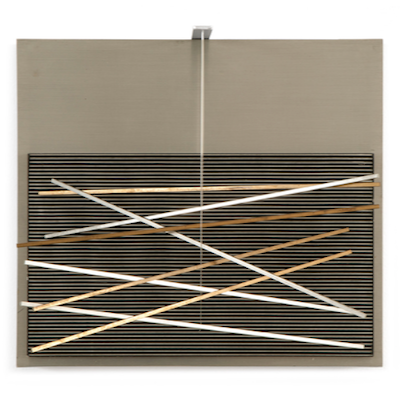
What is kinetic art?
Kinetic art is an international movement that emerged in the 1920s and gained prominence in the 1960s, referring to art that involves both apparent and real motion. It encompasses any medium that includes movement, either relying on actual motion for its effect or being perceived as moving by the viewer. Early examples include canvas paintings designed to create optical illusions of movement. Today, kinetic art often refers to three-dimensional figures and sculptures, such as those operated by machines or those that move naturally. The movement covers a variety of styles and techniques that frequently overlap.