Details
Artist
Styles
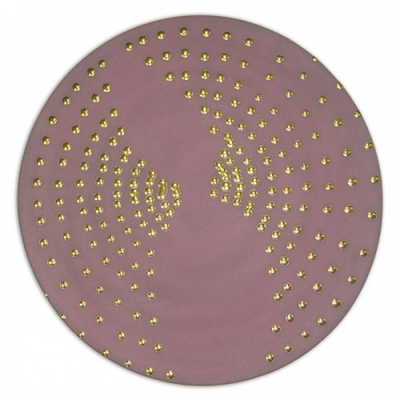
wood and plastics // Luis Tomasello's Lumiere Noire is a striking mixed-media sculpture that uses the interplay of light and shadow to engage viewers in a subtle visual experience. The artwork is composed of a grid of square elements in a monochromatic black palette, creating an austere, minimalist aesthetic. Made from wood and plastics, the sculpture’s surface reflects light in varying intensities, producing shadows that change depending on the observer's angle and the light source. This 40 cm square piece exemplifies Tomasello’s mastery in transforming simple geometric patterns into dynamic visual experiences, emphasizing his exploration of kinetic and optical art through minimalist forms.
Lumiere Noire, 2011
form
Medium
Size
40 x 40 X 4 cm
- Inches
- Centimeters
Edition
Price
- USD
- EUR
- GBP
Details
Artist
Styles
wood and plastics // Luis Tomasello's Lumiere Noire is a striking mixed-media sculpture that uses the interplay of light and shadow to engage viewers in a subtle visual experience. The artwork is composed of a grid of square elements in a monochromatic black palette, creating an austere, minimalist aesthetic. Made from wood and plastics, the sculpture’s surface reflects light in varying intensities, producing shadows that change depending on the observer's angle and the light source. This 40 cm square piece exemplifies Tomasello’s mastery in transforming simple geometric patterns into dynamic visual experiences, emphasizing his exploration of kinetic and optical art through minimalist forms.
- Recently Added
- Price (low-high )
- Price (high-low )
- Year (low-high )
- Year (high-low )
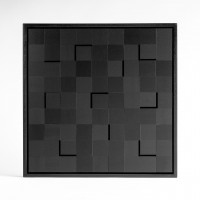
Luis Tomasello
Lumiere Noire Unique VI/X, 2011
Sculpture / Object
Mixed Media
EUR 3,500
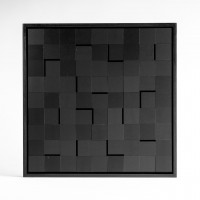
Luis Tomasello
Lumiere Noire Unique V/X, 2011
Sculpture / Object
Mixed Media
EUR 3,500
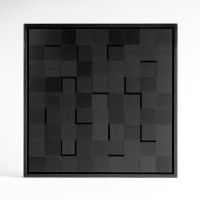
Luis Tomasello
Lumiere Noire Unique IV/X, 2011
Sculpture / Object
Mixed Media
EUR 3,500
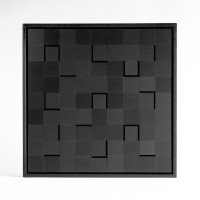
Luis Tomasello
Lumiere Noire Unique III/X, 2011
Sculpture / Object
Mixed Media
EUR 3,500
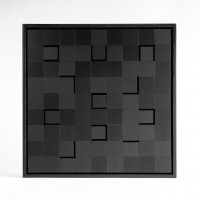
Luis Tomasello
Lumiere Noire Unique II/X, 2011
Sculpture / Object
Mixed Media
EUR 3,500
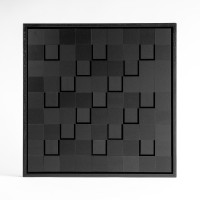
Luis Tomasello
Lumiere Noire Unique I/X, 2011
Sculpture / Object
Mixed Media
EUR 3,500

Luis Tomasello
S/T 1 - Verde, 2013
Limited Edition Print
Lithograph
EUR 3,000

Luis Tomasello
S/t 2, 2012
Sculpture / Object
Mixed Media
EUR 2,200

Luis Tomasello
S/t 3, 2012
Sculpture / Object
Mixed Media
EUR 2,200

Luis Tomasello
S/T - 3 Rosa, 2013
Limited Edition Print
Lithograph
EUR 3,000

Luis Tomasello
Grille Chromoplastique C, 2012
Sculpture / Object
Acrylic Sculpture
EUR 2,000

Luis Tomasello
Lumiere Noire, 2011
Sculpture / Object
Mixed Media
EUR 2,500

Luis Tomasello
ST 1, 2012
Sculpture / Object
Mixed Media
EUR 2,200

Luis Tomasello
S/T 4 - Verde , 2013
Limited Edition Print
Lithograph
EUR 3,000

Luis Tomasello
S/T 4 - Rosa , 2013
Limited Edition Print
Lithograph
EUR 3,000

Luis Tomasello
S/T 4 - Naranja , 2013
Limited Edition Print
Lithograph
EUR 3,000

Luis Tomasello
S/T 3 - Verde, 2013
Limited Edition Print
Lithograph
EUR 3,000

Luis Tomasello
S/T 3 - Naranja , 2013
Limited Edition Print
Lithograph
EUR 3,000

Luis Tomasello
S/T 2 - Verde, 2013
Limited Edition Print
Lithograph
EUR 3,000

Luis Tomasello
S/T 2 Rosa , 2013
Limited Edition Print
Lithograph
EUR 3,000

Luis Tomasello
S/T 2 - Naranja , 2013
Limited Edition Print
Lithograph
EUR 3,000

Luis Tomasello
S/T 1 - Rosa , 2013
Limited Edition Print
Lithograph
EUR 3,000

Luis Tomasello
S/T 1 - Naranja , 2013
Limited Edition Print
Lithograph
EUR 3,000

Luis Tomasello
Chromoplastique 1025, 2013
Sculpture / Object
Wood
EUR 4,000

Luis Tomasello
Grille Chromoplastique B, 2012
Sculpture / Object
Mixed Media
EUR 2,000

Luis Tomasello
Grille Chromoplastique A, 2012
Sculpture / Object
Object
EUR 2,000

Luis Tomasello
Cube Atmosphére Chromoplastique, 2011
Sculpture / Object
Wood
EUR 6,000
Related Artists



Related Articles
Popular, Collecting - July 23, 2025
Sculpture Care and Display: From Plinths to Pedestals in Your Home
Learn how to display and care for sculpture at home—from lighting tips to material care—so your art can truly shine in any space. Read More

What is the Zero Movement?
ZERO was an art movement founded by Otto Piene and Heinz Mack, aiming to develop into a large international and cross-border movement. The name ZERO originated from a magazine founded by Heinz Mack in 1957, which became a platform for the group's ideas. The magazine was published for several years before ceasing in 1967. The ZERO movement sought to create a new beginning in art, emphasizing light, space, and movement, and became influential in post-war European art.