
Details
Artist
Styles
Image: 27 1/2 x 39 1/2" (69.8 x 100.3 cm); sheet: 29 3/8 x 40 7/8" (74.6 x 103.8 cm) - Published by Maximilian Verlag/Sabine Knust, Munich - Printed by Till Verclas, Hamburg // Woman and Woman by Georg Baselitz is a limited edition woodcut print created between 1993 and 1994, measuring 74.6 x 103.8 cm. Known for his bold and expressive style, Baselitz carves dynamic, abstract figures into the woodblock, resulting in a striking composition of intertwined forms rendered in yellow against a black background. The piece exhibits his characteristic exploration of the human figure, fragmented and distorted, yet suggestive of movement and emotion. The use of sharp, jagged lines and the contrast of light and dark create an intense visual experience, revealing the raw, tactile nature of the woodcut technique.
Woman and woman, 1993-1994
form
Medium
Size
74.6 x 103.8 cm
- Inches
- Centimeters
Edition
Price
Details
Artist
Styles
Image: 27 1/2 x 39 1/2" (69.8 x 100.3 cm); sheet: 29 3/8 x 40 7/8" (74.6 x 103.8 cm) - Published by Maximilian Verlag/Sabine Knust, Munich - Printed by Till Verclas, Hamburg // Woman and Woman by Georg Baselitz is a limited edition woodcut print created between 1993 and 1994, measuring 74.6 x 103.8 cm. Known for his bold and expressive style, Baselitz carves dynamic, abstract figures into the woodblock, resulting in a striking composition of intertwined forms rendered in yellow against a black background. The piece exhibits his characteristic exploration of the human figure, fragmented and distorted, yet suggestive of movement and emotion. The use of sharp, jagged lines and the contrast of light and dark create an intense visual experience, revealing the raw, tactile nature of the woodcut technique.
- Recently Added
- Price (low-high )
- Price (high-low )
- Year (low-high )
- Year (high-low )

Georg Baselitz
Hirsche (set Of 4), 2022
Limited Edition Print
Etching And Aquatint
Make Your Offer

Georg Baselitz
Adler (Eagle) 2, 1981
Limited Edition Print
Woodcut
EUR 9,850

Georg Baselitz
Adler (Eagle) 1, 1981
Limited Edition Print
Woodcut
EUR 12,850
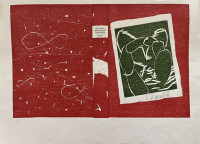
Georg Baselitz
Die Grosse..., 1992
Limited Edition Print
Serigraph
EUR 1,550

Georg Baselitz
Man And Woman III (with Fir Tree), 1985
Limited Edition Print
Woodcut
Currently Not Available

Georg Baselitz
Sono Sei Piedi, 2015
Limited Edition Print
Etching And Aquatint
Currently Not Available
Related Artists


Related Articles

Popular, Art Movements - January 24, 2025
Exploring Dadaism: Art in the Absurd
Discover Dadaism, the radical 20th-century art movement that challenged norms with absurdity and defiance. Explore its origins, techniques, and lasting legacy. Read More


What is figurative art?
Sometimes known as Figurativism, figurative art refers to sculptures and paintings that are clearly or specifically derived from real objects, making them representational. The term figurative art is often used in contrast to abstract art. However, since the emergence of abstract art, figurative art has come to describe any form of modern art that has strong references to the real world or actual situations.