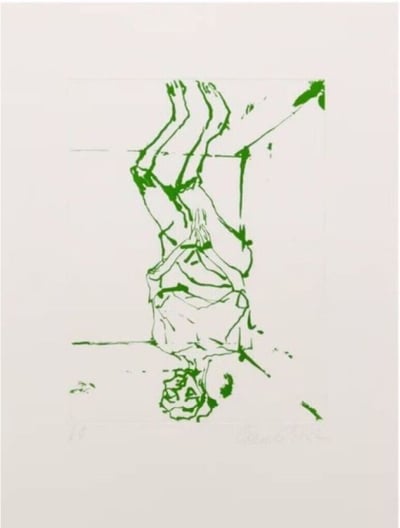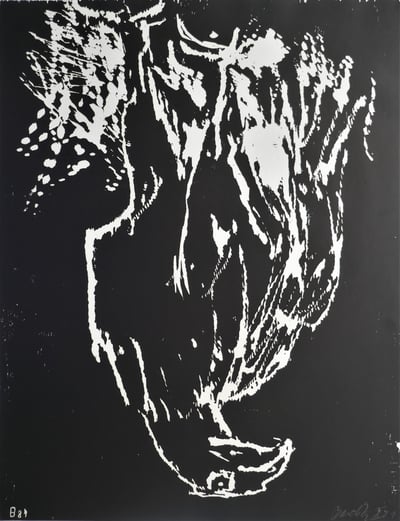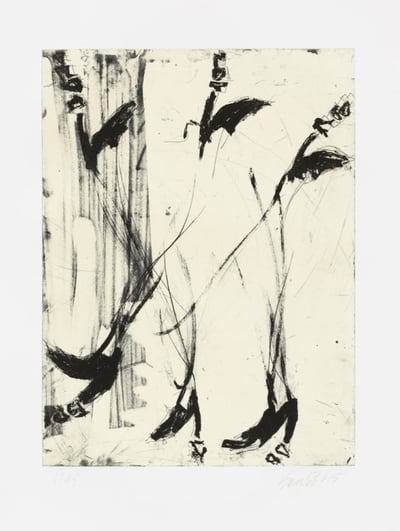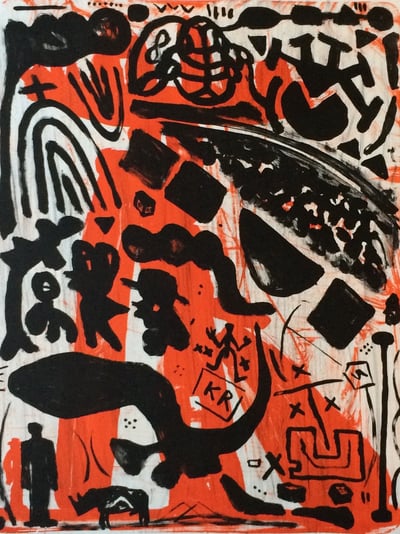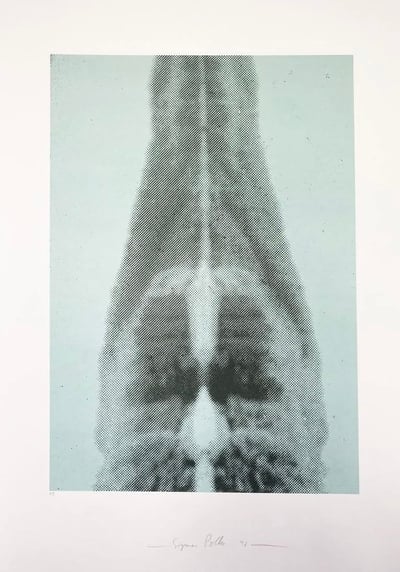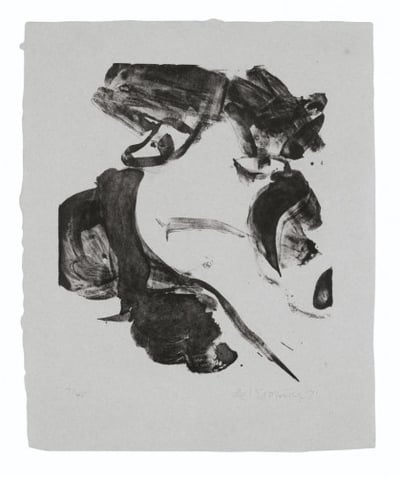
This lithograph in colors was created by the artist for the Carnegie Hall 100th Anniversary portfolio in 1990. Signed in pencil and numbered, from the edition of 60
Georg Baselitz (Germany, 1938–2026) was a groundbreaking painter, sculptor, and graphic artist, known for his Neo-Expressionist works. Renowned for inverting his subjects in 1969 to challenge artistic conventions, Baselitz explored themes of memory, identity, and national history. His provocative style profoundly shaped contemporary art.
LithographLithography is a printing method based on the principle that water and oil do not mix. It can be used to print artwork or text onto paper or other suitable materials. Traditionally, an image was drawn with wax, fat, or oil onto a lithographic limestone surface or plate. Today, metal plates and other surfaces are also used in lithographic printing.
This lithograph in colors was created by the artist for the Carnegie Hall 100th Anniversary portfolio in 1990. Signed in pencil and numbered, from the edition of 60
Georg Baselitz (Germany, 1938–2026) was a groundbreaking painter, sculptor, and graphic artist, known for his Neo-Expressionist works. Renowned for inverting his subjects in 1969 to challenge artistic conventions, Baselitz explored themes of memory, identity, and national history. His provocative style profoundly shaped contemporary art.
I always feel attacked when I'm asked about my painting.
- Georg Baselitz
Renowned for his expressionistic, often grotesque figurative artwork, Georg Baselitz’s output spanned painting, wood sculpture, and printmaking. His most notable works often addressed questions surrounding Germany’s national identity in the aftermath of the Second World War. He was at the centre of significant controversy in 1980 when he represented Germany at the Venice Biennale, exhibiting a large wooden sculpture that appeared to reference a Nazi salute.
Among Baselitz’s early influences were Art Brut and Abstract Expressionism, as well as the work of artists such as Wassily Kandinsky and Edvard Munch. The exaggerated features present throughout his work were intended as symbolic devices, and one of his most recognised bodies of work is the Hero series, depicting wounded and scarred soldiers in the aftermath of war.
Towards the end of the 1960s, Baselitz began painting his subjects upside down as a deliberate strategy to shift focus away from representation and toward the act of painting itself. His Elke series stands among the most notable examples of this approach.
Gestural art is a term that describes painting with freely sweeping brushstrokes. The primary goal of gestural art is to allow the artist to physically express emotional impulses. The varied, yet expressive paint marks are intended to convey the artist's inner thoughts and emotions, which viewers are believed to understand through the dynamic and spontaneous application of paint.