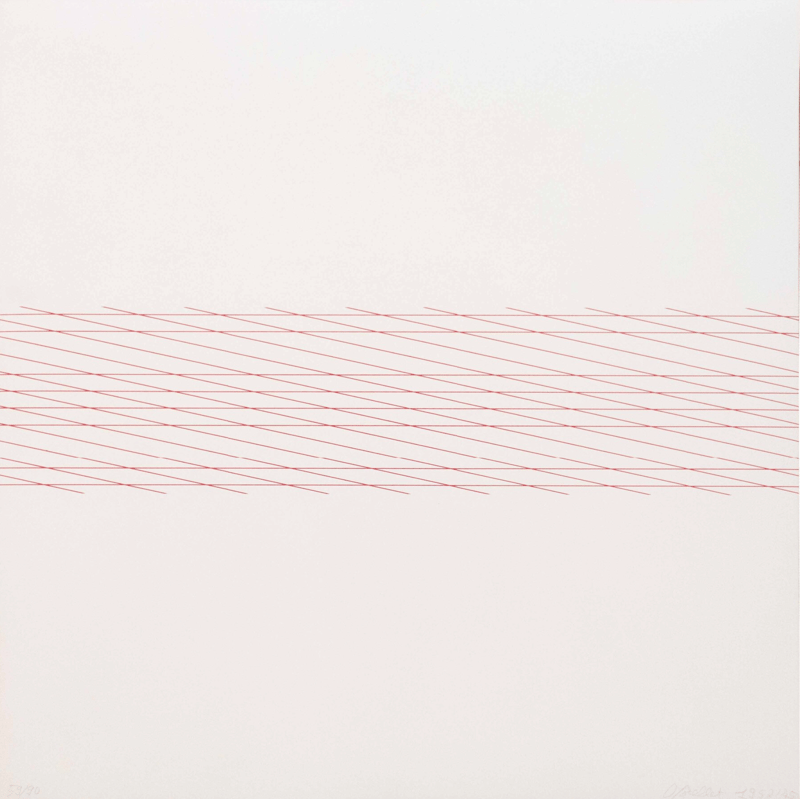
Trame, 1957-1975
Form
Medium
Size
- Inches
- Centimeters
Edition
Price
- USD
- EUR
- GBP
- CHF
- Authenticity Guaranteed
- Insured Shipping
- Online Since 2005
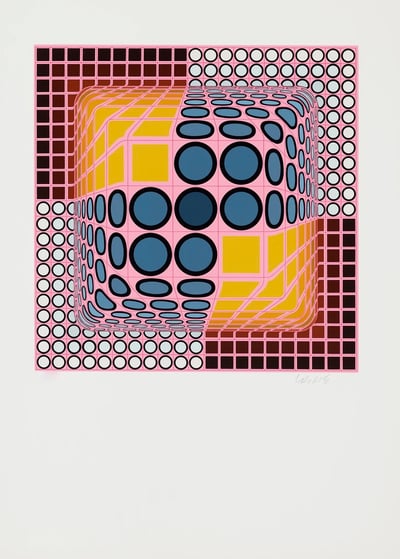
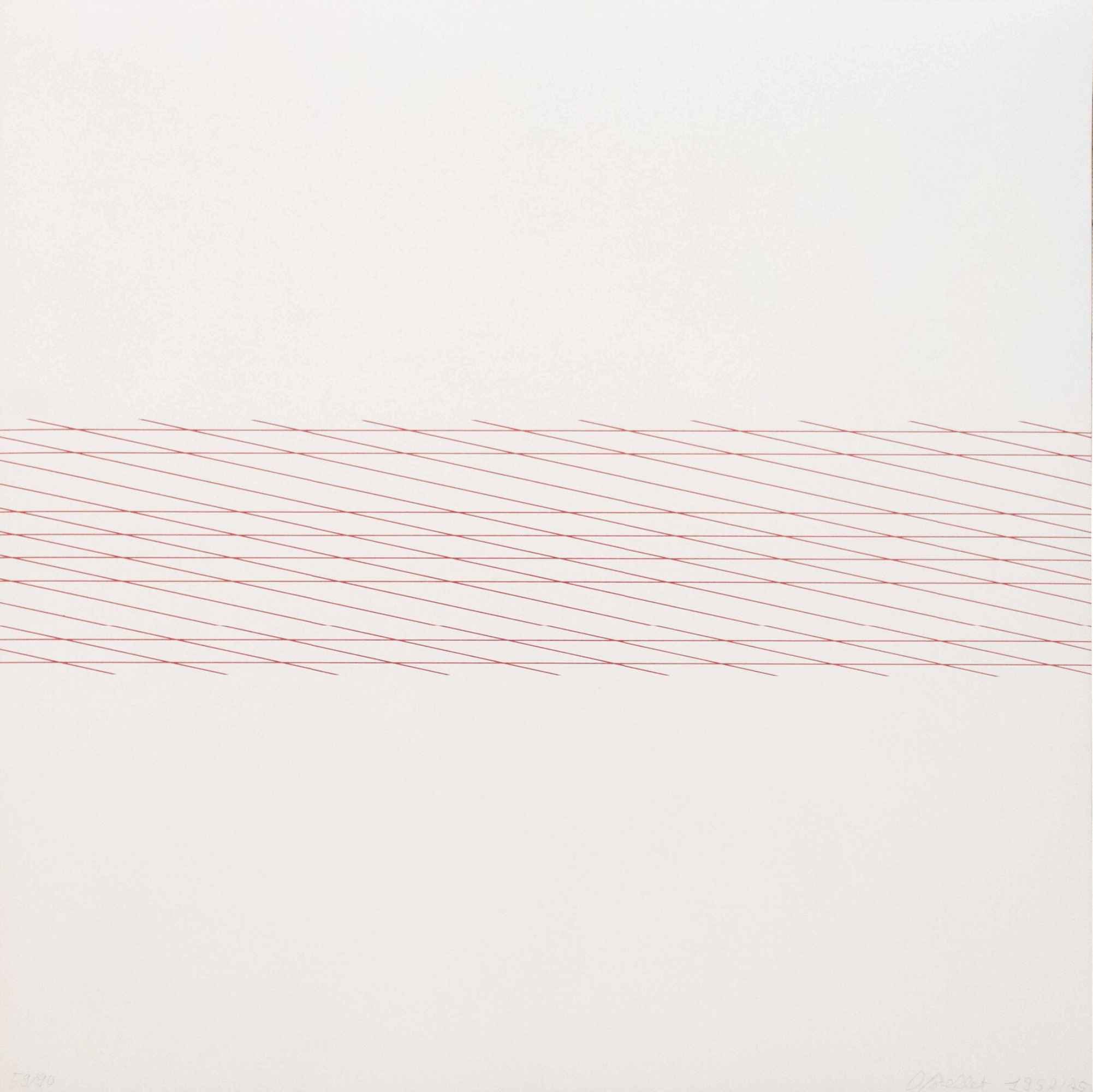
Francois Morellet
Trame, 1957-1975
Limited Edition Print
Silkscreen
EUR 1,800
Francois Morellet
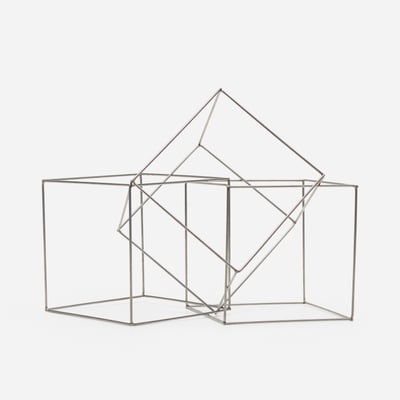
Trois cubes imbriqués, 1977
Sculpture / Object
Metal
EUR 6,990

Francois Morellet
Untitled (Intersecting Lines), 1975
Limited Edition Print
Lithograph
EUR 1,375

Francois Morellet
Untitled (black Grid Pattern), 1975
Limited Edition Print
Lithograph
EUR 1,375
Francois Morellet
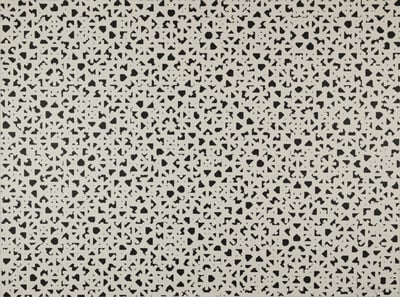
Trames
Limited Edition Print
Screen-print
EUR 1,400
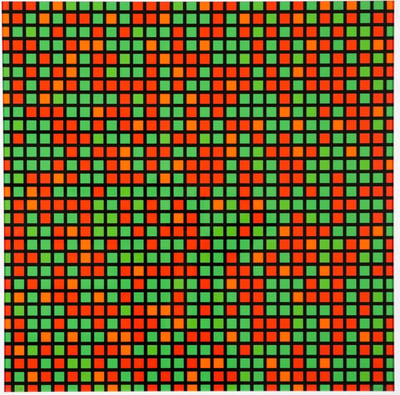
Francois Morellet
Chartres - vert orange, 1973
Limited Edition Print
Silkscreen
EUR 1,700
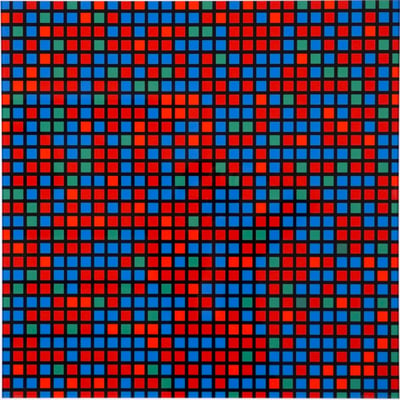
Francois Morellet
Chartres bleu rouge, 1973
Limited Edition Print
Silkscreen
EUR 1,700
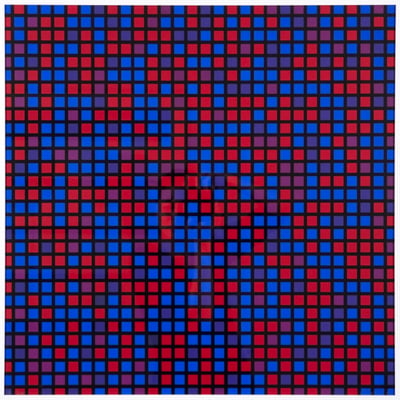
Francois Morellet
Chartres - bleu violet, 1973
Limited Edition Print
Silkscreen
EUR 1,700
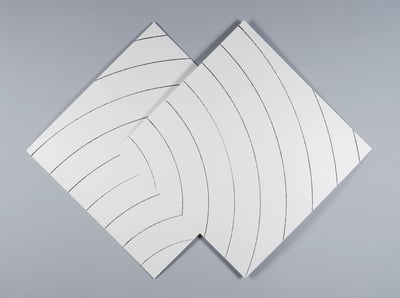
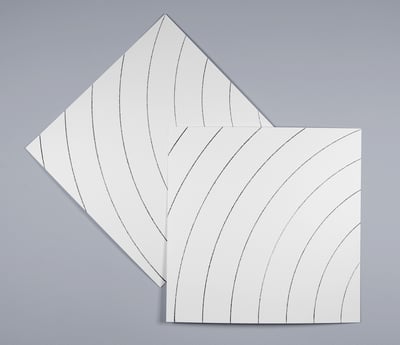
Francois Morellet
Ondes parasites 3, 2014
Limited Edition Print
Screen-print
EUR 2,150
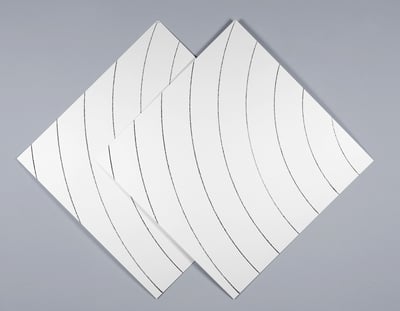
Francois Morellet
Ondes parasites 2, 2014
Limited Edition Print
Screen-print
EUR 2,150
Francois Morellet
Ondes parasites 1, 2014
Limited Edition Print
Screen-print
EUR 2,150
Related Artists
Related Articles

Artists - March 28, 2023
An Elegy to Colour, Geometry and Optics: The Visual Resonance and Forms of Julio Le Parc
Explore the vibrant world of Julio Le Parc, a pioneer in kinetic art and geometric innovation. Discover how light, form, and motion redefine viewer interaction.Read More
Popular, Collecting - May 6, 2026
Edition Numbers and Print Value: What Really Matters
Edition size—not number—drives print value. Learn how scarcity, condition, provenance, and artist demand shape prices in modern printmaking.Read More
Popular, News, Artists, Collecting - August 12, 2026
In Minor Keys: Finding Intimacy and Identity at the 61st Venice Biennale — and in Your Collection
Explore how Koyo Kouoh’s 61st Venice Biennale vision, In Minor Keys, is shifting contemporary collecting toward quiet introspection, memory, and personal identity.Read More
What is Op Art?
Op Art is a visual art style that uses optical illusions to create the impression of movement, vibrating patterns, flashing, or hidden images. The works are typically abstract, with many well-known pieces in black and white. The roots of Op Art can be traced back to earlier movements like Futurism, Constructivism, Dada, and Neo-Impressionism, particularly in their use of color effects and graphic design.
Francois Morellet
Trame, 1957-1975
69 x 69 cm


