Details
Artist
Styles
Screenprint in colours on wove paper. Hand-signed, numbered, and dated.// Echo exemplifies Bridget Riley's groundbreaking exploration of optical vibration and geometric rhythm through the screen-print medium. Executed in 1998 in a limited edition of seventy-five, the work demonstrates Riley's refined investigation of line, color, and movement as pathways to visual transcendence. The composition celebrates arched striping patterns that create a dynamic interplay between mathematical precision and intuitive formal sensibility, establishing Riley's signature contribution to kinetic abstraction.
Details
Artist
Styles
Screenprint in colours on wove paper. Hand-signed, numbered, and dated.// Echo exemplifies Bridget Riley's groundbreaking exploration of optical vibration and geometric rhythm through the screen-print medium. Executed in 1998 in a limited edition of seventy-five, the work demonstrates Riley's refined investigation of line, color, and movement as pathways to visual transcendence. The composition celebrates arched striping patterns that create a dynamic interplay between mathematical precision and intuitive formal sensibility, establishing Riley's signature contribution to kinetic abstraction.
- Recently Added
- Price (low-high )
- Price (high-low )
- Year (low-high )
- Year (high-low )

Bridget Riley
Green Dominance, Blue Dominance, Red Dominance (set Of 3), 1077
Limited Edition Print
Screen-print
Inquire For Price

Bridget Riley
Cherub, 2020
Limited Edition Print
Screen-print
GBP 7,000 - 9,100

Bridget Riley
Elapse, 1982
Limited Edition Print
Screen-print
GBP 18,000 - 23,000

Bridget Riley
Untitled (Rothko Portfolio), 1973
Limited Edition Print
Screen-print
GBP 16,000 - 20,000

Bridget Riley
Serpentine, 1999
Limited Edition Print
Screen-print
GBP 12,000 - 15,600

Bridget Riley
Brouillard, 1981-2003
Limited Edition Print
Screen-print
Inquire For Price

Bridget Riley
Around, 2011
Limited Edition Print
Screen-print
GBP 12,500 - 16,200

Bridget Riley
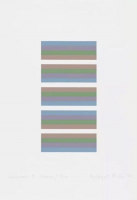
Echo, 1998
Limited Edition Print
Screen-print
GBP 16,000 - 20,800

Bridget Riley
Vista, 2017
Limited Edition Print
Screen-print
Inquire For Price
Bridget Riley
Intervals 3 - Orange / Blue, 2021
Limited Edition Print
Screen-print
Inquire For Price

Bridget Riley
Intervals 3 (Green/Purple), 2021
Limited Edition Print
Screen-print
GBP 7,000 - 10,000

Bridget Riley
About Lilac, 2007
Limited Edition Print
Screen-print
GBP 9,000 - 12,000

Bridget Riley
Two Blues, 2003
Limited Edition Print
Screen-print
USD 14,000 - 16,000

Bridget Riley
Coloured Greys (2), 1972
Limited Edition Print
Screen-print
GBP 12,000 - 15,000

Bridget Riley
Fold, 2004
Limited Edition Print
Screen-print
Inquire For Price

Bridget Riley
Intervals 3, Blue / Green, 2021
Limited Edition Print
Screen-print
GBP 8,900

Bridget Riley
Rose Rose, 2011
Limited Edition Print
Screen-print
GBP 17,500

Bridget Riley
La Lune, 1965
Limited Edition Print
Screen-print
GBP 20,000 - 25,000
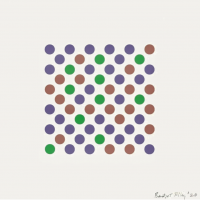
Bridget Riley
Measure For Measure, 2020
Limited Edition Print
Screen-print
GBP 9,000

Bridget Riley
One Small Step, 2009
Limited Edition Print
Screen-print
GBP 10,500

Bridget Riley
Print For Chicago 8, 1971
Limited Edition Print
Screen-print
Currently Not Available

Bridget Riley
Going Across, 2001
Limited Edition Print
Silkscreen
Currently Not Available
Related Artists



Related Articles

Artists - November 11, 2024
25 Living Icons: A Generation of Artists Defying Time
Celebrate 25 living legends redefining art! From Kusama to Hockney, explore their enduring creativity and groundbreaking contributions to modern art. Read More

What is Hard Edge Art?
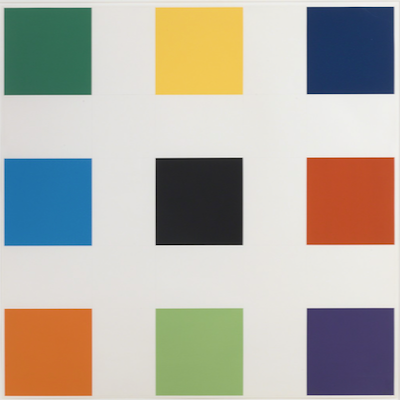
Hard Edge art is a style of abstract painting that became popular in the 1960s. It features areas of color separated by crisp, sharp edges that are painted with geometric precision. The term hard-edge painting was coined by art critic Jules Langsner to describe this approach, which contrasts with the softer, more fluid forms of other abstract styles.