Details
Artist
Styles
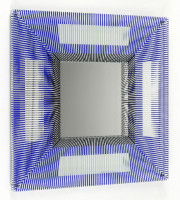
Wood, steel and serigraph. Signed in marker at the back. Vibration cercles mauve, rouge et turquoise by Antonio Asis, created in 2010, is a kinetic sculpture composed of wood, steel, and serigraph, measuring 52 x 52 x 13 cm. This edition of 15 exemplifies Asis’s investigations into color vibration and optical dynamics. Behind a gridded black metal screen, concentric circles in mauve, red, and turquoise appear to shift and pulse, depending on the viewer's position. The interplay between the static grid and vibrant printed elements generates a sensation of movement, a hallmark of Asis’s work. Signed in marker on the reverse, it reflects his legacy within the Op Art and kinetic movements.
Vibration cercles mauve, rouge et turquoise, 2010
form
Medium
Size
52 x 52 X 13 cm
- Inches
- Centimeters
Edition
Price
- USD
- EUR
- GBP
Details
Artist
Styles
Wood, steel and serigraph. Signed in marker at the back. Vibration cercles mauve, rouge et turquoise by Antonio Asis, created in 2010, is a kinetic sculpture composed of wood, steel, and serigraph, measuring 52 x 52 x 13 cm. This edition of 15 exemplifies Asis’s investigations into color vibration and optical dynamics. Behind a gridded black metal screen, concentric circles in mauve, red, and turquoise appear to shift and pulse, depending on the viewer's position. The interplay between the static grid and vibrant printed elements generates a sensation of movement, a hallmark of Asis’s work. Signed in marker on the reverse, it reflects his legacy within the Op Art and kinetic movements.
- Recently Added
- Price (low-high )
- Price (high-low )
- Year (low-high )
- Year (high-low )

Antonio Asis
Boules Tactiles Sur Font Rouge, 2015
Sculpture / Object
Mixed Media
EUR 3,000

Antonio Asis
Vibration Bandes Noir, Bleu Et Turquoise, 2010
Sculpture / Object
Mixed Media
EUR 3,000

Antonio Asis
Vibration 4 Cercles Noir Et Blanc, 2010
Sculpture / Object
Mixed Media
EUR 3,000

Antonio Asis
Asistype 20 - Boule Sur Cercle, 2016
Sculpture / Object
Monotype
EUR 3,500

Antonio Asis
3 Cercles Noir Et Blanc, 2014
Sculpture / Object
Mixed Media
EUR 3,000

Antonio Asis
Asistype 20 – Boule Sur Cercle, 2016
Sculpture / Object
Monotype
EUR 3,000

Antonio Asis
Asistype 19 – Boule Sur Cercle, 2016
Sculpture / Object
Monotype
EUR 3,000

Antonio Asis
Asistype 18 – Boule Sur Cercle, 2016
Sculpture / Object
Monotype
EUR 3,000

Antonio Asis
Asistype 17 – Boule Sur Cercle, 2016
Sculpture / Object
Monotype
EUR 3,000

Antonio Asis
Asistype 16 – Boule Sur Cercle, 2016
Sculpture / Object
Monotype
EUR 3,000

Antonio Asis
Asistype 15 – Boule Sur Cercle, 2016
Sculpture / Object
Monotype
EUR 3,000

Antonio Asis
Asistype 14 – Boule Sur Cercle, 2016
Sculpture / Object
Monotype
EUR 3,000

Antonio Asis
Asistype 13 – Boule Sur Cercle, 2016
Sculpture / Object
Monotype
EUR 3,000

Antonio Asis
Asistype 11 – Boule Sur Cercle, 2016
Sculpture / Object
Monotype
EUR 3,000

Antonio Asis
Vibration Cercles Mauve, Rouge Et Turquoise, 2010
Sculpture / Object
Mixed Media
EUR 3,000

Antonio Asis
3 Ovals Noir Et Blanc, 2012
Sculpture / Object
Mixed Media
EUR 3,000

Antonio Asis
Vibration 9 Petits Et 4 Grands Cercles, 2010
Sculpture / Object
Mixed Media
EUR 3,000

Antonio Asis
Vibration Carré Noir Et Bleu, 2012
Sculpture / Object
Mixed Media
EUR 3,000

Antonio Asis
Vibration Grand Cercle, 2010
Sculpture / Object
Mixed Media
EUR 3,000

Antonio Asis
Vibration Bandes Bleus Et Rouges, 2010
Sculpture / Object
Mixed Media
EUR 3,000

Antonio Asis
Interferences Cercles De Couleurs, 2010
Limited Edition Print
Mixed Media
EUR 2,200

Antonio Asis
Interferences Cercles Rouge Et Blanc, 2010
Limited Edition Print
Mixed Media
EUR 2,200

Antonio Asis
Interferences Cercles Noir Et Blanc, 2010
Limited Edition Print
Mixed Media
EUR 2,200

Antonio Asis
Vibration Cercles Noir Et Blanc, 2010
Sculpture / Object
Mixed Media
EUR 3,000

Antonio Asis
Vibration Cercles Noir, Orange Et Rouge, 2010
Sculpture / Object
Mixed Media
EUR 3,000

Antonio Asis
Vibration 16 Carres Bleu Et Jaune, 2010
Sculpture / Object
Mixed Media
EUR 3,000
Related Artists



Related Articles
Popular, Collecting - July 23, 2025
Sculpture Care and Display: From Plinths to Pedestals in Your Home
Learn how to display and care for sculpture at home—from lighting tips to material care—so your art can truly shine in any space. Read More

What is kinetic art?
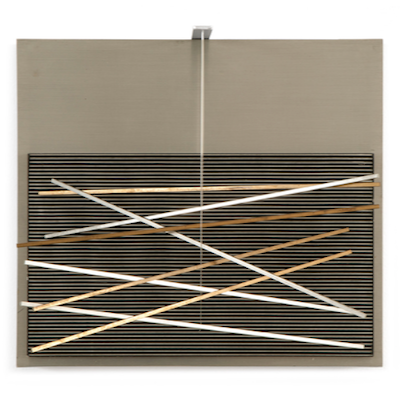
Kinetic art is an international movement that emerged in the 1920s and gained prominence in the 1960s, referring to art that involves both apparent and real motion. It encompasses any medium that includes movement, either relying on actual motion for its effect or being perceived as moving by the viewer. Early examples include canvas paintings designed to create optical illusions of movement. Today, kinetic art often refers to three-dimensional figures and sculptures, such as those operated by machines or those that move naturally. The movement covers a variety of styles and techniques that frequently overlap.