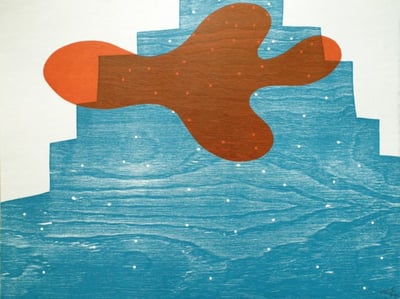
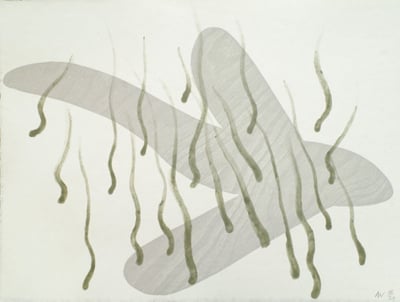
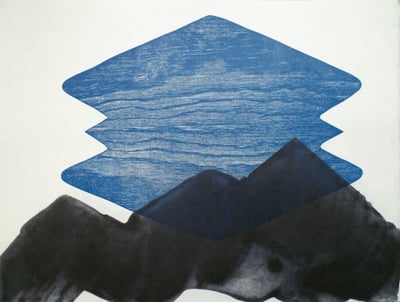
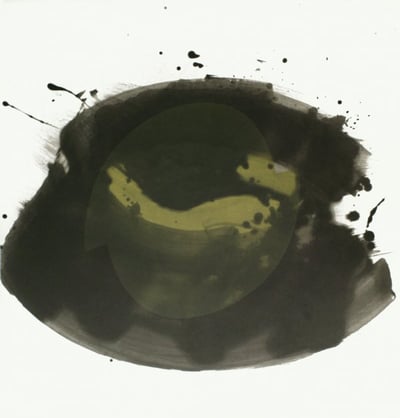
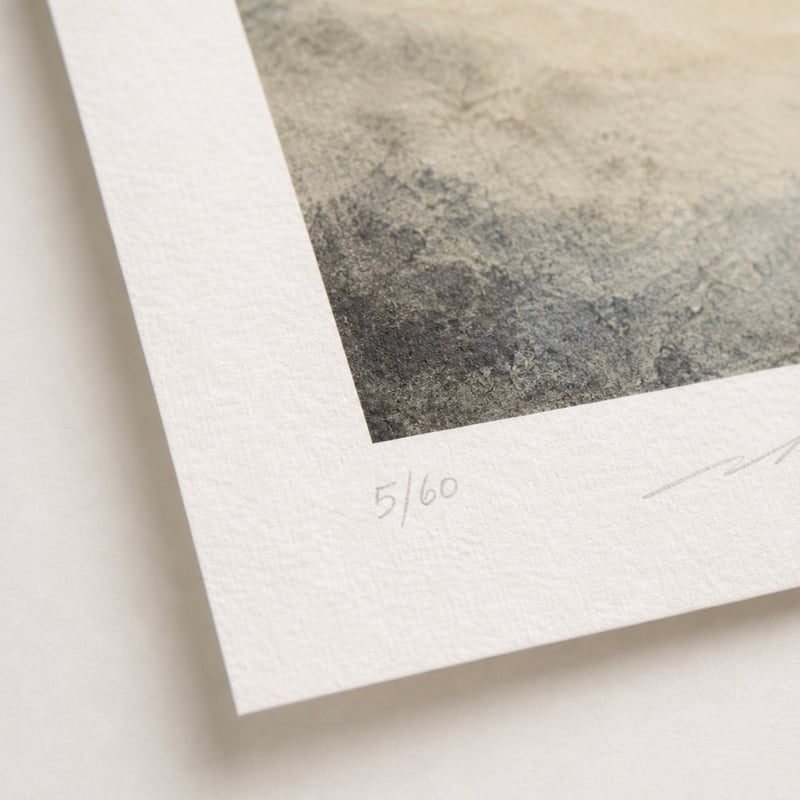
Aquatint and woodcut - 2 plates of 30 x 40 cm. -Printed on Zerkall-Butten, 300 gr. of 30 x 40 cm.
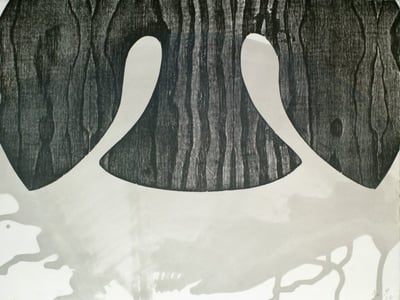
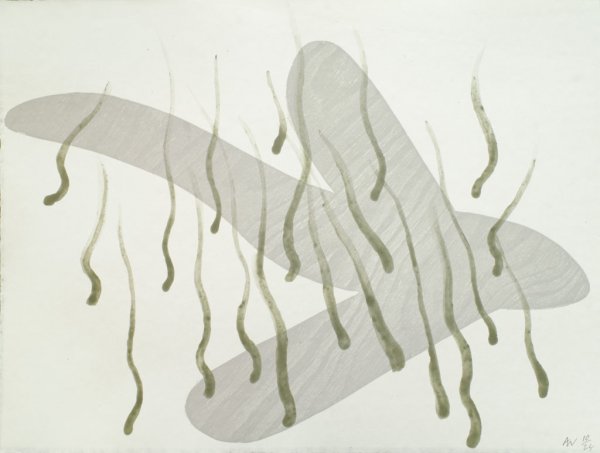
Glider by Alison Wilding is a limited edition print from 2010 that combines aquatint and woodcut techniques, giving it a layered, tactile quality. The piece features two intersecting, softly contoured shapes in a muted gray tone, suggestive of gliding forms or abstracted wings. Surrounding these shapes are elongated, curved lines that cascade downwards, reminiscent of drips, tendrils, or even the sensation of movement in air or water. This composition evokes a sense of calm, yet the organic forms create a visual rhythm that draws viewers into a contemplative space. Printed on Zerkall-Butten paper, this work reflects Wilding’s ability to balance abstraction with a subtle nod to nature. Part of an edition of only 24, it embodies Wilding’s exploration of form, space, and the delicate interplay between solid and ephemeral.
Ludwig Wilding (Germany, 1927–2010) was a pivotal figure in Op and Kinetic art. His three-dimensional works, often in black and white, created dynamic optical illusions that challenged visual perception. Exhibiting internationally, Wilding's art continues to influence contemporary explorations of movement and space.
WoodcutWoodcut is a printing technique where an image is carved into the surface of a woodblock using gouges, with the remaining flat surface holding the ink for printing. The areas cut away by the artist do not carry ink, while the uncut areas do, producing the desired print. The carving follows the wood's grain, unlike wood engraving, where the block is cut across the end-grain. Ink is applied to the surface with a roller, ensuring only the flat, uncarved areas receive ink, leaving the recessed, non-printing areas clean.
Aquatint and woodcut - 2 plates of 30 x 40 cm. -Printed on Zerkall-Butten, 300 gr. of 30 x 40 cm.
Glider by Alison Wilding is a limited edition print from 2010 that combines aquatint and woodcut techniques, giving it a layered, tactile quality. The piece features two intersecting, softly contoured shapes in a muted gray tone, suggestive of gliding forms or abstracted wings. Surrounding these shapes are elongated, curved lines that cascade downwards, reminiscent of drips, tendrils, or even the sensation of movement in air or water. This composition evokes a sense of calm, yet the organic forms create a visual rhythm that draws viewers into a contemplative space. Printed on Zerkall-Butten paper, this work reflects Wilding’s ability to balance abstraction with a subtle nod to nature. Part of an edition of only 24, it embodies Wilding’s exploration of form, space, and the delicate interplay between solid and ephemeral.
Ludwig Wilding (Germany, 1927–2010) was a pivotal figure in Op and Kinetic art. His three-dimensional works, often in black and white, created dynamic optical illusions that challenged visual perception. Exhibiting internationally, Wilding's art continues to influence contemporary explorations of movement and space.
Different performances have different kinds of outcomes. I would say live bodies sometimes activate a space.
- Alison Wilding
Alison Wilding is a twentieth century English sculptor. She studied at Nottingham College of Art, the Ravensbourne College of Art and Design and finally at the Royal College of Art, where she left in 1973. Although she began her career specializing in multimedia artworks, she is perhaps best known for her abstract sculptures which she used a large array of materials to create. She has worked with wood, bronze, stone, wax, silk, steel and a whole host of other materials. One of her best known pieces of work is called Stormy Weather and beeswax, oil and pigment rubbed into steel. She was inventive and groundbreaking in her methodologies. She made one significant piece of public artwork which is located on the River Wear in Sunderland. The piece is calledAmbit and consists of a number of steel tubes which float on the river and are lit at night. Alison Wilding was nominated for the Turner Prize in 1988 and 1992.
Contemporary art refers to avant-garde or innovative art created in the recent past or present day. The exact starting point of contemporary art varies depending on the institution, often tied to the founding year of museums or galleries that showcase the style. Contemporary art is characterized by its focus on current ideas, diverse media, and the exploration of new concepts and techniques.